Industry related headlines to keep you in the know.
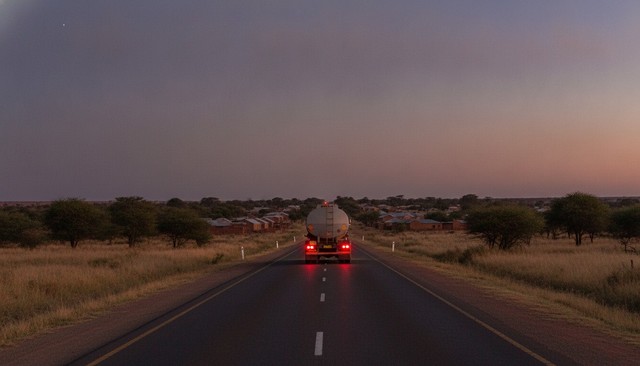
South African authorities record where a foreign-registered truck says it is going when it enters the country, then largely lose sight of it. A transport specialist has warned that the gap becomes a serious safety problem when the load is dangerous goods.
Fleet Management
18 September 2026 • 4 min read
A declared destination is not a tracked route. The industry already collects enough data to close this gap — it just does not use it. And the operators who will feel the consequences of that first are the compliant ones.
University of Johannesburg lecturer Lunga Jacobs raised the issue at the Transport Forum’s Integrated Public Transport Network Operational Focus event on 17 September. Authorities capture a vehicle’s intended destination at the point of entry, he said, but cannot necessarily monitor its movements afterwards. “When trucks come in and they are on our roads from neighbouring states, there’s no way to tell where they are.”
A truck can enter South Africa declaring a destination such as the Port of Durban and then deviate from the expected route to avoid enforcement. That is an inconvenience with general freight. With dangerous goods moving through communities that have no capacity to respond to an incident, it is something else. Jacobs also flagged the related problem of poor cargo information: “You carry something that looks like water or smells like paraffin. We assume it is paraffin but it is not. It can cause a whole lot of other dangers.”
The core argument: the transport sector already collects substantial data — it simply does not use it effectively. As Jacobs put it: “When we know what happens, where and when, we know how to allocate resources.” (Source: Transport Forum IPTN Operational Focus event via Freight News, 2026)
Almost every cross-border truck on a SADC corridor is already tracked. Telematics units are standard on insured, financed and contracted fleets, and most operators can produce a breadcrumb trail for any vehicle on demand. The visibility exists commercially. What does not exist is a route by which the relevant slice of it reaches the authority responsible for enforcement or emergency response at the moment it is needed.
Jacobs called for greater use of tracking technology and transport data, and for better cooperation between government, transport operators and technology providers. That framing matters: a compliant operator is not being asked to install anything new. They are being asked to share what they already generate. The cost is governance — who sees what, for how long, and under what protection — not hardware.
The operator who deviates from a declared route to dodge a weighbridge or a roadblock is competing against the operator who does not. Every hour and every fine avoided is a cost the compliant business carries and the non-compliant one does not. That is the same rate-undercutting dynamic the sector has been complaining about all year, expressed as a road safety statistic.
Jacobs made the link explicit: safer roads and more effective enforcement matter not only for protecting lives but for reducing South Africa’s logistics costs. He also noted this sits inside a broader compliance reform picture, with government considering stricter controls for drivers and operators. Cross-border fleets should read that as a direction of travel. Route and cargo data that is voluntary today tends to become mandatory later, and the operators who structured for it early are the ones who do not scramble.
Check that your telematics can actually produce a clean route history per trip, per vehicle, on request — many systems store it but few operators have ever exported it under pressure. If you carry dangerous goods cross-border, confirm that the load description on the driver’s documents is accurate enough for a first responder, not just for customs. And treat route-and-cargo data sharing as the direction regulation is heading, which makes it worth designing for now rather than retrofitting under a deadline.
Stay connected with Southern Africa's freight and transport community.
Join 6,400+ logistics professionals across the SADC region.
Visit Laaimylorrie.com| About the Author | |

|
Andre Klynsmith Entrepreneur & Technology Enthusiast Andre's expertise spans technology, blockchain, transport, and logistics — with a passion for innovation and driving positive change across industries. |
| Source: Freight News View source › | 17 September 2026 |


Subscribe to our Newsletter and stay in the know with all the latest Industry News, Products and Trends covering the whole of the SADC region.
KS Blockchain T/A Laaimylorrie.com . All Rights Reserved.