Industry related headlines to keep you in the know.
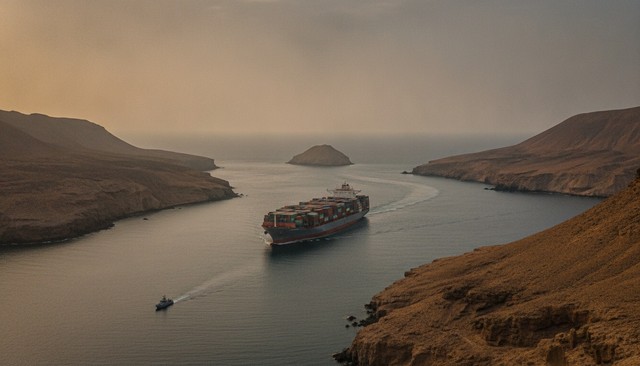
U.S. officials met Houthi representatives at the American embassy in Muscat over the weekend, and the Houthi delegation told them it would not attack commercial vessels — except those belonging to Saudi Arabia.
Politics Insight
17 September 2026 • 3 min read
Five sources told Reuters the meeting happened. The U.S. State Department would not confirm it. What was reportedly offered is not freedom of navigation — it is a sea lane with a published exception list, given privately by a group that now controls both approaches to it.
According to five sources who spoke to Reuters on condition of anonymity, the talks took place at the U.S. Embassy in Muscat, with Oman — a long-standing regional mediator — helping to organise them. One source put the meeting on Sunday. The U.S. side was represented by embassy personnel. The Houthi delegation reportedly included Mohammad Abdulsalam, a senior official based in Muscat who is under U.S. sanctions, and Abdelmalik al-Ajiri.
Asked whether the meeting had happened, a State Department spokesperson declined to confirm it, saying only that safeguarding freedom of navigation in the Red Sea and preventing the export of terrorism from the Middle East were core U.S. interests. The Trump administration designated the Houthis a foreign terrorist organisation in March 2025, then negotiated a ceasefire with them two months later.
The carve-out: Two sources said the Houthis told U.S. officials they had no intention of attacking American vessels and remained committed to the 2025 ceasefire. One Yemeni source added that the group said it would not attack Israeli ships or any commercial vessels — except those belonging to Saudi Arabia. (Source: Reuters via gCaptain, 2026)
The Houthis last week seized effective control of Yemen’s entire Red Sea coastline, including the historic port of Mocha and Perim Island in the Bab el-Mandeb strait at the sea’s mouth. The group that is offering an assurance about passage now physically holds the ground on both sides of the approach to the Suez Canal.
The context is a war that had quietened and then restarted. Fighting resumed in July when the Houthis declared a blockade on Saudi shipping in the Red Sea, in response to a Saudi blockade of Yemeni ports. Saudi Crown Prince Mohammed bin Salman called President Trump last week seeking U.S. military support as the Houthi advance accelerated; Reuters has reported that Washington told Riyadh it would not get directly involved. President Trump said on Saturday that the Houthis had phoned his administration asking the United States to stay out of the Yemen war, and Vice President JD Vance confirmed direct contact on Monday without giving detail.
This is the part that reaches freight desks in Durban and Walvis Bay. A conditional, unconfirmed, privately delivered assurance with a named exempt nationality is not what a war-risk underwriter or a carrier’s security committee needs in order to reopen a route at normal premiums. It is an invitation to test the route, which is a different thing.
It also creates a screening problem that did not exist before. If one flag or ownership chain is excluded from the assurance, then ownership, charterer and even cargo interest become routing variables — and on a modern container ship those details are layered across several companies. Carriers that have been moving services back to Suez are doing so against exactly this kind of partial, deniable comfort, and the direction can reverse in a week.
Your carrier’s Suez-versus-Cape decision is now being taken on assurances you will never see. Ask for the contracted routing rather than the intended routing, and keep a written note of which party carries the cost if a service is re-diverted mid-voyage. On inland legs, build schedule tolerance into North-South and Trans-Kalahari bookings that depend on a fixed vessel arrival — a routing reversal moves your truck date, not just the ship’s.
Stay connected with Southern Africa's freight and transport community.
Join 6,400+ logistics professionals across the SADC region.
Visit Laaimylorrie.com| About the Author | |

|
Andre Klynsmith Entrepreneur & Technology Enthusiast Andre's expertise spans technology, blockchain, transport, and logistics — with a passion for innovation and driving positive change across industries. |
| Source: Reuters, via gCaptain View source › | 16 September 2026 |


Subscribe to our Newsletter and stay in the know with all the latest Industry News, Products and Trends covering the whole of the SADC region.
KS Blockchain T/A Laaimylorrie.com . All Rights Reserved.