Industry related headlines to keep you in the know.
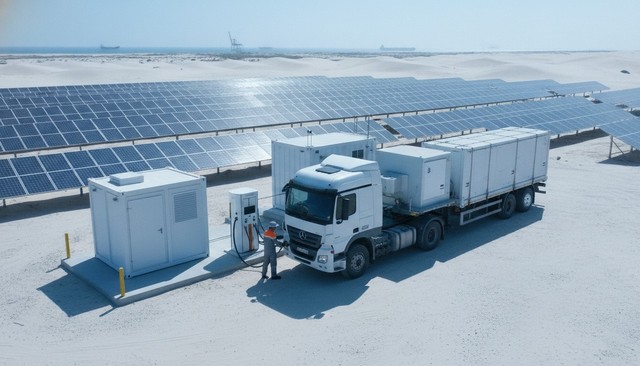
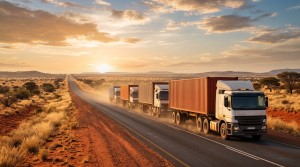
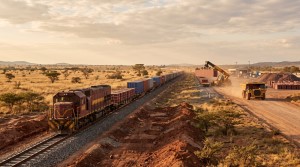
Africa's first fully integrated green hydrogen facility is operating at Walvis Bay, combining solar generation, hydrogen production and battery storage on a single site. Its initial customers are not export markets but local transport: dual-fuel trucks, generators and Namibia's first hydrogen-powered freight locomotive.
Carbon Footprint
17 September 2026 • 5 min read
Most African green hydrogen projects stall for one reason: nobody has agreed to buy the hydrogen. CMB.TECH solved that by becoming its own first customer — and that single commercial decision is the most transferable lesson in the whole project.
The CMB.TECH Namibia facility at Walvis Bay brings solar power generation, green hydrogen production and energy storage into one operational ecosystem. A 5 MWp solar park covering 6.5 hectares feeds a 5 MW proton exchange membrane electrolyser, backed by a 5.9 MWh battery energy storage system. The electrolyser runs fully off-grid, splitting water into hydrogen and oxygen using solar electricity and stored energy.
The site also carries a refuelling station for hydrogen-powered vehicles and industrial applications, and an on-site Hydrogen Academy. Siemens supplied the integrated electrical, automation and safety infrastructure. CMB.TECH Chief Technology Officer Roy Campe describes the facility as a "Living Lab" for an integrated hydrogen economy.
Local capability: 24 of the facility's 25 employees are Namibian, all trained through the on-site Hydrogen Academy, which works with local universities and the Namibia Institute for Mining Technology. (Source: ESI-Africa / CMB.TECH, 2026)
Siemens Sub-Saharan Africa CEO Sabine Dall'Omo named the failure mode directly: many green hydrogen projects stall because heavy investment goes into solar and production while no commercial offtake agreement secures demand for the hydrogen produced. CMB.TECH built the plant and then consumed its own output in its own industrial applications, guaranteeing a buyer from day one.
That is a practical point for anyone in transport watching alternative fuels from a distance. The projects that reach steady operation are the ones where the producer already owns the fleet, the vessel or the plant that burns the fuel. Where production and consumption sit in different companies, the negotiation over price and volume tends to outlast the funding window.
The current applications are modest and deliberately so: dual-fuel trucks, generators, and Namibia's first hydrogen-powered freight locomotive. The stated next step is integration with port infrastructure, combining hydrogen with nitrogen from the air to produce ammonia, which is then liquefied for refuelling ships — a route into maritime decarbonisation that a truck-scale refuelling station cannot reach on its own.
The expansion ambition is considerable. The 5 MWp park occupies a fraction of the available land, and Campe has described a path to 250 MW and then 500 MW, with 7,000 solar panels today and "millions" envisaged. Namibia's roughly 300 sunny days a year underpins that arithmetic. Operators should treat the target capacity as an ambition and the operating 5 MW plant as the fact.
Nothing here replaces diesel in your fleet this year, and any vendor suggesting otherwise is selling ahead of the infrastructure. What is worth doing now is asking customers with emissions-reporting obligations whether a lower-carbon leg on the Walvis Bay corridor has commercial value to them — because the answer determines whether early adoption is a cost or a differentiator. Operators near Walvis Bay should also note the Hydrogen Academy: technician and driver skills for dual-fuel equipment are being built locally, not imported.
Stay connected with Southern Africa's freight and transport community.
Join 6,400+ logistics professionals across the SADC region.
Visit Laaimylorrie.com| About the Author | |

|
Andre Klynsmith Entrepreneur & Technology Enthusiast Andre's expertise spans technology, blockchain, transport, and logistics — with a passion for innovation and driving positive change across industries. |
| Source: ESI-Africa View source › | 20 August 2026 |


Subscribe to our Newsletter and stay in the know with all the latest Industry News, Products and Trends covering the whole of the SADC region.
KS Blockchain T/A Laaimylorrie.com . All Rights Reserved.