Industry related headlines to keep you in the know.
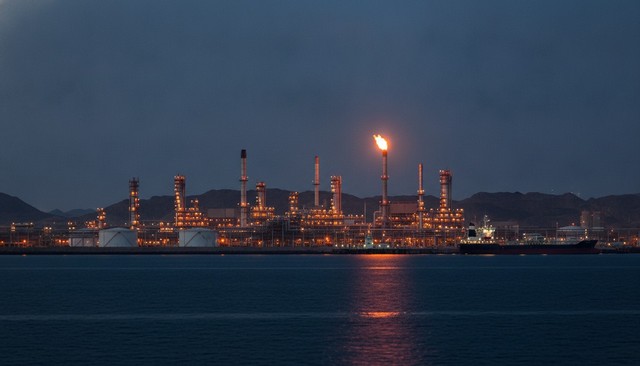
Houthi forces struck Saudi Aramco's Jazan refining complex with drones and missiles in back-to-back attacks on 7 and 8 September, starting fires and taking the 400 000 barrel-a-day facility offline for the second time this year - a hit on refining capacity rather than crude production, and one that lands on the Red Sea coast at a moment when Saudi Arabia is moving more oil west to avoid the Strait of Hormuz.
Politics Insight
15 September 2026 • 4 min read
Crude is not what a truck burns. Refined product is. Every strike that removes refining capacity rather than wellhead capacity widens the gap between the crude price on the screen and the diesel price at the pump - and that gap is now the single biggest variable in SADC freight costing.
Yemen's Houthi movement hit the Jazan complex - one of the largest and most modern refineries in the region - on consecutive days. Crude oil tank farms at Jazan and Abha were struck as well, according to energy-industry sourcing and satellite imaging. NASA FIRMS infrared sensing detected fire on the eastern half of the facility, an area primarily occupied by tank farms. Industry sources told the Wall Street Journal the refinery had been taken offline; the extent of the damage and the duration of the outage were not immediately established.
Saudi Arabia's civil defence agency gave the all-clear for Jazan at about 2000 hours on the second day. The Saudi foreign ministry said the attacks injured 73 civilians and condemned the targeting of civilian and economic assets. The strikes followed Houthi accusations of Saudi bombing runs over Houthi-controlled areas, and a Saudi military response is expected - which would extend the return to open conflict after four years of relative quiet.
Capacity removed: The Jazan refinery processes 400 000 barrels a day. It is the second time in 2026 that the plant has sustained significant damage. Brent crude rose more than 2% on the news, settling north of $99 a barrel. (Source: The Maritime Executive, 2026)
Jazan sits on the Red Sea, near Saudi Arabia's southwestern border with Yemen. Through this crisis, the standing reassurance has been that Gulf producers can route product west and avoid the Strait of Hormuz altogether. Jazan is part of that western outlet. Damaging it narrows the escape route rather than the source.
The southern front compounds it. Houthi forces have been fighting Yemeni government troops west of Taiz, close to the port of Mokha and the Bab el-Mandeb strait - the narrowest stretch of water in the southern Red Sea. Control of those shores strengthens the group's position against Saudi shipping, and the movement announced a declared blockade on Saudi energy ports in July, disrupting routing out of Aramco's Red Sea loading terminals. A refinery behind a contested strait is worth less than a refinery with clear water in front of it.
SADC states are overwhelmingly importers of refined product, not crude processors. South Africa's domestic refining base has shrunk over the past decade; Namibia, Botswana, Zambia and Zimbabwe are structurally import-dependent. That means regional pump and bunker prices track international refined-product markets and refining margins, not the Brent headline alone. When refining capacity is destroyed anywhere on the import chain, the crack spread widens and Southern African landed costs follow.
The timing is also lagged. Regional fuel prices are set on review periods that close weeks before the pump adjustment is announced. A strike in early September does not show up in a SADC pump price in early September; it shows up in the review period that feeds the next adjustment, or the one after. Operators who read the pump price as a real-time signal will consistently be one cycle behind the information they actually need.
Track refining capacity and refined-product cracks, not just the Brent price - crude headlines understate what happens to diesel when refineries come offline. Build the pricing lag into your planning: what happened in the Red Sea this month sets your pump price next month or the one after. Set fuel reorder points now rather than buying on the announcement, and make sure long-haul quotes carry dated expiries so a lagged increase does not land inside a fixed rate.
Stay connected with Southern Africa's freight and transport community.
Join 6,400+ logistics professionals across the SADC region.
Visit Laaimylorrie.com| About the Author | |

|
Andre Klynsmith Entrepreneur & Technology Enthusiast Andre's expertise spans technology, blockchain, transport, and logistics - with a passion for innovation and driving positive change across industries. |
| Source: The Maritime Executive View source › | 8 September 2026 |


Subscribe to our Newsletter and stay in the know with all the latest Industry News, Products and Trends covering the whole of the SADC region.
KS Blockchain T/A Laaimylorrie.com . All Rights Reserved.