Industry related headlines to keep you in the know.
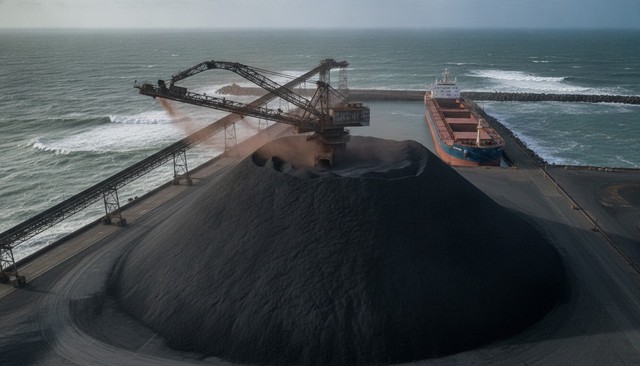
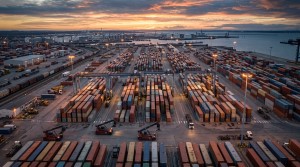
Transnet has set out a three-wave private sector participation programme that puts two bulk mineral export facilities - the Ngqura Manganese Export Terminal and the Richards Bay Dry Bulk Terminal - in the first tranche, with the manganese terminal's request for proposals due for release this month and the iron-ore and coal corridors themselves earmarked for assessment in a later wave.
Mining and Commodities
15 September 2026 • 4 min read
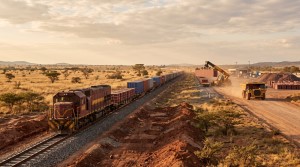
The headline number from Transnet's results was a R4.6-billion profit. The number that matters to anyone hauling minerals is 167 million tons - the volume the railway actually moved, against a 180 million-ton target and a 250 million-ton national goal for 2030.
Speaking at the group's results presentation on 10 September, Transnet chief executive Michelle Phillips described a sequenced portfolio of private sector participation transactions across rail, ports and pipelines. Wave 1 contains the already-completed sale of a 49.99% interest in the Durban Container Terminal Pier 2 - now the Durban Gateway Terminal - alongside the Richards Bay Dry Bulk Terminal, whose submission deadline was recently extended, the Ngqura Manganese Export Terminal, and a LeaseCo entity that will lease rolling stock to train operating companies in South Africa and the region.
Wave 2 targets rail fuelling facilities, yards and depots, agriculture and multipurpose terminals, and gas and jet-fuel pipelines and storage. Wave 3 is where the assessment of the iron-ore and coal corridors sits. Phillips framed the Durban transaction, which produced a R12.5-billion profit on disposal after two years of legal delay, as the template: Transnet intends to "transact for value" rather than simply divest.
The volume gap: Rail volumes rose 4.9% to 167 million tons in the year to March 2026, short of the 180 million-ton breakeven target and well short of the 250 million-ton national goal for 2030. (Source: Transnet results presentation via Mining Weekly, 2026)
Phillips was unusually direct about the container rail corridor between Durban and Johannesburg, which Transnet plans to concession: "We bleed on that line." The stated logic there is strategic relief rather than commercial proceeds - if a private operator can run it more cheaply, that is value in itself. A request for qualification for the Container Corridor PSP is expected before the end of the year, though Transnet acknowledged that a profitable private business case may be difficult to build without public support.
That candour is worth noting, because it tells mineral exporters something about sequencing. The assets being sold first are the ones with a clear revenue story - bulk mineral terminals with committed export tonnage behind them. The loss-making general-freight corridor is being handed over precisely because it does not carry that kind of guaranteed volume.
Eleven private train operating companies have signed rail access agreements and some are expected to begin operating in 2027. Maintenance backlogs on the mainline network and a shortage of rolling stock remain the binding constraints on reaching the 2030 target. National Treasury has approved R14.8-billion in grant funding through the Budget Facility for Infrastructure, and Transnet plans a R129.1-billion capital programme over five years, of which R116-billion is sustaining capital - roughly R25-billion a year, against R23-billion spent in 2026.
For the wider SADC mineral trade, the read-across is straightforward. Every ton that South African rail cannot lift is a ton that either sits at the mine, moves by road, or leaves through a competing corridor. Zambian and DRC copper already tests the Walvis Bay, Dar es Salaam, Beira and Lobito options against the southern route on cost and reliability, and manganese and chrome producers in Limpopo, Mpumalanga and the Northern Cape make the same calculation at a shorter distance.
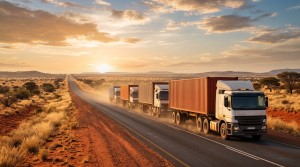
Bulk mineral terminals changing hands means terminal rules, slot allocation and tariff structures will change with them - read the Ngqura manganese and Richards Bay dry bulk RFP outcomes as operating-condition news, not corporate news. Road hauliers serving mineral corridors should expect the rail shortfall to persist through 2027 while TOCs ramp up, and should be pricing that overflow work rather than assuming rail takes it back. If you move manganese or chrome to Ngqura or Richards Bay, ask now who you will be contracting with next year.
Stay connected with Southern Africa's freight and transport community.
Join 6,400+ logistics professionals across the SADC region.
Visit Laaimylorrie.com| About the Author | |

|
Andre Klynsmith Entrepreneur & Technology Enthusiast Andre's expertise spans technology, blockchain, transport, and logistics - with a passion for innovation and driving positive change across industries. |
| Source: Mining Weekly / Engineering News View source › | 10 September 2026 |


Subscribe to our Newsletter and stay in the know with all the latest Industry News, Products and Trends covering the whole of the SADC region.
KS Blockchain T/A Laaimylorrie.com . All Rights Reserved.