Industry related headlines to keep you in the know.
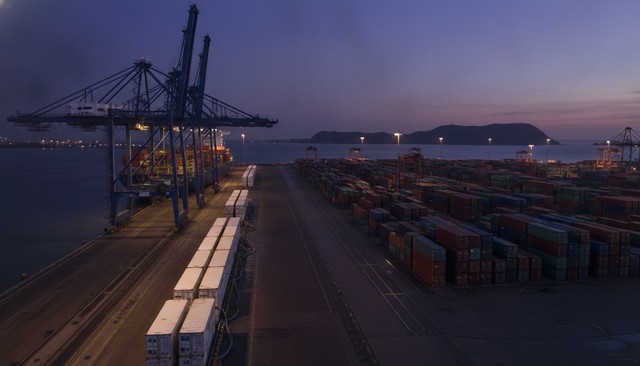
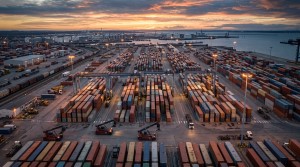
Durban Gateway Terminal handled an average of 3 672 TEUs a day in the four weeks to 10 September, down 30.5% on the 5 286 TEUs a day it managed over the preceding four months, and waterside volumes came in at roughly 63% of the same period last year.
Ports and Terminals
15 September 2026 • 3 min read
Vessels that secured a berth at DGT waited an average of about 212 hours at anchorage — close to nine days before a single box moved. The anchorage queue is shrinking, but the terminal's output has not recovered with it. That gap between a shorter queue and a weaker throughput number is the part SADC operators need to read carefully.
The figures come from the Busa Cargo Movement Update compiled by the Southern African Association of Freight Forwarders, reflecting operational conditions through 10 September. Alongside the 30.5% throughput shortfall, completed vessels spent an average of roughly 125 hours alongside. The anchorage queue fell from ten vessels on 7 September to five on 10 September, but SAAFF was careful to say this had not yet translated into a sustained recovery in terminal performance.
By 10 September around 11 550 containers had been diverted to relieve pressure, with further diversion and network-management measures continuing. A shorter queue that is partly the product of diverting boxes elsewhere is not the same thing as a terminal catching up, and the 63%-of-2025 waterside comparison makes that distinction hard to argue with.
The four-week picture: 3 672 TEUs a day from 14 August to 10 September against 5 286 TEUs a day from 14 April to 13 August — a 30.5% shortfall, with about 11 550 containers diverted by 10 September. (Source: SAAFF Busa Cargo Movement Update via Freight News, 2026)
Refrigerated cargo remained the sharpest pressure point. Reefer occupancy reached 106% on 9 September before easing to 102% on 10 September — a terminal running above its own plug capacity, with no slack for a delayed vessel or a late truck. Overall stack occupancy moved from 60.8% on 7 September to 64.4% on 9 September before settling at 63.2%, while road import containers on hand rose about 11%, from 3 968 to 4 421.
Gate activity averaged roughly 2 147 moves a day between 7 and 10 September, fluctuating between 1 867 and 2 552, and rail evacuation was uneven over the same period. Elsewhere in the port the picture was mixed: Pier 1 handled 97% of its targeted volume with vessels waiting an average of 51 hours at anchorage and 77 hours at berth, while the Durban Multi-Purpose Terminal recorded a 158% week-on-week jump in waterside volumes and exceeded its target by 118%, though average waiting time there still sat at 89 hours.
For nearly three years, carriers routing around the Cape of Good Hope have had a structural reason to keep Southern African ports in their rotations. That reason is weakening. Major Asia–Europe services are moving back through the Suez Canal, which shortens those voyages and removes the natural convenience of a Southern African call. Port performance in the region is about to be judged on its own merits again rather than on geography.
A terminal running 30% below its own recent average, with reefer occupancy above 100% and nine-day anchorage waits, is a terminal that invites omitted calls, congestion surcharges and cargo routed through neighbouring gateways. Those decisions get taken in carrier network meetings, not at the quayside, and they are slow to reverse once made.
Build nine days of anchorage risk into every Durban-routed schedule until the throughput number recovers, not just until the queue shortens. If you move reefer cargo, confirm plug availability before the box leaves the packhouse — occupancy above 100% means there is no buffer. And price a Walvis Bay, Ngqura or Maputo alternative now, while you can negotiate it, rather than during the next backlog.
Stay connected with Southern Africa's freight and transport community.
Join 6,400+ logistics professionals across the SADC region.
Visit Laaimylorrie.com| About the Author | |

|
Andre Klynsmith Entrepreneur & Technology Enthusiast Andre's expertise spans technology, blockchain, transport, and logistics — with a passion for innovation and driving positive change across industries. |
| Source: Freight News View source › | 11 September 2026 |


Subscribe to our Newsletter and stay in the know with all the latest Industry News, Products and Trends covering the whole of the SADC region.
KS Blockchain T/A Laaimylorrie.com . All Rights Reserved.