Industry related headlines to keep you in the know.
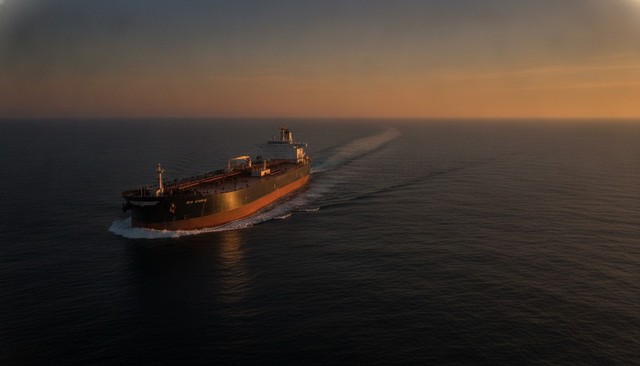
Global tanker freight has effectively separated into two markets. Cargo demand out of the US Gulf, Brazil and West Africa is absorbing prompt very large crude carrier tonnage in the Atlantic, while any vessel asked to trade east of Suez now carries an additional premium purely for Strait of Hormuz exposure.
Shipping and Logistics
13 September 2026 • 3 min read
Freight is no longer priced by distance and cargo alone. It is now priced by which side of Suez a ship is willing to trade on, and by what an underwriter charges to let it cross a single narrow waterway. For SADC importers, that split is the reason landed fuel and chemical costs are not falling.
The most recent published indications before the latest escalation placed additional Hormuz war-risk premiums at 7.5% to 12.5% of a vessel's hull value per transit. Before the conflict, the equivalent charge sat at roughly 0.25%. That is not a surcharge in any ordinary sense. It is a structural repricing of what it costs to put a ship into the Arabian Gulf at all.
Cover is also no longer uniform. Availability varies by vessel, by ownership and by individual voyage, and some underwriters have reduced their capacity or declined to quote at all. Crew safety requirements, revised charter-party terms and genuinely uncertain transit times stack further cost on top of the premium itself.
War-risk premium: 7.5%–12.5% of hull value per Hormuz transit, against approximately 0.25% before the conflict. (Source: Breakwave Advisors, 2026)
Iraq's Basrah exports recovered over August as selective access through Hormuz improved, rising from roughly 1.35 million barrels a day in July to about 2.35 million barrels a day once certain tankers were permitted to transit. Even so, volumes stayed below pre-war levels, and Basrah cargoes continue to depend on a much smaller pool of vessels willing and able to enter the Gulf.
That recovery has since been interrupted. Renewed attacks involving commercial tankers pushed commodity-vessel transits through the strait to their lowest level since May, with the direct targeting of merchant ships raising the risk of physical damage, delay and vessels being held inside the Gulf.
Firmer Atlantic enquiry is tying up prompt tonnage and limiting how many ships are available to ballast towards the Middle East. Owners weighing Arabian Gulf employment must price in security, insurance and operational exposure on top of the voyage itself, which raises the cost of attracting vessels east in the first place.
Brent crude has meanwhile climbed steadily into the mid to high $90s, although price volatility has compressed against the extreme spikes seen earlier in the conflict. The immediate freight picture is therefore being set by two separate forces: cargo absorption in the Atlantic basin, and restricted vessel participation in the east.
Southern Africa buys most of its refined fuel, base chemicals and lubricants out of Gulf and Indian refineries, which means SADC landed costs are set in the expensive basin, not the cheap one. Treat the Hormuz premium as a standing cost in your 2027 budget rather than a temporary spike, and ask your supplier or forwarder to show you the freight and war-risk components separately so you can see which part of a quote is actually negotiable.
Stay connected with Southern Africa's freight and transport community.
Join 6,400+ logistics professionals across the SADC region.
Visit Laaimylorrie.com| About the Author | |

|
Andre Klynsmith Entrepreneur & Technology Enthusiast Andre's expertise spans technology, blockchain, transport, and logistics -- with a passion for innovation and driving positive change across industries. |
| Source: Breakwave Advisors — Bi-Weekly Tanker Report View source › | 8 September 2026 |


Subscribe to our Newsletter and stay in the know with all the latest Industry News, Products and Trends covering the whole of the SADC region.
KS Blockchain T/A Laaimylorrie.com . All Rights Reserved.