Industry related headlines to keep you in the know.
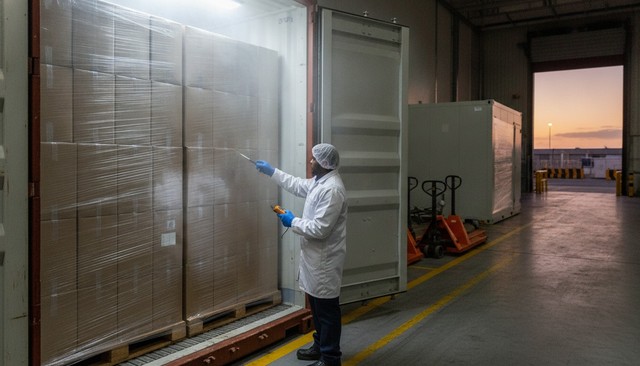
South Africa and Egypt have concluded negotiations on the Veterinary Health Certificate governing red meat exports, and shipments can be cleared to move once the final signatures are appended. The market access is real, but the handling standard it comes attached to is the part that will decide who actually loads.
Cargo Handling
13 September 2026 • 4 min read
Agriculture Minister Willie Aucamp announced the breakthrough at the Agri North West Congress, describing it as a major milestone for a sector navigating one of South Africa's biggest Foot-and-Mouth Disease outbreaks in decades. For hauliers and handlers, a veterinary certificate is not a diplomatic document - it is a chain of custody specification.
The Veterinary Health Certificate is the instrument through which two countries agree what may cross the border and under what conditions. It provides South African exporters with a clear regulatory framework for accessing the Egyptian market while ensuring animal health and food safety requirements are met. Once formally signed, it becomes the document every consignment must satisfy - not once at the point of approval, but on every load.
That distinction matters to everyone downstream of the abattoir. A VHC typically governs which establishments may produce for the market, which zones animals may originate from, how product is chilled or frozen and held, how consignments are sealed and identified, and what inspection and documentation must accompany them. Each of those clauses becomes a physical handling requirement somewhere between the slaughter floor and the ship's reefer socket.
Minister Willie Aucamp: "This is a major milestone for South Africa's agricultural sector, which has been facing one of the biggest Foot-and-Mouth Disease outbreaks in decades." (Source: SAnews.gov.za, 2026)
South Africa is opening this market while still managing a severe Foot-and-Mouth Disease outbreak, and that context runs through the entire operation. Disease control works by geography: movement controls, zoning and traceability determine which animals may enter which establishments, and which establishments may produce for which destination. A consignment's eligibility is therefore established long before it reaches a cold store, and it can be lost by a documentation failure that has nothing to do with product quality.
For transporters this raises the consequences of ordinary mistakes. Mixing loads, an unrecorded transfer between vehicles, a broken seal replaced without documentation, or a temperature excursion during a border delay can each render a consignment ineligible rather than merely late. In a market being entered under active disease-control scrutiny, a single rejected consignment does more damage than the value of the cargo, because it lands on the credibility of the whole protocol.
Egypt is a genuinely useful destination for the sector precisely because it is large and comparatively close by sea, but the route is not short in operating terms. Red meat leaving inland abattoirs must reach a port, hold temperature through loading and berth waiting, secure a reefer slot on a northbound service and survive discharge and clearance at the other end. Every one of those steps is a place where the chain of custody can break.
Reefer capacity at South African ports is already under visible pressure, which makes port dwell the highest-risk segment of the journey rather than the road leg. Operators quoting this lane should be explicit about what happens if a vessel slips: who carries the cost of extended plug-in time, who authorises a diversion to alternative cold storage, and how a temperature record is preserved and handed over when a consignment changes hands under pressure.
Read the signed Veterinary Health Certificate before quoting this lane, not after - it defines the seal, temperature, identification and documentation obligations you will be held to. Build a continuous, exportable temperature and seal record covering every handover, including port dwell, and agree in writing who pays for extended reefer plug-in if a vessel is delayed. Reefer operators and cold stores near the export ports should treat this as a demand signal: a new red meat lane adds pre-shipment holding requirements before it adds sea freight volume.
Stay connected with Southern Africa's freight and transport community.
Join 6,400+ logistics professionals across the SADC region.
Visit Laaimylorrie.com| About the Author | |

|
Andre Klynsmith Entrepreneur & Technology Enthusiast Andre's expertise spans technology, blockchain, transport, and logistics - with a passion for innovation and driving positive change across industries. |
| Source: SAnews.gov.za View source › | 7 September 2026 |


Subscribe to our Newsletter and stay in the know with all the latest Industry News, Products and Trends covering the whole of the SADC region.
KS Blockchain T/A Laaimylorrie.com . All Rights Reserved.