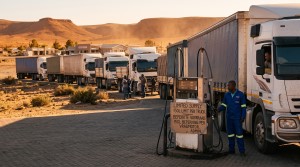
Industry related headlines to keep you in the know.
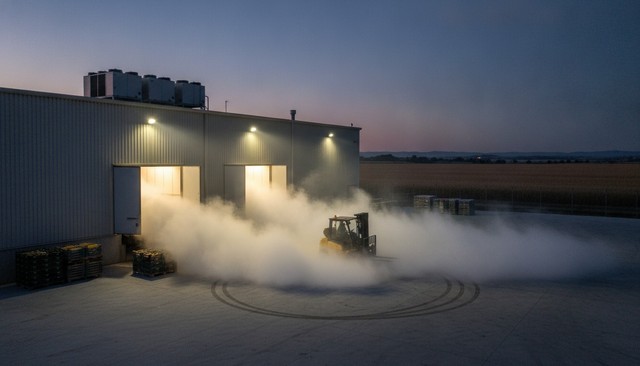
South Africa has roughly 420 000 pallet positions in dedicated third-party cold storage, and more than 80% of that capacity sits in just three provinces — a concentration that quietly sets the routing for a large share of the country's temperature-controlled freight.
Warehousing and Storage
12 September 2026 • 5 min read
A frozen-goods producer in Mbombela who needs five pallets of storage is, in practice, looking at Johannesburg — 350 kilometres away. That single fact creates freight demand, and it also explains why so much South African produce is trucked long before it is chilled.
A systematic documentation exercise by ColdChainSA put dedicated third-party cold storage at approximately 420 000 pallet positions nationally, distributed overwhelmingly toward the metropolitan corridors: roughly 180 000 pallets in Gauteng, 120 000 in the Western Cape and 90 000 in KwaZulu-Natal. The Eastern Cape adds about 31 000, almost all of it dedicated to citrus export through Coega and Gqeberha. The remaining provinces share a small fraction of dedicated capacity, and in several the assessment struggled to identify any third-party facility at all.
Ownership is similarly concentrated. Commercial Cold Holdings, backed by African Infrastructure Investment Managers, has assembled a platform exceeding 160 000 pallet positions through successive acquisitions, while Maersk operates more than 32 000 pallets through facilities including Belcon and Cato Ridge. Vector Logistics runs 22 multi-temperature distribution centres across South Africa, Namibia and Botswana — a regional footprint, but one serving contracted principals rather than the open market.
The access gap: Across all nine provinces, only four facilities were confirmed as actively offering flexible, short-term cold storage to SME operators — and all four are in Gauteng. (Source: ColdChainSA provincial assessment, 2026)
The gaps are not in empty country. Limpopo produces roughly 60% of South Africa's tomatoes, 75% of its mangoes and 65% of its papayas, and is the largest citrus production area by planted hectares. Mpumalanga carries about 8% of national citrus area alongside significant subtropical fruit and sugar output. The Garden Route, stretching more than 300 kilometres from George through Knysna to Plettenberg Bay, has no dedicated cold storage facility at all.
Cold chain infrastructure does exist in these provinces — foodservice distributors and retailers operate branches in Nelspruit, Polokwane and Bloemfontein — but it sits inside closed commercial ecosystems serving contracted customers and owned supply chains. An independent producer cannot store inventory there. The infrastructure gap is not primarily about tonnage; it is about market-accessible tonnage.
One finding deserves the attention of every refrigerated operator in the region: long-haul reefer transporters have built their own cold storage because the market did not supply it. Operators including Hestony Transport, LMC Express, HFR Transport, SPH Transport and Coldsure Distribution Services maintain depot facilities carrying typically 200 to 500-plus pallets each, estimated at an additional 10 000 to 15 000 pallet positions nationally. Hestony — a fleet exceeding 1 000 vehicles — is headquartered in Bloemfontein precisely for its central position on the N1 and N8, yet the assessment found no significant third-party cold storage serving the general market there.
The consequence runs beyond inconvenience. The CSIR reports South Africa losing approximately 10.3 million tonnes of food a year, with 68% of losses occurring in early supply chain stages including post-harvest handling and storage. Every additional hundred kilometres between harvest and the first chilled pallet position is a temperature-excursion opportunity. South Africa's cold chain market was valued at about USD 6.3 billion in 2023 and is projected to reach USD 20.6 billion by 2030 — growth that has to be built somewhere, and the empty provinces are where the space is.
If you run reefer capacity, the concentration map is a demand map: long empty-to-load legs into Limpopo, Mpumalanga and the Garden Route are structural, not seasonal, and should be priced accordingly. If you already hold depot cold storage, off-peak or overflow capacity sold to third parties is revenue from an asset you have already paid for — and a differentiator no rate card can copy. For operators in Namibia, Botswana, Zambia and Zimbabwe, the same pattern of captive-versus-accessible capacity is worth auditing before committing to perishable contracts.
Stay connected with Southern Africa's freight and transport community.
Join 6,400+ logistics professionals across the SADC region.
Visit Laaimylorrie.com| About the Author | |

|
Andre Klynsmith Entrepreneur & Technology Enthusiast Andre's expertise spans technology, blockchain, transport, and logistics — with a passion for innovation and driving positive change across industries. |
| Source: ColdChainSA View source › | Updated March 2026 |


Subscribe to our Newsletter and stay in the know with all the latest Industry News, Products and Trends covering the whole of the SADC region.
KS Blockchain T/A Laaimylorrie.com . All Rights Reserved.