Industry related headlines to keep you in the know.
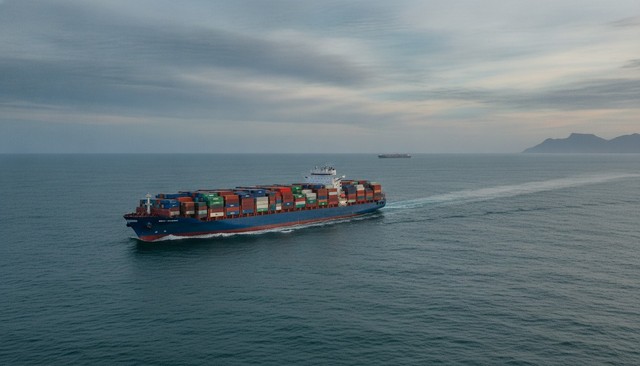
Suez Canal traffic has climbed to its highest weekly level since the start of 2024, but the carriers using it are not the same ones that left. Some liner operators are moving services back through the Red Sea while others are pulling Asia–Europe strings in the opposite direction, around the Cape of Good Hope.
Shipping and Logistics
11 September 2026 • 4 min read
Around 290 ships were tracked through the Red Sea's northern chokepoint in late August — still 36% below normal, but 30% higher than the same period in 2025. For Southern African ports that have spent two years absorbing diverted traffic, the Cape route has stopped being a one-way bet.
Weekly transits through the Suez Canal have now held at elevated levels for a second consecutive week, reaching a mark not seen since the beginning of 2024. Roughly 290 vessels were tracked passing the northern Red Sea chokepoint in late August. That figure sits about 36% below pre-crisis normal volumes, yet it is approximately 30% above the equivalent period last year.
The distinction matters. This is a recovery measured against a collapsed baseline, not a restoration of the pre-2024 route map. Renewed Houthi threats through the northern summer did not reverse the trend, but underwriters continue to classify the corridor as high risk, and the carriers testing it are doing so service by service rather than fleet-wide.
Transit count: Approximately 290 ships transited the Red Sea's northern chokepoint in late August 2026 — 36% below normal levels, but 30% higher than the same period in 2025. (Source: Lloyd's List Intelligence, 2026)
The divergence is visible in published service notices. Hapag-Lloyd moved its SE3 service back onto the Red Sea routing in July 2026, having previously run it via the Cape. In the same broad window, CMA CGM reversed plans to expand its Suez and Red Sea transits, instead rerouting three major Asia–Europe services via the longer Cape of Good Hope passage. Maersk, meanwhile, paused Trans-Suez sailings and moved its ME11 and MECL services around the Cape on security grounds.
Those are not contradictory decisions so much as different risk appetites applied to different trades, vessel values, crew nationalities, charter terms and insurance arrangements. The practical result is a network in which two route maps operate simultaneously, and in which a shipper's transit time now depends less on the lane than on which carrier's string the box happens to sit in.
A uniform detour is inconvenient but stable. Everyone adds the same two weeks, schedules re-sequence around the new normal, and inland planning adjusts once. A split network removes that stability. Two shipments booked in the same week on the same origin–destination pair can now arrive a fortnight apart depending on carrier routing, and the gap can change at the next service review.
For Southern African operators the consequence runs in two directions. Vessel volumes passing the Cape — and the bunkering, stores, crew-change and repair demand that travels with them — are no longer a structural given. At the same time, import arrival dates into Durban, Cape Town, Walvis Bay and Beira become less predictable, because European and Asian transhipment schedules feeding regional services are themselves de-synchronised.
Stop treating the Cape detour as a permanent baseline and start tracking routing at carrier and service level, because that is now where transit time is decided. Forwarders should ask for the routing on each quoted string in writing, and inland transporters holding capacity against import arrivals should widen their booking windows rather than assume the two-year detour pattern still holds.
Stay connected with Southern Africa's freight and transport community.
Join 6,400+ logistics professionals across the SADC region.
Visit Laaimylorrie.com| About the Author | |

|
Andre Klynsmith Entrepreneur & Technology Enthusiast Andre's expertise spans technology, blockchain, transport, and logistics — with a passion for innovation and driving positive change across industries. |
| Source: Lloyd's List Intelligence — Red Sea Brief View source › | 3 September 2026 |


Subscribe to our Newsletter and stay in the know with all the latest Industry News, Products and Trends covering the whole of the SADC region.
KS Blockchain T/A Laaimylorrie.com . All Rights Reserved.