Industry related headlines to keep you in the know.
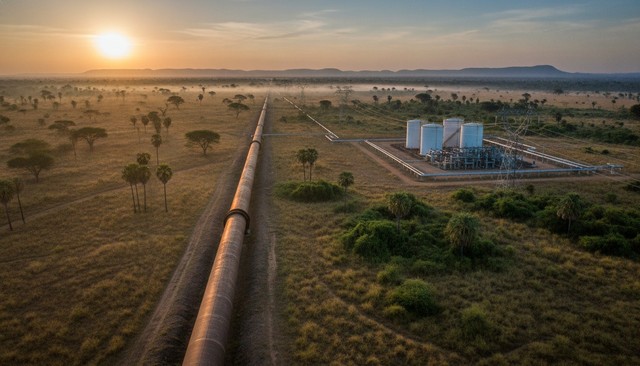
Mozambican pipeline operator Companhia do Pipeline Moçambique-Zimbabwe has broken ground on an expansion that will raise the Beira-Feruka fuel pipeline's annual capacity by 67% — from three million to five million cubic metres — by the end of 2027.
SUPPLY CHAIN MANAGEMENT
9 September 2026 • 4 min read
Roughly two billion additional litres of fuel a year will be able to move from the Port of Beira into the southern African interior once the expansion is commissioned. For landlocked SADC markets that currently rely on road tankers for a share of their supply, this is the most consequential fuel logistics project in the region right now.
The existing line runs 294 kilometres, carrying refined petroleum products from the Port of Beira to Feruka in Zimbabwe, and forms part of the wider Beira Corridor linking the Mozambican port to Zimbabwe and other landlocked southern African economies. The expansion adds new pumping stations at Nhamatanda in Sofala Province and Messica in Manica Province, near the Zimbabwean border.
CPMZ says the work is being synchronised with the planned expansion of the Petrozim pipeline between Feruka and Harare, so that the higher capacity runs continuously from the coast into the hinterland rather than stopping at a bottleneck. Construction and commissioning are to take place without interrupting existing pipeline operations or fuel supplies to the markets served by the corridor.
The volume: annual transport capacity rises from three million to five million cubic metres — roughly two billion additional litres of diesel, petrol and jet fuel a year moving inland from Beira. (Source: Companhia do Pipeline Moçambique-Zimbabwe via Freight News, 2026)
CPMZ frames the expansion as supporting growing demand for diesel, petrol and jet fuel in Mozambique and Zimbabwe, and in regional markets including Zambia, Malawi, Botswana and the Democratic Republic of the Congo. That list is the important part. Beira has always been the natural port for Zimbabwe, but the reach into Zambia, Malawi and the DRC positions the corridor as a competitor to fuel routed through Dar es Salaam, Durban and Walvis Bay.
Mozambican President Daniel Chapo described the project as an investment in the country's infrastructure and in regional energy security, saying that strengthening the connection between Beira and the southern African hinterland reinforces Mozambique's role as a strategic gateway for regional trade. Zimbabwean President Emmerson Mnangagwa said the strengthened corridor would support Zimbabwe's energy security while creating additional capacity to serve markets beyond its borders.
This is the second increase in three years. An earlier project completed in 2024 lifted annual capacity from two million to three million cubic metres. Preliminary studies are now assessing replacing the existing pipeline with a larger-diameter line, which CPMZ says could take annual capacity to approximately 12 million cubic metres and cover projected regional demand through to 2050. A possible extension of the Harare-Lusaka route into Zambia's Copperbelt is also being evaluated.
For road transport operators, that trajectory reads two ways. Pipeline capacity substitutes directly for tanker kilometres on the Beira-Harare leg, which will compress a segment of the fuel haulage market over time. But pipeline product still needs distribution from Feruka, Harare and any future Copperbelt terminal to depots, mines and filling stations. The work does not disappear — it moves closer to the customer and shortens in average length, which changes fleet mix, turnaround planning and the economics of long-haul tanker assets built for coast-to-interior runs.
Fuel hauliers running Beira-Harare and onward legs should treat end-2027 as a planning date, not a distant one: long-haul tanker demand on that corridor will thin as pipeline volume rises, while short-haul distribution from inland terminals grows. If your tanker fleet is financed on multi-year terms, check that the residual assumptions still hold under a scenario where the coast-to-Harare leg largely moves underground. For importers and industrial fuel users in Zimbabwe, Zambia, Malawi and the DRC, a more reliable Beira route is a genuine second option worth pricing against your current supply arrangement.
Stay connected with Southern Africa's freight and transport community.
Join 6,400+ logistics professionals across the SADC region.
Visit Laaimylorrie.com| About the Author | |

|
Andre Klynsmith Entrepreneur & Technology Enthusiast Andre's expertise spans technology, blockchain, transport, and logistics — with a passion for innovation and driving positive change across industries. |
| Source: Freight News View source › | 7 September 2026 |


Subscribe to our Newsletter and stay in the know with all the latest Industry News, Products and Trends covering the whole of the SADC region.
KS Blockchain T/A Laaimylorrie.com . All Rights Reserved.