Industry related headlines to keep you in the know.
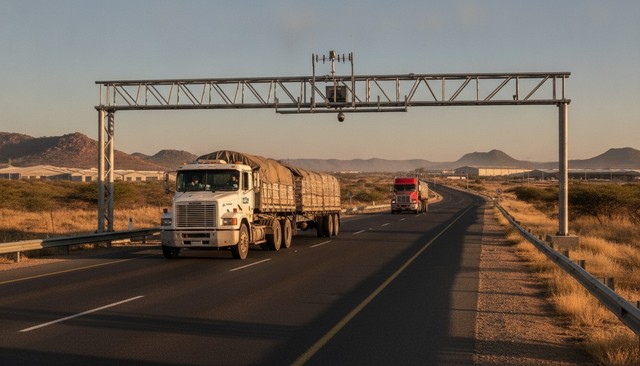
The City of Windhoek has introduced a permit system controlling which freight vehicles of nine tonnes gross vehicle mass and above may use its urban road network. The rules took effect on 1 September 2026, with camera-based monitoring and spot fine enforcement starting on 1 October.
FLEET MANAGEMENT
9 September 2026 • 4 min read
Trucks passing through Windhoek without business in the city must now use the bypass. Those with a legitimate delivery or collection may use five named routes without a permit — anything beyond that needs paperwork, a fee and a permit disc on the windscreen. Operators have until 1 October before cameras start writing fines.
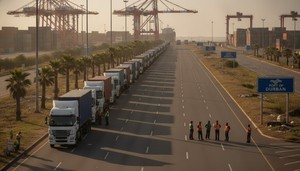
The threshold is gross vehicle mass of nine tonnes or more. Vehicles at or above that mass travelling through Windhoek without making a delivery, a collection or conducting other authorised business in the city are required to use the bypass road. The municipality has been explicit that this is not a ban on freight entering the capital: the intent is that trucks enter the urban area only where there is a genuine operational reason to be there, while through traffic keeps moving around it.
Windhoek-bound vehicles may use designated routes to reach identified industrial areas without a permit. Those routes are Sam Nujoma Drive, Nelson Mandela Avenue, Robert Mugabe Avenue, Mandume Ndemufayo Avenue and David Hosea Meroro Road. The permit requirement bites when a vehicle needs to leave those authorised routes and enter load-restricted areas — which, in practice, is where a large share of delivery addresses sit.
The cost line: a non-refundable application fee of N$600 per permit, plus a monthly fee by gross vehicle mass — N$120 for 9 to 15 tonnes, N$250 for 15 to below 24 tonnes, N$350 for 24 to 32 tonnes and N$500 a month for anything above 32 tonnes. (Source: City of Windhoek Heavy Vehicle Access and Permit System information sheet, 2026)
From 1 October, cameras positioned at strategic entry and exit points will monitor heavy vehicle movements and permit compliance, backed by roadside inspections by Windhoek City Police. Approved operators receive a permit disc that must be displayed on the vehicle, so enforcement is designed to work both automatically and on the roadside.
Applications may cover a period of one to 12 months, and the city asks for at least two working days to process a complete application. Military vehicles, emergency response vehicles and registered refuse removal trucks are exempt; any other exemption or special authorisation must be confirmed by the city in writing. That last point matters — a verbal assurance at a depot gate is not an exemption.
The municipality lists road deterioration, congestion, safety risk, noise, emissions and illegal truck parking as the problems it is trying to solve. Windhoek sits on the Trans-Kalahari and Trans-Cunene routes and carries a large volume of trucks that have no destination inside the city at all — vehicles running between Walvis Bay and the northern regions, Botswana or Angola. Pushing that traffic onto the bypass is a cheaper intervention than rebuilding urban pavements designed for lighter axle loads.
For operators, the substantive change is administrative rather than financial. N$500 a month on a 34-tonne combination is a rounding error against fuel and tyres. The risk sits in the vehicles that fall through the cracks: subcontracted trucks, one-off backloads, a hired unit covering a breakdown, or a driver who assumes the permit on his usual tractor covers the replacement he collected that morning. Those are the units that will meet a camera on 1 October without a disc.
If you deliver into or collect from Windhoek with vehicles of nine tonnes GVM or more, use the September transition month to audit which units actually enter load-restricted areas and apply for those permits now — the city needs two working days per application, and a 12-month permit removes the monthly administrative churn. Cross-border operators simply transiting to the north, Botswana or Angola should brief drivers on the bypass requirement before October, and freight forwarders quoting Windhoek deliveries should decide whether the permit cost is absorbed or itemised before customers see it appear on an invoice.
Stay connected with Southern Africa's freight and transport community.
Join 6,400+ logistics professionals across the SADC region.
Visit Laaimylorrie.com| About the Author | |

|
Andre Klynsmith Entrepreneur & Technology Enthusiast Andre's expertise spans technology, blockchain, transport, and logistics — with a passion for innovation and driving positive change across industries. |
| Source: Freight News View source › | 8 September 2026 |


Subscribe to our Newsletter and stay in the know with all the latest Industry News, Products and Trends covering the whole of the SADC region.
KS Blockchain T/A Laaimylorrie.com . All Rights Reserved.