Industry related headlines to keep you in the know.
Freight volumes through the Port of Walvis Bay fell against the corresponding 2025 period during the 2026 fiscal year, and the cause was not a port problem, a corridor problem or a competitor. It was the water level at Kariba Dam.
Mining and Commodities
28 August 2026 • 5 min read
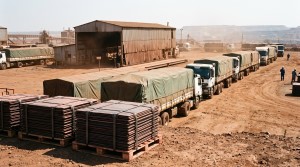
Drought cut Kariba's water. Low water cut Zambia's generation. Load-shedding cut mining and processing output on the Copperbelt. Less concentrate produced meant less concentrate available to export — and a corridor 1,600km away recorded lower volumes. For anyone whose business depends on mineral freight, that chain is the single most useful thing to understand this year.
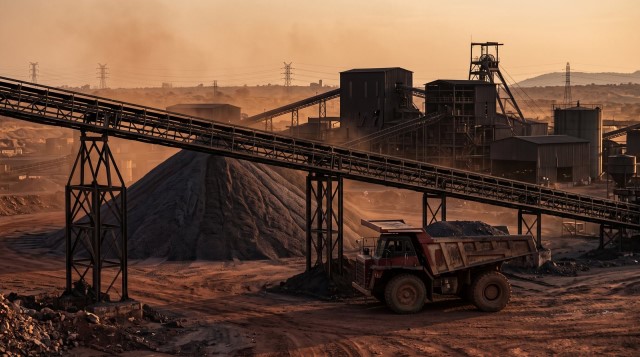
Namibia's exposure to Zambia's mining sector was laid bare during the 2026 fiscal year. Drought-related water shortages at Kariba contributed to severe electricity shortages and load-shedding across Zambia. Mining and processing operations on the Copperbelt run on that power. When it is rationed, mills run fewer hours, smelters and concentrators throttle back, and the volume of copper concentrate available for export falls.
That reduction showed up as a decline in freight volumes handled through Walvis Bay compared with the corresponding period in 2025. No border closed. No road washed away. No shipper switched corridors. The tonnage simply was not produced.
The transmission chain: Kariba drought → Zambian generation shortfall and load-shedding → reduced Copperbelt mining and processing output → less copper concentrate available for export → lower freight volumes through Walvis Bay in FY2026 versus 2025. (Source: Simonis Storm Securities via Windhoek Observer, August 2026)
Namibia does face genuine corridor competition. Angola's Lobito Corridor, built on the rehabilitated Benguela Railway running from the Atlantic port of Lobito through eastern Angola to the DRC–Zambia border area, is being developed explicitly as an alternative export route for Copperbelt minerals. That competition is real and it is intensifying.
But Namibia's distance case remains strong: for copper originating in the western Copperbelt, the Walvis Bay route is estimated at 1,500km to 2,000km shorter than either Dar es Salaam or Durban, which converts directly into lower transport cost and shorter transit. The competitive question is about share of a pool. The Kariba question is about the size of the pool itself. Operators tend to spend their attention on the first and get surprised by the second.
If your fleet, warehouse or forwarding book is levered to Copperbelt minerals, your leading indicators are not freight indicators. They are Kariba lake levels and Zambian generation and load-shedding schedules, published well before the tonnage arrives at your gate. A power crisis reads through to your load board with a lag of weeks, and a recovery does the same in the opposite direction.
The same logic applies to capacity commitments. Committing trucks, tank capacity or bonded warehouse space against Copperbelt volume for a full year assumes a production profile that a hydrology cycle can override. Shorter commitment periods, volume bands rather than fixed tonnages, and contract language that recognises force majeure on the production side are all reasonable responses to a corridor whose throughput is partly a function of rainfall in the Zambezi catchment.
Add Zambian power and Kariba lake levels to whatever you already monitor for the Walvis Bay, Kasumbalesa and Trans-Caprivi lanes — they are a better six-to-eight-week forecast of mineral tonnage than any freight index. Structure Copperbelt capacity commitments in bands rather than fixed volumes, and keep a second commodity or a second corridor in the mix so a production shortfall does not empty your whole schedule. And when volumes fall, diagnose it properly: losing tonnage to Lobito and losing tonnage that was never mined require completely different responses.
Stay connected with Southern Africa's freight and transport community.
Join 6,400+ logistics professionals across the SADC region.
Visit Laaimylorrie.com| About the Author | |

|
Andre Klynsmith Entrepreneur & Technology Enthusiast Andre's expertise spans technology, blockchain, transport, and logistics -- with a passion for innovation and driving positive change across industries. |
| Source: Windhoek Observer — Namibia faces race to secure Copperbelt freight View source › | August 2026 |


Subscribe to our Newsletter and stay in the know with all the latest Industry News, Products and Trends covering the whole of the SADC region.
KS Blockchain T/A Laaimylorrie.com . All Rights Reserved.