Industry related headlines to keep you in the know.
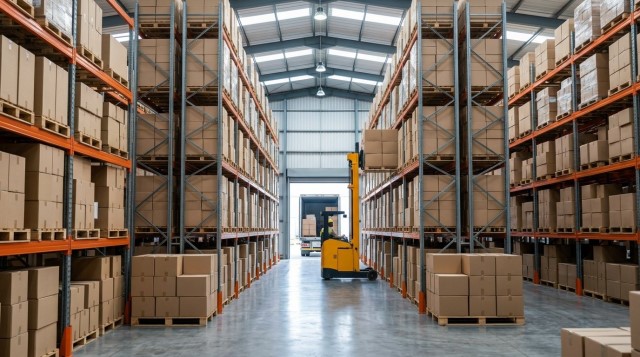
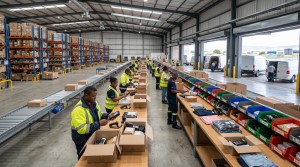
South Africa's national industrial vacancy rate is sitting at roughly 4%, and in the most sought-after logistics precincts A-grade vacancy is effectively below 1% — which means the warehouse your network design assumes will be available probably is not.
Warehousing and Storage
27 August 2026 • 5 min read
Prime industrial rentals are up around 8% year on year, Cape Town vacancy is down to about 3.3%, and new supply is not keeping pace with demand from logistics, warehousing and light manufacturing occupiers. For freight operators, this stopped being a property-market story the moment it started dictating where cargo can be staged.
The Rode Report put national industrial vacancy at about 4% in the first quarter of 2026, against 3.7% a year earlier — a slight loosening at the headline level that conceals a much tighter picture underneath. Broker data for 2026 puts the national figure closer to 3.8% and Cape Town at approximately 3.3%, with A-grade space in the strongest nodes running at effectively full occupancy. Year-on-year growth in prime rentals sits at around 8%.
Two forces are driving this. Demand from logistics and light-manufacturing occupiers has held up despite a weak general economy, pushed along by e-commerce fulfilment requirements that need more space closer to the consumer. Supply has not responded, because development economics under current construction costs and financing rates only work for tenants willing to sign long leases at rentals many operators cannot carry.
The gap that matters: a headline vacancy rate near 4% still describes a functioning market. A-grade vacancy below 1% in prime nodes describes a market where the specific building you need, in the specific place you need it, does not exist. (Source: Rode Report Q1 2026 / Galetti, 2026)
Every routing decision in a freight business rests on an assumption about where cargo can sit. A cross-dock near the port, a bonded facility close to the border, a staging yard within reach of the customer's delivery window — these are the fixed points a schedule is built around. When those points become unavailable, the transport plan changes even though nothing about the vehicles or the drivers has changed.
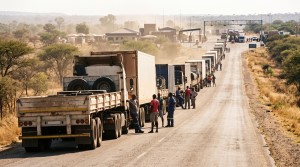
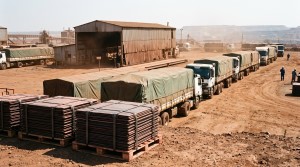
The substitutions are all expensive. Taking space further out adds a leg. Splitting a requirement across two smaller sites adds double handling and a second set of overheads. Holding cargo on trailers because there is nowhere to tip it converts a warehousing problem into a fleet utilisation problem, and trailers used as storage are the most costly warehouse in the business. None of these costs appear in a property report, and all of them appear on a transport operator's income statement.
Scarcity in Gauteng, Durban and Cape Town changes the arithmetic on where regional cargo consolidates. If bonded and transit storage in South Africa's core nodes is priced at a premium and hard to secure at short notice, the case for consolidating Zambian, Zimbabwean, Botswanan and Namibian volumes closer to their own markets — or at the western gateway rather than the eastern one — improves without any corridor investment being announced.
There is a related risk worth naming. Tight markets favour incumbents with balance sheets. A landlord choosing between a national retailer on a ten-year lease and a twelve-truck operator wanting three years will take the retailer every time. The practical effect is that the operators who most need flexible, short-term space are the ones least likely to get it — which quietly concentrates warehousing-linked contract work among larger players, in the same way that compliance-linked work already does.
Start any lease renewal conversation twelve months out, not three, and assume the renewal will be at a materially higher rate. If you are quoting on new contract work that depends on securing space, confirm the space before you confirm the price — the rental has moved enough to erase a thin margin on its own. And run the number on what trailer-based storage is actually costing you per pallet position; in most fleets it is the single most expensive square metre in the operation and nobody has ever measured it.
Stay connected with Southern Africa's freight and transport community.
Join 6,400+ logistics professionals across the SADC region.
Visit Laaimylorrie.com| About the Author | |

|
Andre Klynsmith Entrepreneur & Technology Enthusiast Andre's expertise spans technology, blockchain, transport, and logistics -- with a passion for innovation and driving positive change across industries. |
| Source: Rode Report Q1 2026 / Galetti Corporate Real Estate — Industrial Real Estate Trends South Africa 2026 View source › | August 2026 |


Subscribe to our Newsletter and stay in the know with all the latest Industry News, Products and Trends covering the whole of the SADC region.
KS Blockchain T/A Laaimylorrie.com . All Rights Reserved.