Industry related headlines to keep you in the know.
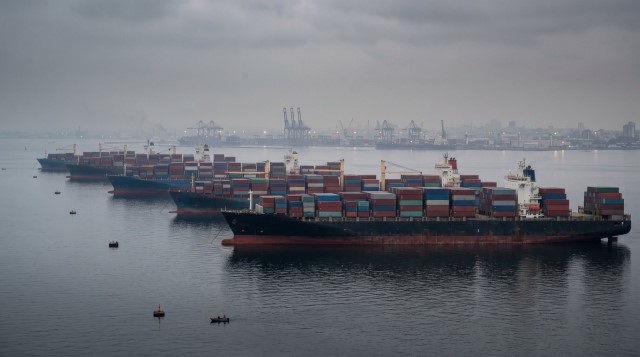
Roughly 1.85 million TEU of container ship capacity was sitting at anchor rather than sailing in late August 2026, according to a Kuehne+Nagel market update published on 21 August. The freight forwarder puts 4.55% of the world's container vessel capacity in queues outside the 45 ports it monitors through its seaexplorer Anchorage Congestion Indicator.
Shipping and Logistics
25 August 2026 • 5 min read
A ship waiting at anchor is not late in the way a truck is late. It is capacity that has been removed from the trade entirely for the duration of the wait. When that happens at scale, the effect reaches SADC importers as blank sailings, rolled bookings and schedules that stop matching the rate sheet -- long before it shows up as a headline about congestion.
The distinction matters commercially. A vessel that waits four days outside a European or Asian gateway does not simply arrive four days late at its next port. It falls out of its rotation, and the operator has to decide whether to skip a call, cut a port, or run the loop short. Each of those decisions removes sailings from the schedule that a SADC importer has already booked against.
Congestion in late August was reported across Northern Europe, China, Brazil, West Africa and India -- a spread wide enough that a shipper cannot route around it by changing origin. Red Sea diversions continue to absorb capacity on top of that, with many services still running via the Cape of Good Hope and adding sea days to voyages that were priced on a shorter routing.
The number to hold onto: 4.55% of global container vessel capacity was waiting outside the 45 ports monitored by the seaexplorer Anchorage Congestion Indicator -- approximately 1.85 million TEU. (Source: Kuehne+Nagel market update, 21 August 2026)
Kuehne+Nagel's weekly African port readings give the regional detail. Durban's seven-day average vessel waiting time sat at around 3.25 days in early August, with terminal-level delays of three to four days at Pier 1 and five to nine days at Pier 2, attributed to equipment shortages and productivity constraints. Vessel schedules were reported as affected, with possible rerouting and port omissions.
Beira, the natural alternative for Zimbabwean, Zambian and Malawian cargo, was worse: a seven-day average waiting time of roughly 15.3 days, with delays reported of up to 30 days and terminal recovery not expected before weeks 40 to 43 of the year. Dar es Salaam sat at about 1.33 days, with inland evacuation pressure. The relief valve, in other words, is not currently a relief valve.
Withdrawn capacity tightens space before it moves price. For SADC importers building fourth-quarter and festive-season stock, the practical risk is not the freight rate on the quotation -- it is whether the booking actually sails on the week it was accepted for. Rolled containers do not appear on a rate sheet, but they consume the same buffer that a late vessel does.
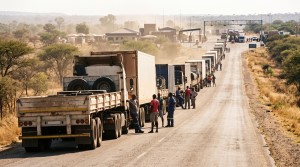
For road hauliers contracted to evacuate that cargo inland, the exposure is the mirror image: trucks positioned for an arrival window that moves, then a bunched arrival when three delayed vessels discharge in the same week. Neither the standing time nor the peak-week surge is usually priced into an annual rate agreement.
Book fourth-quarter volumes earlier than last year and treat the confirmed sailing date, not the rate, as the thing worth negotiating. Check the vessel waiting time at both the discharge port and the alternative before committing an inland delivery date -- Beira is not currently the faster way in. If you are hauling, quote port collection with a measured waiting-time component rather than an all-in figure that silently absorbs a bunched arrival week.
Stay connected with Southern Africa's freight and transport community.
Join 6,400+ logistics professionals across the SADC region.
Visit Laaimylorrie.com| About the Author | |

|
Andre Klynsmith Entrepreneur & Technology Enthusiast Andre's expertise spans technology, blockchain, transport, and logistics -- with a passion for innovation and driving positive change across industries. |
| Source: Freight News -- "Port congestion ties up 1.85m TEUs of capacity" View source › | August 2026 |


Subscribe to our Newsletter and stay in the know with all the latest Industry News, Products and Trends covering the whole of the SADC region.
KS Blockchain T/A Laaimylorrie.com . All Rights Reserved.