Industry related headlines to keep you in the know.
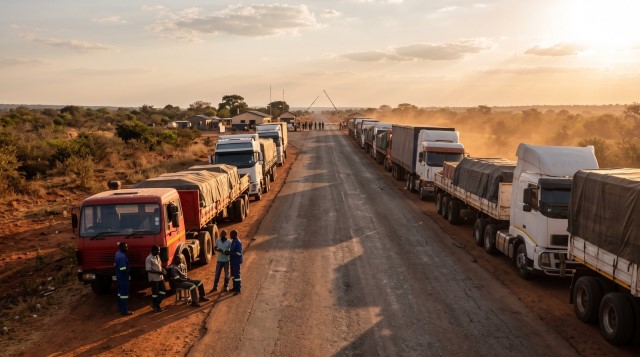
Cargo moving northbound from Durban to Kasumbalesa takes an average of more than 15 days from clearance to delivery, according to a Time Release Study on the North-South Corridor cited by TradeMark Africa. Very little of that is sailing time, and almost none of it is line-haul.
Transportation
24 August 2026 • 5 min read
South Africa's ports have spent two years getting measurably better. The corridor they feed has not improved at anything like the same rate. When the gains made at the quayside are given back at a border 2,000 kilometres inland, the customer experiences no improvement at all -- and the transporter carries the argument.
TradeMark Africa's analysis names border delays, customs inefficiency and logistics bottlenecks as the principal barriers to the trade growth the African Continental Free Trade Area is meant to unlock. The Time Release Study it points to measured the North-South Corridor end to end and identified bottlenecks at the major crossings, Beitbridge and Chirundu among them, with the Durban to Kasumbalesa leg averaging more than 15 days.
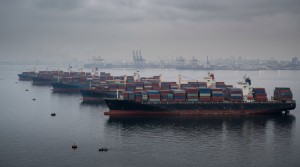
That figure deserves to be read alongside the port numbers, not instead of them. Transnet's terminals have posted their strongest tonnage in more than a decade and Durban has been rated among the most improved container ports globally. Both things are true at once: the maritime leg is getting faster and the delivered transit time to the Copperbelt is not moving with it.
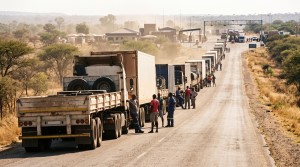
Where the days sit: Average crossing time at Kasumbalesa on the Zambia-DRC border has exceeded 100 hours -- more than four days at a single crossing, on a corridor whose total measured clearance and transit is around 15 days. (Source: TradeMark Africa North-South Corridor Time Release Study, 2026)
The study attributes the delay to cumbersome procedures, uncoordinated operations between agencies, and infrastructure constraints -- in that order. That ordering matters to anyone budgeting for the corridor. Road condition and distance are real costs, but they are predictable costs. Documentary and inspection sequencing is where the variance lives, and variance is what breaks a delivery promise.
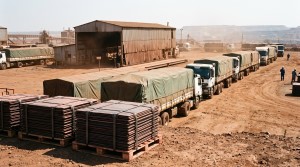
Kasumbalesa is the clearest example. It is the convergence point for traffic off several corridors, and processing on one side of the line does not automatically release a truck on the other. Beitbridge, Chirundu and Kazungula each carry their own version of the same problem: two administrations, two sets of systems, and a queue that forms whenever the two fall out of step.
The recommendations coming out of the study -- integrated corridor management, stronger co-operation between border agencies, better customs processes and greater digital interoperability -- are policy work, and they will move at policy speed. None of it changes a truck's cycle time this quarter. What does change it is measurement discipline at the operator's own level.
Record arrival, submission, release and departure as four separate timestamps at every crossing on a lane, and the corridor stops being one 15-day number and becomes a series of segments with owners. That is the only version of the data that supports a rate conversation, a route comparison, or a credible delivery window.
Stop quoting the Copperbelt off a port-to-door average. Break the lane into measured segments, price border dwell as a named line item with a free period rather than burying it in the rand-per-kilometre, and keep your own timestamp record -- when a customer disputes a late delivery, segment data is the difference between an explanation and an argument.
Stay connected with Southern Africa's freight and transport community.
Join 6,400+ logistics professionals across the SADC region.
Visit Laaimylorrie.com| About the Author | |

|
Andre Klynsmith Entrepreneur & Technology Enthusiast Andre's expertise spans technology, blockchain, transport, and logistics -- with a passion for innovation and driving positive change across industries. |
| Source: Freight News -- Border delays undermine Durban gains (TradeMark Africa) View source › | August 2026 |


Subscribe to our Newsletter and stay in the know with all the latest Industry News, Products and Trends covering the whole of the SADC region.
KS Blockchain T/A Laaimylorrie.com . All Rights Reserved.