Industry related headlines to keep you in the know.
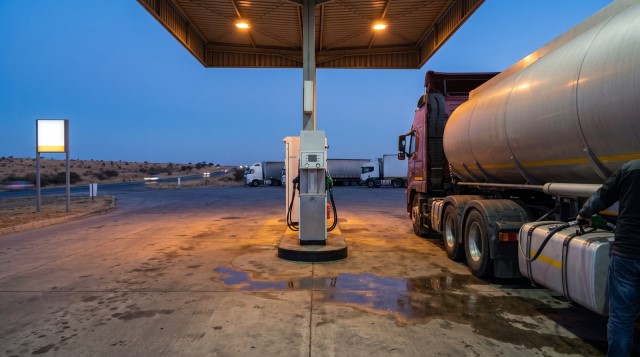
South Africa's Clean Fuels 2 regulation will cut diesel and petrol sulphur to 10 parts per million, but the deadline sits in July 2027 and 50ppm remains the grade most commonly available at the pump today. Every fleet specifying a truck with a diesel particulate filter or selective catalytic reduction system between now and then is making a fuel bet, not just a vehicle choice.
Asset Management
21 August 2026 • 5 min read
Modern aftertreatment is the most fuel-sensitive component ever fitted to a commercial vehicle. In a market still running two diesel grades and a refinery upgrade programme that is not finished, the fuel a truck actually drinks over five years is now one of the largest single variables in its whole-life cost -- and in what it is worth when you sell it.
South Africa sells diesel in two main grades. The 50ppm grade -- a maximum of fifty parts per million of sulphur -- is the low-sulphur diesel found at most filling stations. The 10ppm grade, ultra-low sulphur diesel, is the one modern emission-control hardware is designed around. Clean Fuels 2 is the national specification overhaul that will bring both petrol and diesel down to 10ppm, replacing the current 50ppm and 500ppm limits, with the industry working to a July 2027 deadline.
Refiners are spending to get there. Astron Energy has indicated investment of up to US$328 million to install the equipment needed for compliance, and Sasol's Natref facility is running its own upgrade programme. None of that changes what is in the tank of a truck refuelling at a rural stop on the N1 or crossing into a neighbouring SADC market this month.
The specification gap: Clean Fuels 2 takes diesel and petrol sulphur down to 10ppm from current 50ppm and 500ppm limits, against a July 2027 deadline -- while 50ppm remains the most widely available diesel grade at South African forecourts. (Source: TopAuto / Africa Oil+Gas Report, 2026)
Diesel particulate filters and selective catalytic reduction systems were engineered on the assumption of consistently clean fuel. Sulphur is what they are least tolerant of: higher sulphur content accelerates filter loading and can poison catalyst surfaces, which shows up first as more frequent regeneration cycles, then as reduced fuel economy, then as a component replacement that is measured in tens of thousands of rand rather than hundreds.
None of that appears in a purchase price comparison. It appears in year three and year four of an eight-year hold, in a maintenance line item that was budgeted at a European duty cycle and is being consumed at a Southern African one. For a fleet that runs the same trucks across South Africa, Namibia, Botswana, Zambia and Zimbabwe -- where fuel specification and consistency vary -- the exposure is real and unevenly distributed across the fleet.
Resale is where the fuel decision becomes visible. A used truck with a compromised aftertreatment system is not a discount -- it is a category. Buyers in the second-hand market discount hard for uncertainty around exhaust hardware because the failure mode is expensive and hard to inspect. A documented service history showing consistent 10ppm use, on-schedule filter servicing and correct urea dosing is worth money at disposal, and the absence of one is worth a deduction.
The practical response is not to avoid modern emission technology -- that option is closing as manufacturers localise higher-specification production. It is to treat fuel sourcing as part of the asset plan: identify which of your regular refuelling points supply 10ppm, route long-haul units through them where the detour cost is lower than the maintenance risk, and keep the fuel and service records that a buyer will ask for in five years' time.
Before you sign the next order, map the fuel grade actually available on the routes that vehicle will run -- not the routes head office assumes it will run. Where 10ppm supply is unreliable, weigh an older-specification unit for that lane and keep the high-specification trucks on corridors you can supply properly. And start the fuel-and-service record now: at disposal it is the difference between a clean sale and a discount you cannot argue against.
Stay connected with Southern Africa's freight and transport community.
Join 6,400+ logistics professionals across the SADC region.
Visit Laaimylorrie.com| About the Author | |

|
Andre Klynsmith Entrepreneur & Technology Enthusiast Andre's expertise spans technology, blockchain, transport, and logistics -- with a passion for innovation and driving positive change across industries. |
| Source: TopAuto -- Major changes on the cards for petrol and diesel in South Africa View source › | 2026 |


Subscribe to our Newsletter and stay in the know with all the latest Industry News, Products and Trends covering the whole of the SADC region.
KS Blockchain T/A Laaimylorrie.com . All Rights Reserved.