Industry related headlines to keep you in the know.
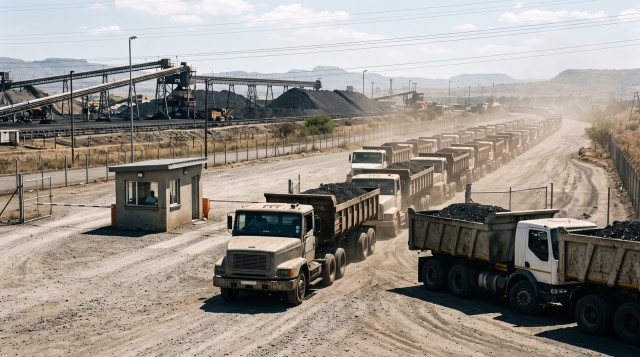
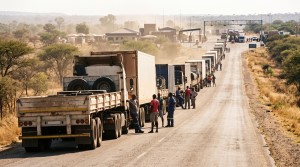
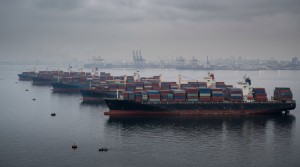
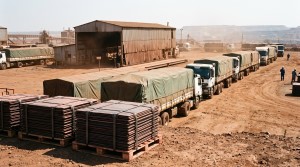
The logistics industry has escalated conditions at the Port of Richards Bay to national government, with a formal submission to Transport Minister Barbara Creecy calling for a financial audit, infrastructure rehabilitation and a binding digitalisation roadmap. At the centre of the complaint is a single operational number: trucks are spending around thirty minutes at a gate that should process them in three.
Cargo Handling
20 August 2026 • 4 min read
Terminal performance is usually argued in tonnes handled and vessel turnaround. But for the road operator, the number that decides profitability is how long a truck spends between arriving at the port precinct and being released. At a bulk terminal moving 600 to 800 trucks a day, a manual gate is not an inconvenience -- it is a daily capacity ceiling.
Mike Fitzmaurice of the African Union of Transportation and Logistics Organisations lodged the submission after earlier representations reportedly sat with port leadership for more than six weeks without an integrated response. It raises deteriorating conditions, increasing truck damage, alleged health and safety shortcomings and poor administrative responsiveness, and it sets out a specific list of demands.
Those demands include a full financial audit of access fees collected, urgent grading and paving of staging roads and access routes to offloading points, OHSA-compliant sanitation, a structured recovery plan for freight rail on the corridor, and a binding digitalisation roadmap from Transnet for an integrated vehicle booking and scheduling system. The industry's position on the Gate Zero staging facility -- an access fee of around R157 per truck against what it describes as an unpaved, unmaintained gravel lot -- is contested, and Transnet's response to those specific claims should be sought directly from the operator.
The throughput arithmetic: 600-800 trucks per day at roughly 30 minutes of gate time each, against a three-minute benchmark -- up to 27 minutes per truck of avoidable delay, repeated across every vehicle, every day. (Source: Industry submission reported by Freight News, 2026)
It is tempting to treat gate processing as paperwork sitting outside the cargo handling operation. It is not. Gate throughput determines the rate at which cargo can be presented to the terminal, and a terminal that cannot receive trucks fast enough cannot keep its tipping, stacking and shiploading equipment fed at a steady rate. The queue outside the fence becomes an irregular supply inside it.
The industry's case for an integrated vehicle booking and scheduling system rests on that logic. Slotted arrivals matched to processing capacity spread the day's volume instead of concentrating it, cut queuing on the access roads and the N2, and give operators visibility of expected waiting time before a truck is dispatched. The argument made by the South African Freight and Logistics Association is not that the technology needs inventing -- it is that proven systems already exist and the case for manual handling is no longer supportable.
For the operator, congestion at a bulk terminal produces three separate costs. Idle time consumes diesel and paid driver hours while generating no revenue, and it removes the vehicle from the pool available for the next load. Unsurfaced staging areas cause tyre and suspension damage, shortening component life across every truck serving the port. Access and staging fees sit on top of both.
None of these are individually large. Together they materially change the true cost of a port run, and because they are rarely measured, they are usually absorbed silently into the margin rather than recovered in the rate. Richards Bay is the current example, but the same arithmetic applies at any SADC terminal where a truck waits substantially longer than the process should take.
Geofence the terminal precinct and record arrival, staging and release times for every port run -- without that data you cannot price the delay, recover it, or contribute evidence to the reform case. Prioritise tyre and suspension inspection on vehicles working unsurfaced staging areas, and quote port work with a measured waiting-time component rather than a single all-in figure that quietly absorbs the queue.
Stay connected with Southern Africa's freight and transport community.
Join 6,400+ logistics professionals across the SADC region.
Visit Laaimylorrie.com| About the Author | |

|
Andre Klynsmith Entrepreneur & Technology Enthusiast Andre's expertise spans technology, blockchain, transport, and logistics -- with a passion for innovation and driving positive change across industries. |
| Source: Freight News -- Industry demands action as Richards Bay port crisis deepens View source › | 2026 |


Subscribe to our Newsletter and stay in the know with all the latest Industry News, Products and Trends covering the whole of the SADC region.
KS Blockchain T/A Laaimylorrie.com . All Rights Reserved.