Industry related headlines to keep you in the know.
Twenty-one years after it was adopted, the SADC Protocol on the Facilitation of Movement of Persons has been signed by ten of the region's sixteen member states and ratified by only seven. Eleven ratifications are needed before it enters into force, and at the 46th SADC Summit in Durban on 17 August 2026, South Africa spent political capital trying to close that gap.
Politics Insight
20 August 2026 • 4 min read
SADC has spent two decades building corridors, one-stop border posts and customs harmonisation for goods. The people who drive the goods are still governed by a patchwork of national immigration rules. That gap is not an abstraction for freight operators -- it is a crew-planning constraint on every cross-border lane.
The protocol, initiated by SADC in 2005, sets out a framework for easier movement of citizens across member state borders. Ten countries have signed it and seven have ratified. Six of the sixteen member states have not signed at all. With eleven ratifications required for entry into force, four are still outstanding.
At the Durban summit, South Africa -- now holding the SADC chair -- pressed members to sign and ratify, arguing that the region's failure to formalise migration channels has left individual states absorbing displacement pressure without a shared framework. The summit communique urged members to accelerate implementation of freedom of movement and to sign, ratify and implement the protocol. Reporting from the summit indicates that Zimbabwe and Mozambique resisted having migration elevated to a standalone agenda item.
Where it stands: 10 of 16 SADC states signed, 7 ratified, 11 ratifications required for entry into force -- a protocol first initiated in 2005. (Source: SADC Secretariat / summit reporting, 2026)
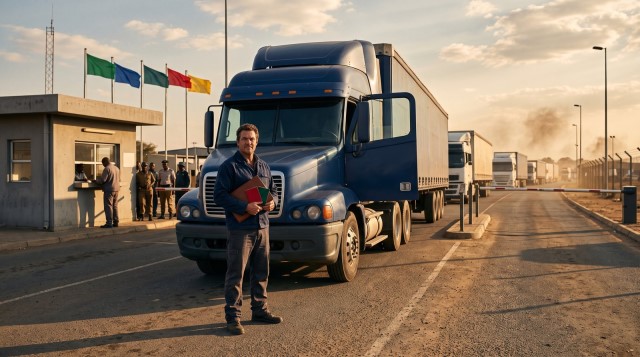
Cross-border road freight is not moved by cargo permits alone. It is moved by drivers who hold passports, visas and work authorisations issued under national law, and by crew who sometimes need to be relieved, replaced or repatriated mid-journey. Every one of those steps is currently governed country by country.
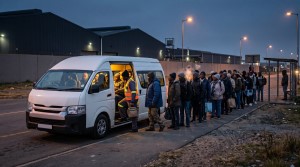
The operational consequences are familiar to anyone running a Namibia-Zambia or South Africa-DRC lane. A driver whose entry permission expires while the truck is queuing cannot simply be swapped out. A relief driver flown or bussed to a breakdown may need a visa the operator did not anticipate. A crew change at a border post can require documentation that varies between the two sides of the same crossing. None of this appears as a line item in a rate, but it appears in delay, in standing time and in the cost of the driver who is stuck in the wrong country.
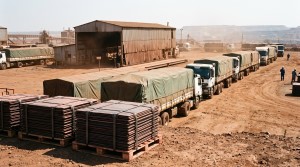
SADC has made measurable progress on the goods side. One-stop border posts, simplified trade arrangements, corridor digitalisation and customs harmonisation all move cargo. The labour that carries the cargo has not received the same treatment, and the summit's own framing -- that free movement of people and skills is central to genuine integration -- concedes the point.
Nothing changes immediately. Even if the four outstanding ratifications arrived tomorrow, implementation would follow national timetables. But the direction of travel matters for planning. Operators building three- to five-year cross-border strategies should assume that driver mobility becomes easier over that horizon, and that the countries ratifying first will be the ones where crew planning gets simpler soonest.
Treat driver documentation as an operational asset with an expiry date, not an HR formality -- track passport and permit validity per driver per lane the same way you track vehicle licensing. Build a documented contingency for crew change and repatriation on each cross-border route you run, and watch which member states ratify next, because those are the lanes where your crew-planning cost falls first.
Stay connected with Southern Africa's freight and transport community.
Join 6,400+ logistics professionals across the SADC region.
Visit Laaimylorrie.com| About the Author | |

|
Andre Klynsmith Entrepreneur & Technology Enthusiast Andre's expertise spans technology, blockchain, transport, and logistics -- with a passion for innovation and driving positive change across industries. |
| Source: EWN -- SA rallies SADC members to sign stalled free movement deal View source › | 17 August 2026 |


Subscribe to our Newsletter and stay in the know with all the latest Industry News, Products and Trends covering the whole of the SADC region.
KS Blockchain T/A Laaimylorrie.com . All Rights Reserved.