Industry related headlines to keep you in the know.
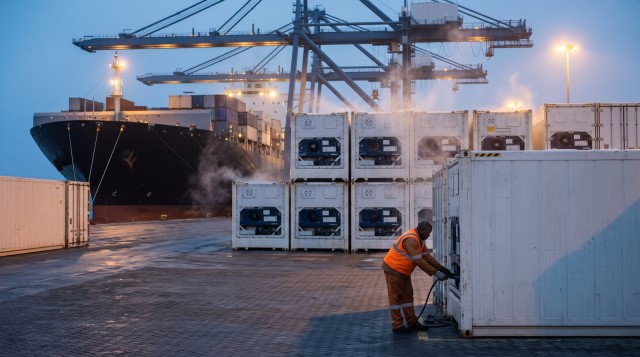
Ocean carriers reintroduced emergency fuel surcharges across long-haul trades in August 2026, and the reefer boxes that carry Southern Africa's citrus, deciduous fruit and chilled protein are being charged more per container than dry cargo.
Shipping and Logistics
18 August 2026 • 4 min read
CMA CGM applied an emergency fuel surcharge of US$150 per TEU and US$165 per reefer container from 1 August. Ocean Network Express followed on 15 August with US$75 per TEU and US$100 per reefer. For SADC exporters, the number quoted at booking is no longer the number that lands on the invoice.
Renewed tension around the Strait of Hormuz -- the chokepoint through which roughly one-fifth of the world's oil and gas has historically moved -- pushed bunker prices sharply higher during July. Carriers responded with emergency fuel surcharges, a mechanism designed to recover fuel cost movements that fall outside the normal bunker adjustment cycle.
The surcharges sit on top of an already elevated base. Drewry's World Container Index put the global average for a 40ft container at approximately US$4,297 on 6 August 2026. Freight forwarders reported ocean rates more than 100% higher year on year and around 68% above their level three months earlier. Meanwhile, a large share of services continue to route around the Cape of Good Hope rather than through the Red Sea, adding roughly ten days to some Asia-Europe voyages and absorbing capacity that would otherwise ease the market.
The reefer premium: Emergency fuel surcharges announced for August 2026 ranged from roughly US$65 to US$165 per container, with reefer boxes consistently charged above dry equivalents on the same trade. (Source: SeaRates / carrier announcements, 2026)
A refrigerated container is not a passive box. It draws power from the vessel for the entire voyage, and that power is generated by burning the same fuel the surcharge is designed to recover. When a voyage lengthens because of rerouting, the reefer burns for longer. The differential between the dry and reefer surcharge is therefore a direct consequence of both fuel price and voyage duration -- and both moved against shippers this quarter.
This lands awkwardly for Southern Africa. The region's highest-value seaborne exports are overwhelmingly temperature-controlled: citrus out of Durban and Gqeberha, deciduous fruit and wine out of Cape Town, chilled and frozen protein through several gateways. These are precisely the cargoes now absorbing the largest per-container increase, in a season where port waiting times have already forced cargo to roll.
Emergency surcharges are usually announced with short notice and applied on the date of loading rather than the date of booking. An exporter who quoted a delivered price to an overseas buyer three weeks ago, using the rate confirmed at the time, may now be carrying a cost that did not exist when the deal was struck. The same exposure runs down the chain to the forwarder and the road haulier who quoted a door-to-port rate off an assumed landed cost.
The practical defence is not to predict bunker prices. It is to separate the controllable base rate from the pass-through elements in every quotation, name the surcharges explicitly, and state which party carries movements between booking and loading. That conversation is far easier to have before a surcharge is announced than after an invoice arrives.
Ask your carrier or forwarder for the full surcharge schedule -- not just the base rate -- before confirming any reefer booking this quarter, and check whether the reefer differential applies to your trade. Quote customers a base rate plus named, itemised pass-throughs rather than a single all-in figure, and put in writing who absorbs a surcharge announced between booking and loading. On perishables, the cost of an unplanned surcharge is smaller than the cost of a rolled shipment, so protect the sailing first.
Stay connected with Southern Africa's freight and transport community.
Join 6,400+ logistics professionals across the SADC region.
Visit Laaimylorrie.com| About the Author | |

|
Andre Klynsmith Entrepreneur & Technology Enthusiast Andre's expertise spans technology, blockchain, transport, and logistics -- with a passion for innovation and driving positive change across industries. |
| Source: SeaRates -- Emergency Fuel Surcharges Explained 2026 View source › | August 2026 |


Subscribe to our Newsletter and stay in the know with all the latest Industry News, Products and Trends covering the whole of the SADC region.
KS Blockchain T/A Laaimylorrie.com . All Rights Reserved.