Industry related headlines to keep you in the know.
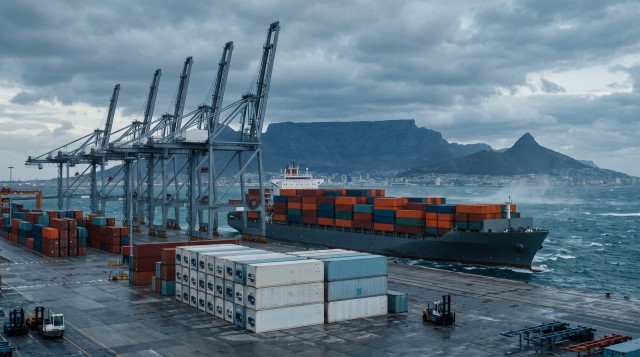
A scheduled Cape Town container call was dropped in early August 2026 and moved to Ngqura instead, leaving exporters to roll their bookings to the next vessel and importers to collect their boxes 750 kilometres away. Port omissions are no longer an exception in the South African rotation -- they are becoming a variable that inland operators have to plan around.
Ports and Terminals
17 August 2026 • 3 min read
When a shipping line omits a port, the delay does not stay at sea. It lands squarely on the road leg -- as an unplanned long-haul repositioning, a container that has to be collected somewhere else, or a load that sits waiting for the next sailing.
Maersk diverted a scheduled Cape Town call to the Port of Ngqura in Gqeberha in early August 2026 after accumulated delays on the Africa rotation and in West Africa. The Maersk Cubango omitted Cape Town entirely and worked Ngqura instead. Export bookings that had been allocated to that vessel were transferred to the next sailing on the same service, and import containers that should have been discharged in Cape Town came off in Ngqura, from where they had to be routed onward by road or rail.
The context is a port under sustained pressure. Cape Town has been carrying a seven-day average vessel waiting time of roughly four days through late July and early August, with an overlapping citrus and deciduous fruit export season creating exceptionally high reefer demand at the same time that high winds and swell have interrupted working hours. It remains the most constrained terminal in the South African network, with a continuing risk of cargo rollings.
Waiting times, early August 2026: Cape Town roughly 4.0 days on a seven-day average, Durban roughly 3.43 days and Port Elizabeth roughly 1.5 days -- while Coega worked at about 12 crane moves an hour under tidal restrictions and equipment breakdowns. (Source: Kuehne+Nagel port operational updates, 2026)
A vessel running late is an inconvenience that can usually be absorbed by adjusting a delivery slot. An omitted call is a different animal. It changes the physical location of the cargo, and that is a road-transport problem before it is a shipping problem. An import box discharged at Ngqura instead of Cape Town needs a haulier, a permit, a driver and roughly a full day's running to reach its intended destination -- none of which was quoted for.
Exports carry the mirror-image risk. A load already trucked into a Cape Town depot for a vessel that never arrives becomes storage cost, a second handling and a missed market window. For temperature-controlled fruit at the peak of the season, that window is measured in days, not weeks, and the commercial penalty for missing it is far larger than the freight itself.
The practical response is to stop treating a booked port as a fixed point. Operators who already know their cost and transit time from the same inland origin to Cape Town, Ngqura, Port Elizabeth and Durban can act on an omission within hours instead of negotiating a rate under pressure. That means having those lanes priced, having capacity contacts on each, and knowing which customers can tolerate a switch and which cannot.
It also means putting the risk into the contract. Who pays for the repositioning leg when a line omits a call is a question best answered in writing before it happens, not in an email exchange while a container sits accruing storage. Across the wider SADC region the same logic applies to Walvis Bay, Maputo and Beira: the corridor that matters is the one you can actually switch to.
Price and pre-qualify at least two ports for every regular export lane, so a diverted call becomes a routing decision rather than a crisis. Agree in advance who carries the cost of an unplanned repositioning leg, and check current vessel waiting times before you commit a truck to a port depot during peak reefer season.
Stay connected with Southern Africa's freight and transport community.
Join 6,400+ logistics professionals across the SADC region.
Visit Laaimylorrie.com| About the Author | |

|
Andre Klynsmith Entrepreneur & Technology Enthusiast Andre's expertise spans technology, blockchain, transport, and logistics -- with a passion for innovation and driving positive change across industries. |
| Source: Freight News / Kuehne+Nagel Port Operational Updates View source › | 17 August 2026 |


Subscribe to our Newsletter and stay in the know with all the latest Industry News, Products and Trends covering the whole of the SADC region.
KS Blockchain T/A Laaimylorrie.com . All Rights Reserved.