Industry related headlines to keep you in the know.
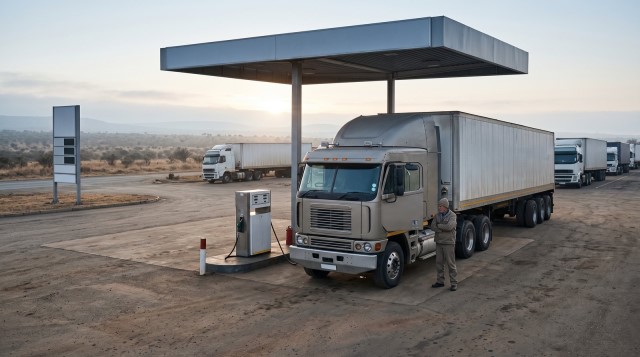
South African diesel is on course for a jump of more than R3 a litre from 1 September 2026. Mid-August data from the Central Energy Fund points to diesel increases of roughly R3.11 to R3.22 a litre and petrol rises of around 63 to 74 cents, driven by volatile international middle-distillate prices. For freight operators, diesel is the single largest controllable line on most invoices -- and this increase will flow straight through to margins.
Economy and Markets
15 August 2026 • 4 min read
A R3-plus diesel increase landing on 1 September is not a rounding error -- on a long-haul SADC route it can move the cost of a trip by thousands of rand. Operators who wait for the pump to change before they react will already be behind.
The Central Energy Fund's early-August tracking points to a steep move for middle distillates. Diesel is facing a potential increase of more than R3.00 a litre, with estimates clustering between R3.11 and R3.22, while petrol 93 and 95 are projected to rise by roughly 63 to 74 cents. The final figures are confirmed at the end of August, with the new prices taking effect at midnight on 1 September.
The pressure is coming from international markets. Middle-distillate prices -- diesel and jet fuel -- have been volatile through 2026, and a firmer oil price combined with rand weakness pushes up the landed cost of fuel before a single cent of local levy is added. Because diesel and petrol move on separate under-recovery calculations, diesel-heavy freight fleets are exposed to the larger of the two increases.
Diesel outlook: South African diesel is projected to rise by R3.11-R3.22 a litre from 1 September 2026, versus roughly 63-74 cents for petrol. (Source: Central Energy Fund data, via SA fuel press, August 2026)
Namibia has been softening the same global pressure through its National Energy Fund. For August 2026, the government limited the pump increase to 200 cents a litre, with the NEF absorbing the diesel under-recoveries and the remaining levy portion rather than passing the full cost to motorists and hauliers. That buffer keeps Namibian pump prices steadier than the raw market would suggest.
The catch is that buffer funds are finite. When a fund is absorbing under-recoveries month after month, the pressure builds for a sharper correction later. For operators running cross-border legs, it means South African and Namibian fuel costs can diverge in the short term -- and a route that looks cheap on one side of the border may not stay that way once buffers are rebuilt.
The operators who protect their margins in months like this treat fuel as a pass-through, not a cost to swallow. That means fuel surcharges or index-linked rates tied to the published price, agreed with customers before the increase lands rather than after. It also means squeezing consumption through tighter routing, fuller loads and disciplined fuel-monitoring to close the gap that theft and pilferage open on long routes.
Where forward purchasing or bulk supply arrangements are available, they can smooth a sharp step like September's. But the single most valuable move is speed: renegotiating rates the week the increase is confirmed, not the month after, so the new fuel cost is reflected in the next load rather than the one after that.
Model the September diesel increase into your per-kilometre cost now and move rates before 1 September, not after. Remember that South Africa's and Namibia's pump prices are buffered differently, so cross-border cost assumptions need refreshing. Pair the rate conversation with real consumption control -- routing, load factors and fuel monitoring -- so you are managing the increase, not just announcing it.
Stay connected with Southern Africa's freight and transport community.
Join 6,400+ logistics professionals across the SADC region.
Visit Laaimylorrie.com| About the Author | |

|
Andre Klynsmith Entrepreneur & Technology Enthusiast Andre's expertise spans technology, blockchain, transport, and logistics -- with a passion for innovation and driving positive change across industries. |
| Source: Central Energy Fund data via The South African / Namibia Ministry of Mines and Energy View source › | 15 August 2026 |


Subscribe to our Newsletter and stay in the know with all the latest Industry News, Products and Trends covering the whole of the SADC region.
KS Blockchain T/A Laaimylorrie.com . All Rights Reserved.