Industry related headlines to keep you in the know.
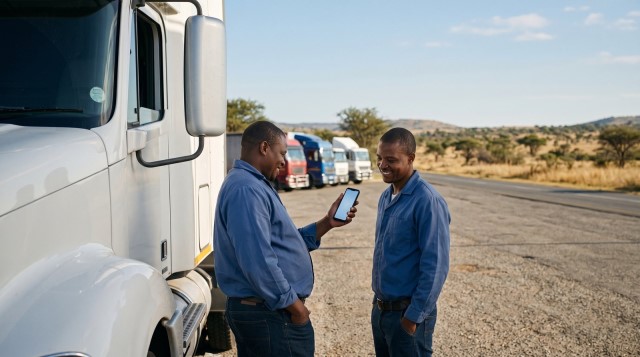
A wave of digital loadboards is spreading across Southern African road freight, connecting shippers with available trucks in real time and pushing the region's traditionally phone-and-spreadsheet freight market onto a screen.
Technology and Trends
8 August 2026 • 4 min read
The advantage in 2026 is shifting from who owns the most trucks to who can match loads, prove visibility and coordinate across borders. For SADC operators, that changes what it takes to stay competitive.
Digital loadboards let cargo owners post a load -- weight, trailer type, route and payment terms -- while transporters browse listings with filters and geographic mapping and claim the freight that fits their fleet. It is the same job a broker's phone once did, but faster, wider and searchable. In 2026 the model is no longer a novelty: new entrants continue to launch, including a Zimbabwean technology startup that recently rolled out a digital loadboard aimed squarely at Southern African road freight.
The bigger continental platforms have shown what scale looks like. Services such as Kobo360 and Lori Systems built AI matching, GPS tracking and mobile-money payments into a single workflow, moving goods across multiple countries. The lesson for SADC is not the individual brand but the pattern: matching, visibility and payment are collapsing into one digital layer.
Where the edge is moving: In 2026 the real advantage belongs to platforms that combine digital visibility, AI-driven routing and cross-border coordination -- not to fleets and warehouses alone. (Source: Envisioning / industry analysis, 2026)
The step change comes when loadboards plug into telematics. Newer platforms integrate with tracking partners to provide live location, automated ETA updates and cloud dashboards, so a shipper can follow cargo without phoning the driver at every stop. That "always-on" visibility is fast becoming a baseline expectation rather than a premium feature -- and it rewards operators whose trucks are already fitted and reporting cleanly.
For SADC's cross-border reality, coordination matters as much as tracking. A load moving from Gauteng to Lusaka crosses jurisdictions, customs regimes and mobile networks. Platforms that can carry documents, payment and location across those handoffs remove friction that has long added days and cost to regional trips.
Digitisation is not a magic switch. Patchy rural connectivity, informal operators, inconsistent load quality and the need to build trust between strangers all slow adoption. A listing is only as good as the payment security and dispute resolution behind it, and empty backhauls remain a hard economic problem that no app fully solves overnight.
Still, the direction is clear. As open APIs link platforms to corporate ERP systems and driver-first mobile tools spread, the operators who treat digital matching and telematics as core infrastructure -- not an experiment -- will win more of the freight that used to move by relationship alone.
List your fleet where the loads are being posted, and make sure your trucks are tracked and reporting cleanly -- visibility is now the price of entry. Use loadboards to attack empty backhauls on regional legs, insist on platforms with real payment security, and treat digital matching as permanent infrastructure rather than a side experiment.
Stay connected with Southern Africa's freight and transport community.
Join 6,400+ logistics professionals across the SADC region.
Visit Laaimylorrie.com| About the Author | |

|
Andre Klynsmith Entrepreneur & Technology Enthusiast Andre's expertise spans technology, blockchain, transport, and logistics -- with a passion for innovation and driving positive change across industries. |
| Source: Newsday Zimbabwe / Envisioning View source › | 8 August 2026 |


Subscribe to our Newsletter and stay in the know with all the latest Industry News, Products and Trends covering the whole of the SADC region.
KS Blockchain T/A Laaimylorrie.com . All Rights Reserved.