Industry related headlines to keep you in the know.
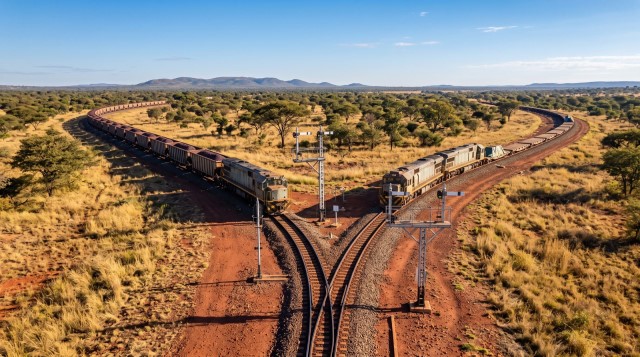
Zambia has spent decades defined by a geographic problem: no coastline, and every export tonne dependent on someone else's port and someone else's border. In 2026 that problem is being turned into an advantage, as three major railways converge on the country and reposition it as the rail interchange at the centre of Southern Africa's freight map.
Railway
6 August 2026 • 4 min read
The story of SADC rail is usually told corridor by corridor. Viewed from Lusaka, a different picture emerges: a single land-linked country where the Atlantic-facing Lobito line, the Indian-Ocean-facing TAZARA route and the southern North-South Corridor all meet -- and whoever controls that junction shapes regional freight for a generation.
To the west, the Lobito Corridor is being extended into Zambia with a planned 830-kilometre greenfield line linking the Copperbelt and North-Western Province to Angola's Port of Lobito -- the largest rail project in Zambia since TAZARA was built in the 1970s, spearheaded by the Africa Finance Corporation with completion targeted around 2030. To the east, TAZARA is under a US$1.4 billion, 30-year rehabilitation concession awarded to China's CCECC, aiming to lift freight to 2.4 million tonnes a year and cut transit times sharply. To the south runs the established North-South Corridor toward South Africa's ports, where Zambia and Zimbabwe are prioritising rolling stock and track upgrades.
Individually, each line has been covered as its own project. Together, they hand Zambia something it has never had: a genuine choice of oceans. Copper that once had a single realistic route to sea can increasingly move west, east or south depending on price, congestion and reliability.
The junction: The Zambian Lobito extension is designed to connect to the existing TAZARA network and the southern rail link toward Durban -- a future Atlantic-to-Indian-Ocean spine running through Zambia. (Source: Railways Africa, 2026)
A crossroads is worth more than any single route, because it creates competition. When shippers can play the Lobito, Dar es Salaam and Durban routes against one another, no single port or border can hold the whole Copperbelt hostage -- the lesson of the Kasumbalesa and Beitbridge delays that have plagued 2026. The convergence also concentrates investment: conferences such as Land-Linked Zambia 2026 have drawn rail operators and suppliers precisely because the country is becoming where the region's freight decisions get made.
For road hauliers, this is not a threat so much as a redraw. Rail rarely reaches the mine gate or the final warehouse; every rail corridor needs trucks to feed and distribute at each end. A rail hub in Zambia means more transhipment points, more first-and-last-mile work, and more demand for operators who can move goods between siding and destination.
Ambition and delivery are not the same thing. The Lobito extension is years from completion, TAZARA's turnaround depends on execution against a long track record of underperformance, and North-South upgrades move at the pace of two governments' budgets. Corridors compete as much for capital and political will as for cargo.
Still, the strategic direction is set. Zambia's land-locked disadvantage is becoming a land-linked position at the heart of the region -- and the operators who map their networks around that junction now will be ready when the trains actually run.
Watch Zambia as the emerging rail interchange and position for the first-and-last-mile trucking that every rail corridor depends on -- sidings, transhipment yards and mine-gate feeder runs. Diversifying which ocean your Copperbelt freight targets protects you against any single congested border, but plan around realistic timelines: these corridors mature over years, not quarters.
Stay connected with Southern Africa's freight and transport community.
Join 6,400+ logistics professionals across the SADC region.
Visit Laaimylorrie.com| About the Author | |

|
Andre Klynsmith Entrepreneur & Technology Enthusiast Andre's expertise spans technology, blockchain, transport, and logistics -- with a passion for innovation and driving positive change across industries. |
| Source: Railways Africa / African Business View source › | 6 August 2026 |


Subscribe to our Newsletter and stay in the know with all the latest Industry News, Products and Trends covering the whole of the SADC region.
KS Blockchain T/A Laaimylorrie.com . All Rights Reserved.