Industry related headlines to keep you in the know.
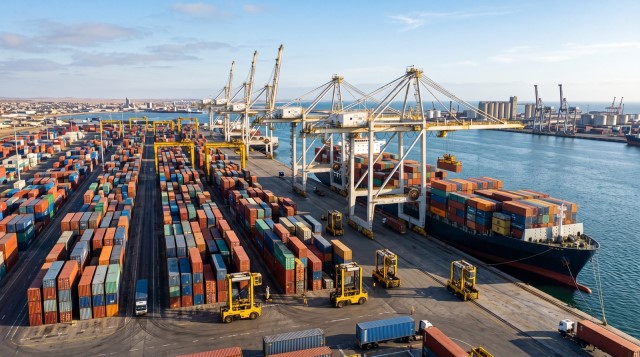
Transnet Port Terminals has moved more than 100,000 twenty-foot equivalent units (TEUs) in a single week -- a new record that signals South Africa's container ports are shifting from crisis management toward a more stable footing, with knock-on benefits for freight flows across the SADC region.
Ports and Terminals
3 August 2026 • 4 min read
Durban is the gateway for the bulk of South Africa's containerised trade and a critical node for landlocked SADC economies. After years of congestion and equipment failures, signs of a genuine operational recovery matter to every operator whose cargo passes through the port.
Transnet Port Terminals reported container volumes growing 7.1% over the period, surpassing its annual budget by 3.6% -- a swing driven in part by a 22% jump in citrus fruit exports as the harvest season fed the ports. Increased vessel traffic across Transnet's terminals has been cited as a leading indicator that the network is stabilising after a prolonged period of underperformance.
The turnaround is being reinforced by structural change. The Durban Container Terminal is moving toward a 25-year public-private partnership designed to modernise equipment and lift productivity, while broader terminal investment aims to expand container capacity from around 2 million to 2.8 million TEUs and raise crane productivity from roughly 18 to 28 gross moves per hour.
Capacity target: Planned upgrades aim to lift Durban's container capacity from ~2 million to 2.8 million TEUs, with crane productivity rising from about 18 to 28 gross moves per hour. (Source: Transnet / industry reporting, 2026)
Durban's performance is a regional concern, not just a South African one. Zambia, Zimbabwe, the DRC, Botswana and eSwatini all move import and export cargo through the port and its connecting corridors. When Durban stalls, landlocked operators feel it in longer transit times and higher demurrage. When it recovers, the entire North-South Corridor breathes easier.
Better crane productivity and faster vessel turnaround also improve schedule reliability for shipping lines, which can translate into more predictable sailings and, over time, more competitive freight rates for importers and exporters across the region.
The gains are real, but the constraints have not vanished. Analysts continue to flag challenges in berth productivity, yard capacity, equipment availability and landside coordination -- the last of which includes truck congestion at the port gates. Sustaining the momentum will depend on private-sector capital arriving on schedule and on the operational discipline holding through the next peak season.
For now, the direction of travel is encouraging. A record week is a milestone worth noting -- provided it becomes the new baseline rather than a one-off headline.
Improving Durban throughput should ease transit times and demurrage risk on the North-South Corridor, but don't strip the buffers from your planning yet. Watch berth and landside performance through the next peak, and keep alternative gateways such as Walvis Bay and Maputo in your routing mix while the recovery proves it can last.
Stay connected with Southern Africa's freight and transport community.
Join 6,400+ logistics professionals across the SADC region.
Visit Laaimylorrie.com| About the Author | |

|
Andre Klynsmith Entrepreneur & Technology Enthusiast Andre's expertise spans technology, blockchain, transport, and logistics -- with a passion for innovation and driving positive change across industries. |
| Source: KZN Industrial Business News -- Increased vessel traffic points to Transnet ports' improvement View source › | May 2026 |


Subscribe to our Newsletter and stay in the know with all the latest Industry News, Products and Trends covering the whole of the SADC region.
KS Blockchain T/A Laaimylorrie.com . All Rights Reserved.