Industry related headlines to keep you in the know.
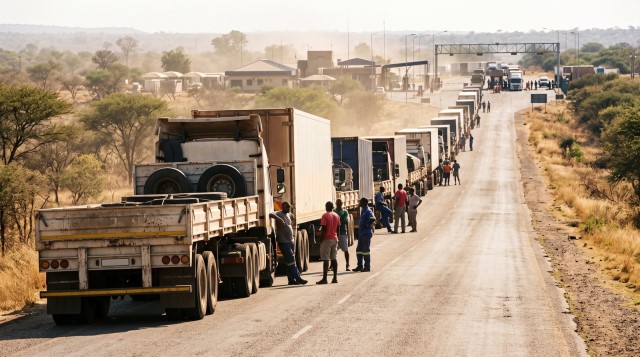
Truck crossing times at Beitbridge climbed roughly 25% week-on-week to around 46 hours in the week of 20-26 July 2026, with the worst cases stretching close to four days — a second straight week of deterioration on Southern Africa's busiest inland border.
Transportation
30 July 2026 • 5 min read
Two of the region's most important crossings — Beitbridge and Kasumbalesa — deteriorated sharply in late July 2026. For operators, the cost is no longer measured in hours but in stranded trucks, missed slots and blown delivery windows.
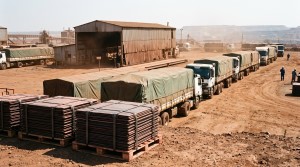
Hundreds of freight trucks queued along the approach to Beitbridge, the Zimbabwe-South Africa crossing that handles the bulk of North-South Corridor cargo. Average crossing times rose about 25% week-on-week to roughly 46 hours during 20-26 July, the second consecutive week of worsening performance.
South Africa's Border Management Authority said its side of the post was fully functional and pinned the backlog on the Zimbabwean side. Zimbabwean authorities pointed to limited parking, abnormal-load vehicles occupying bays and slower processing by clearing agents. Whatever the cause, the trucks and their cargo sit still.
The regional picture: average South African border crossing times sat near 9.6 hours, while the wider SADC average rose about 9% to roughly 8.9 hours. Border congestion is estimated to cost South Africa as much as R16 billion a year. (Source: Transit Assistance Bureau / Freight News, 2026)
On the Copperbelt, the Zambia-DRC crossing at Kasumbalesa told a similar story for different reasons. Ongoing construction cut daily clearances from around 450-500 vehicles to between 200 and 250, and queues stretched beyond 20 kilometres. Drivers reported taking about two and a half days to cross from the Zambian side.
That matters far beyond the border itself: Kasumbalesa is the funnel for copper and cobalt heading south and for inputs, fuel and consumer goods heading north. When it slows, the whole Copperbelt supply chain feels it.
Industry voices are again calling for a corridor-wide approach rather than each post being managed in isolation. That means stronger cooperation between border agencies on both sides, better-synchronised customs processes and genuine digital interoperability so that a truck cleared on one side is not re-queued on the other.
These are the same non-tariff barriers the African Continental Free Trade Area is meant to erode. Until the fixes are built, the delays are structural — and operators have to plan around them rather than hope for a clear run.
Build current, not historical, border-time buffers into every North-South and Copperbelt quote — 46 hours at Beitbridge and 2.5 days at Kasumbalesa are this month's reality, not worst-case. Track live crossing data, pre-clear paperwork before trucks reach the post, and keep an alternative routing (via Groblersbrug or a western-corridor option) costed and ready so a stalled border doesn't strand your fleet.
Stay connected with Southern Africa's freight and transport community.
Join 6,400+ logistics professionals across the SADC region.
Visit Laaimylorrie.com| About the Author | |

|
Andre Klynsmith Entrepreneur & Technology Enthusiast Andre's expertise spans technology, blockchain, transport, and logistics — with a passion for innovation and driving positive change across industries. |
| Source: IOL / Freight News — Beitbridge and SADC border congestion, July 2026 View source › | 26 July 2026 |


Subscribe to our Newsletter and stay in the know with all the latest Industry News, Products and Trends covering the whole of the SADC region.
KS Blockchain T/A Laaimylorrie.com . All Rights Reserved.