Industry related headlines to keep you in the know.
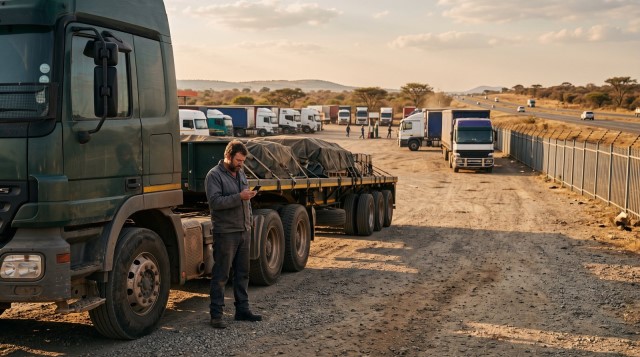
South Africa's load broking sector has grown quickly and operates without any regulatory framework, and the Road Freight Association now argues that the rate compression it produces has become a safety problem as well as a commercial one.
Transportation
21 July 2026 • 5 min read
Load brokers aggregate freight and sell capacity, taking a margin in the middle. Unlike bond originators, who perform a comparable intermediary function, they are not registered, not inspected and not accountable to anyone. Operators are absorbing the difference.
At the Road Freight Association convention in Ballito in July 2026, a panel titled "Shifting gears or stripping gears — is load broking breaking the freight engine?" put the question directly to the industry. The comparison drawn repeatedly was with bond origination: a broker sources and aggregates price options on behalf of a client, takes a margin, and moves on. The difference is that banking and bond origination are heavily regulated, and load broking is not regulated at all.
RFA chief executive Gavin Kelly noted that the National Bargaining Council for the Road Freight and Logistics Industry does not inspect load brokers, because brokers are not required to register with the council. A business can therefore sit between a shipper and a haulier, set the price both sides accept, and fall entirely outside the compliance regime that governs the operator actually moving the load.
Broker mark-up: Unaccredited intermediaries were reported adding 20-30% to a transport price before flipping the move on to the operator who performs the work. (Source: Freight News / RFA Convention, 2026)
The pressure lands hardest on small and medium operators. Prayleen Bailey, founder of courier firm Krosworx Trading, described the spiral plainly: a vehicle standing still earns nothing, so the operator drops the price to win the load, and then drops it again on the next one. Brokers do provide genuine aggregation — they can assemble fleet capacity quickly for a demanding customer — but the unintended consequence is a race to the bottom that nobody can sustain.
There is a payment risk stacked on top of the pricing risk. Bailey noted that the broker takes a margin at the top and, in some instances, simply disappears when settlement falls due. Britannia managing director Ryan Kruger described unaccredited intermediaries approaching transporters for pricing purely to flip the move on at a substantial mark-up — and warned that when something goes wrong, the intermediary is gone and the operator carries the consequence.
Kelly's question to the industry was the sharpest one in the room: when a rate is squeezed, what is no longer being paid for? Labour? Tyres? Brake linings? Scheduled maintenance? Or is it being absorbed through adulterated fuel? Every one of those answers converts a commercial problem into a roadworthiness problem, which is why the association frames rate compression as a safety issue rather than a margin issue.
The RFA says it has escalated the matter to the Department of Transport and the Department of Trade, Industry and Competition to discuss oversight and possible regulation. Any framework is years away. In the meantime the practical defences are contractual rather than statutory: verify who you are actually contracting with, confirm accreditation and affiliation, check payment history with other operators before accepting a first load, and price the credit risk of an unknown intermediary into the rate rather than discovering it on day sixty.
Treat an unfamiliar broker as a credit decision, not a sales call. Establish who holds the contract with the end client, what happens to your claim if the intermediary vanishes, and whether the rate on offer still covers maintenance and tyres at your real cost per kilometre. A load that cannot fund its own wear is not revenue — it is deferred repair cost.
Stay connected with Southern Africa's freight and transport community.
Join 6,400+ logistics professionals across the SADC region.
Visit Laaimylorrie.com| About the Author | |

|
Andre Klynsmith Entrepreneur & Technology Enthusiast Andre's expertise spans technology, blockchain, transport, and logistics — with a passion for innovation and driving positive change across industries. |
| Source: Freight News View source › | 7 July 2026 |


Subscribe to our Newsletter and stay in the know with all the latest Industry News, Products and Trends covering the whole of the SADC region.
KS Blockchain T/A Laaimylorrie.com . All Rights Reserved.