Industry related headlines to keep you in the know.
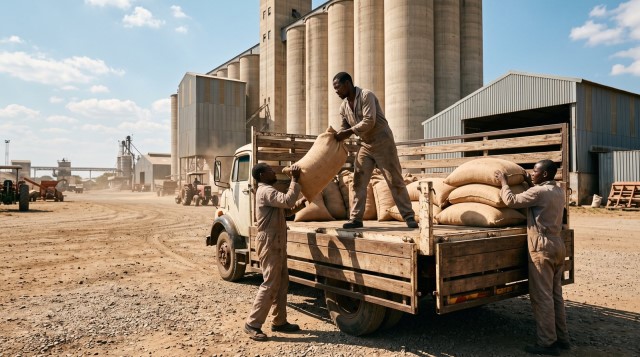
Zambia is sitting on a maize and soybean surplus after a strong harvest, has lifted its export restrictions, and is lining up to ship as much as a million tonnes of maize to the DRC — turning regional grain movement into one of the clearer freight opportunities in SADC for 2026.
Supply Chain Management
17 July 2026 • 4 min read
With production well above national need and neighbours from the DRC to Malawi short of grain, the bottleneck is no longer supply — it is logistics. Transport cost and corridor reliability now decide how much of Zambia's surplus actually reaches the markets that need it.
Zambia's maize production reached about 3.65 million tonnes in the 2024/25 season, up sharply from 1.5 million the year before, leaving national supply more than 500,000 tonnes above requirements. The 2026/27 season is projected to deliver a further staple surplus of close to 4.9 million tonnes of maize, cementing the country's position as a regional breadbasket.
Just as importantly, the policy door is open. Zambia has lifted restrictions on maize and mealie-meal exports, allowing traders, millers and processors to access regional markets. Soybean adds to the story, with a 2025/26 harvest of roughly 450,000 tonnes supporting crushing that could yield around 300,000 tonnes of soymeal and an exportable surplus near 80,000 tonnes.
Export flows: Zambia is targeting up to one million tonnes of maize exports to the DRC in 2025/26, on the back of a surplus exceeding national requirements by more than 500,000 tonnes. (Source: Milling MEA / ANAPRI, 2026)
Structural cross-border trade, most of it toward the DRC and Malawi, flows through both formal and informal channels. But transport costs and logistics remain the key constraint, especially for reaching further-flung demand in East Africa, where Kenya has been exploring maize imports from Zambia and Tanzania to stabilise supply to its millers.
The frictions are familiar to any operator on the Copperbelt: corridor reliability, border dwell at crossings such as Kasumbalesa, and now Zambia's new Advance Cargo Information requirement. Post-harvest losses of around 5% add to the urgency of moving grain efficiently. The paradox is that SADC and COMESA markets still import large volumes of maize, soymeal and edible oils from outside Africa — a mismatch that better logistics can help close.
For hauliers and forwarders, the surplus is a demand signal. There is scope in bulk grain haulage, bagged maize into the DRC and Malawi, storage near production zones, and above all in backhaul planning — pairing southbound mineral loads out of the Copperbelt with northbound and cross-border grain to cut empty running.
What buyers in the DRC, Malawi and East Africa are ultimately paying for is not just capacity but predictability. In a trade where a delayed load can mean spoilage or a missed milling window, the operators who can guarantee reliable, documented delivery will win the volumes that policy has now unlocked.
Zambia's grain surplus is a freight opportunity for operators positioned on the Copperbelt and North-South Corridor. Pair southbound mineral loads with northbound and cross-border grain to cut empty running, invest in storage near production, and sell reliability — predictable, documented delivery is what regional buyers are paying a premium for.
Stay connected with Southern Africa's freight and transport community.
Join 6,400+ logistics professionals across the SADC region.
Visit Laaimylorrie.com| About the Author | |

|
Andre Klynsmith Entrepreneur & Technology Enthusiast Andre's expertise spans technology, blockchain, transport, and logistics — with a passion for innovation and driving positive change across industries. |
| Source: Milling Middle East & Africa / ANAPRI View source › | July 2026 |


Subscribe to our Newsletter and stay in the know with all the latest Industry News, Products and Trends covering the whole of the SADC region.
KS Blockchain T/A Laaimylorrie.com . All Rights Reserved.