Industry related headlines to keep you in the know.
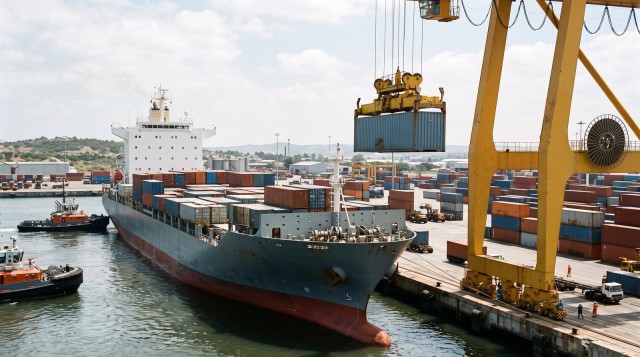
Ocean freight rates out of Asia have roughly doubled in the space of two months, and the increase is now landing on the desks of Southern African importers as higher landed costs on everything from machinery and vehicle parts to consumer goods.
Shipping and Logistics
17 July 2026 • 4 min read
Spot rates are climbing on every major trade lane, port congestion has hit a four-year high, and shipping a container on an ad hoc basis now costs about 74% more than it did a year ago. For SADC importers and exporters, the era of cheap, predictable ocean freight that defined early 2026 is over.
Only a few months ago, ocean freight rates were softening and importers were enjoying some breathing room on landed costs. That window has closed. Global spot rates have doubled within two months as congestion, vessel repositioning and geopolitical uncertainty combine to restrict the capacity that carriers can actually put to sea.
The China–South Africa lane tells the story. A standard 20-foot container has risen about 12% to roughly US$2,403–US$2,937, while a 40-foot box is up around 25% to about US$3,096–US$3,784. Those increases have arrived in a matter of weeks, not months, and they feed straight into the cost of imported goods across the region.
Container cost: A 40-foot container from China to South Africa now costs roughly US$3,096–US$3,784, up about 25% in a matter of weeks. (Source: MoverDB / industry rate trackers, 2026)
The squeeze is not about demand alone. Port congestion at a four-year high is tying up ships and boxes, carriers are layering peak-season surcharges onto base rates, and blank sailings are quietly removing capacity from the schedule. Vessels repositioned around the Cape after Red Sea and Gulf disruptions have added further strain to global rotations.
Crucially, improving schedule reliability does not mean cargo is moving faster. A carrier can hit its arrival windows more consistently while transit times themselves remain long — sea freight still averages 22 to 30 days to Durban and Cape Town, and consolidated LCL shipments can take 36 to 48 days once grouped.
For landlocked SADC markets — Zambia, Zimbabwe, the DRC, Botswana and Malawi — the ocean spike is only the first cost. Every dollar added to a box at origin compounds with inland trucking, border dwell and financing before the goods reach a warehouse in Lusaka or Harare. The full landed cost can move far more than the headline sea rate suggests.
The practical response is to plan on real numbers, not quoted ones. Check actual transit times rather than advertised ones, monitor blank sailings and available vessel space, and confirm which surcharges apply before committing stock. Where volumes justify it, locking rates or booking space ahead can protect margins that ad hoc bookings will erode.
Higher ocean rates ripple inland, so importers should quote and budget on landed cost, not FOB. Build surcharge buffers into 2026 plans, confirm real transit times before committing stock, and treat forward rate agreements as a hedge rather than a luxury while capacity stays scarce.
Stay connected with Southern Africa's freight and transport community.
Join 6,400+ logistics professionals across the SADC region.
Visit Laaimylorrie.com| About the Author | |

|
Andre Klynsmith Entrepreneur & Technology Enthusiast Andre's expertise spans technology, blockchain, transport, and logistics — with a passion for innovation and driving positive change across industries. |
| Source: EWC Logistics News Update / MoverDB Container Rate Index View source › | 17 July 2026 |


Subscribe to our Newsletter and stay in the know with all the latest Industry News, Products and Trends covering the whole of the SADC region.
KS Blockchain T/A Laaimylorrie.com . All Rights Reserved.