Industry related headlines to keep you in the know.
South Africa's earliest electric-truck adopters have now covered more than 12.5 million kilometres between them, avoiding roughly 2.75 million kilograms of carbon dioxide in the process. It is a milestone worth marking — and a useful reality check on exactly where the region's freight decarbonisation actually stands.
Carbon Footprint
15 July 2026 • 5 min read
The electric-truck story in Southern Africa is neither hype nor mirage. A small pioneer fleet is proving the technology works on real routes — but diesel still rules the road, and understanding why is the key to planning a credible transition.
A cluster of well-known operators — including DSV, FedEx, Woolworths and Vodacom — have put electric commercial vehicles into genuine daily service rather than showroom demonstrations. Their combined 12.5 million kilometres are the strongest evidence yet that battery-electric trucks can handle the duty cycles of South African urban and regional distribution without the wheels falling off the business case.
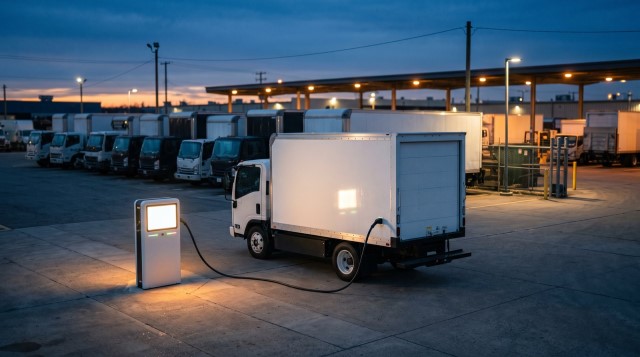
The vehicle choice is broadening too. Recent launches aimed at sub-Saharan Africa include compact urban delivery models with ranges around 140 to 155 kilometres and light-duty tippers stretching toward 200 kilometres — figures that map neatly onto last-mile and short-haul distribution, where trucks return to a depot each night to recharge.
Milestone: Early-adopter electric fleets in South Africa have covered more than 12.5 million kilometres and avoided about 2.75 million kg of CO₂ emissions. (Source: Business Day, 2026)
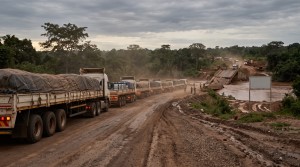
For all the progress, electric trucks remain a rounding error in a national fleet still overwhelmingly powered by diesel. The reasons are practical rather than ideological: higher upfront vehicle cost, limited public charging on long-haul corridors, uncertainty over battery life in heavy-duty use, and a national grid whose own emissions dilute the climate benefit of charging. The long-haul cross-border leg — Johannesburg to Lusaka, Durban to Lubumbashi — remains firmly diesel territory for now.
That is why the smart money is treating electrification as a segment strategy, not a fleet-wide switch. Depot-based urban and regional routes are where the economics already work; heavy long-haul will wait for cheaper batteries, denser charging and cleaner grid power. Off-grid, solar-backed charging hubs now appearing on major freight routes are an early sign that the corridor gap is beginning to close.
Even operators who cannot yet electrify need to pay attention, because the pressure is arriving through the contract, not just the tailpipe. Multinational shippers with net-zero commitments increasingly ask their transport partners to measure and report emissions per shipment. An operator that can already show a credible carbon number — and a plausible plan to lower it — will hold an edge when those tenders land.
The 12.5-million-kilometre milestone, then, is best read not as a finish line but as a signpost: the technology is ready for the right routes, the reporting expectations are hardening, and the operators who start experimenting now will not be caught flat-footed later.
Pilot electric vehicles where they already pay — depot-based urban and short-haul routes — rather than betting on a full fleet switch. Keep long-haul on diesel while corridor charging matures, but start measuring emissions per shipment now, because customers with net-zero targets will soon ask. A credible carbon number is fast becoming a commercial asset.
Stay connected with Southern Africa's freight and transport community.
Join 6,400+ logistics professionals across the SADC region.
Visit Laaimylorrie.com| About the Author | |

|
Andre Klynsmith Entrepreneur & Technology Enthusiast Andre's expertise spans technology, blockchain, transport, and logistics — with a passion for innovation and driving positive change across industries. |
| Source: Business Day — SA Trucking Industry Edges Into Electric Future View source › | 15 July 2026 |


Subscribe to our Newsletter and stay in the know with all the latest Industry News, Products and Trends covering the whole of the SADC region.
KS Blockchain T/A Laaimylorrie.com . All Rights Reserved.