Industry related headlines to keep you in the know.
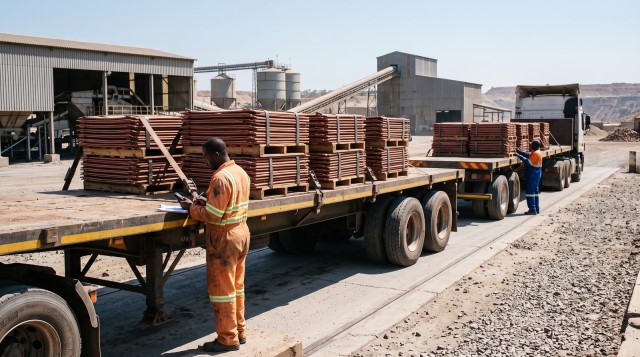
Zambia's copper output fell 4.27% in the first quarter of 2026 even as the DRC shipped a record 823,887 tonnes of copper in the same period, up 4.8% year on year, alongside 51,940 tonnes of cobalt hydroxide — a 24.5% jump. Two neighbouring producers on the same corridor network are moving in opposite directions, and that divergence is quietly redrawing where SADC freight demand sits.
MINING AND COMMODITIES
14 July 2026 • 4 min read
Hauliers plan around a region. Mines produce inside a country. When Zambian output softens while DRC volumes hit records, a fleet built for "the Copperbelt" can find itself short of loads on one side of the border and short of trucks on the other — in the same week.
Zambia entered 2026 with a public ambition of exceeding one million tonnes of copper for the year. A 4.27% first-quarter decline does not kill that target, but it does mean the rest of the year has to work harder. Reagent supply constraints, grid reliability and the sheer lead time on new capacity all bite in the same quarter.
Across the border, the picture is different. The DRC's record Q1 copper shipments and a sharp rise in cobalt hydroxide exports reflect the ramp-up of large assets and, in cobalt's case, the release of material under the quota regime that replaced the export moratorium. Volumes are there. Whether the corridors can carry them is the open question.
Q1 2026 divergence: Zambian copper output −4.27%; DRC copper shipments a record 823,887 tonnes (+4.8%) with cobalt hydroxide exports up 24.5% to 51,940 tonnes. (Source: Discovery Alert / Canadian Mining Report, 2026)
A trader can hedge a tonne of copper. A haulier cannot hedge a truck that is standing. Fleet capacity is committed months ahead through finance agreements, driver contracts and corridor permits — and it is committed to a specific geography. If DRC volumes grow while Zambian volumes flatten, the effective centre of gravity of Copperbelt freight moves north, deeper into a jurisdiction with harder permits, longer clearance times and worse road condition.
That has a price. DRC-capable operators — those with the permits, the local partners, the language and the security discipline to run beyond Kasumbalesa — are already scarce. Operators who cannot cross into the DRC will increasingly be bidding against each other for a Zambian load pool that is not growing.
Quarterly production and export figures from the Zambian Chamber of Mines and DRC customs are published, free, and roughly two months ahead of the freight demand they create. Most SADC hauliers do not read them. The ones who do can see a shortfall or a ramp-up coming before the load board does.
One caution: mine output and corridor freight are not the same series. A record export quarter can reflect stockpile release rather than new production, and a soft production quarter can still generate heavy freight if a backlog clears. Treat the numbers as a leading indicator to be tested with your customers, not as a forecast.
Stop planning "Copperbelt" volume as one market. Split your demand view by country: Zambian output is under pressure while DRC volumes are setting records. If you are not DRC-capable, expect a tighter, more price-competitive Zambian load pool — and treat DRC permitting and security capability as a commercial investment, not an operational headache.
Stay connected with Southern Africa's freight and transport community.
Join 6,400+ logistics professionals across the SADC region.
Visit Laaimylorrie.com| About the Author | |

|
Andre Klynsmith Entrepreneur & Technology Enthusiast Andre's expertise spans technology, blockchain, transport, and logistics — with a passion for innovation and driving positive change across industries. |
| Source: Discovery Alert View source › | July 2026 |


Subscribe to our Newsletter and stay in the know with all the latest Industry News, Products and Trends covering the whole of the SADC region.
KS Blockchain T/A Laaimylorrie.com . All Rights Reserved.