Industry related headlines to keep you in the know.
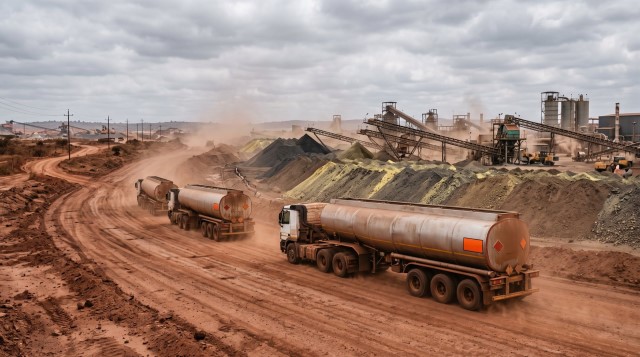
Southern Africa's copper industry sources more than 90% of its sulphur from the Gulf, and disruption to flows through the Strait of Hormuz has left Copperbelt producers facing halted shipments, refinery slowdowns and sharply higher input costs — a reminder that the most dangerous supply chain in mining is often the inbound one.
Supply Chain Management
13 July 2026 • 5 min read
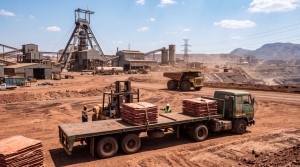
Almost every conversation about Copperbelt logistics is about getting metal out. The vulnerability nobody priced was getting chemicals in. Sulphur — the feedstock for the sulphuric acid that leaches copper and cobalt — moves largely through the Strait of Hormuz, and when that route falters, the Copperbelt's production maths falls apart long before the export trucks are affected.
Copper and cobalt in Zambia and the DRC are largely produced through hydrometallurgical processing — leaching, solvent extraction and electrowinning. That process runs on sulphuric acid, which is made from elemental sulphur. Southern Africa produces very little of its own; more than 90% is imported, and the Gulf is the dominant source region, with the Strait of Hormuz carrying close to half of global sulphur exports.
Conflict-driven disruption to Hormuz therefore lands on the Copperbelt as a raw materials crisis, not a shipping inconvenience. Reported consequences include halted shipments, refinery and plant shutdowns, and steeply rising costs — and a mine that cannot leach cannot produce cathode, whatever the copper price is doing.
Import dependence: Southern Africa sources over 90% of its sulphur from the Gulf region, and the Strait of Hormuz normally carries close to half of global sulphur exports. (Source: Argus Media, 2026)
The inbound shock is arriving alongside outbound regulatory turbulence. The DRC has moved from an outright cobalt export moratorium to a quota-based regime, and recent directives withdrawing unused quotas have raised the prospect of substantial missed shipments — industry estimates point to as much as 20,000 tonnes, worth roughly US$1.1 billion at current prices, potentially stranded by administrative and allocation issues.
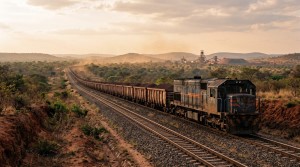
For transporters, that combination is unusually awkward. Reagent volumes inbound become urgent and volatile; metal volumes outbound become uncertain and quota-dependent. Both directions of the same corridor are simultaneously harder to plan — and both are harder to price.
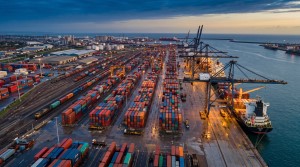
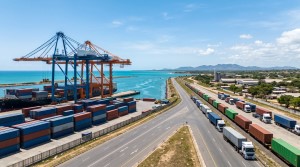
Sulphur and acid reach the Copperbelt through the same ports the metal leaves by: Dar es Salaam, Beira, Walvis Bay, Durban and increasingly Lobito. When Gulf supply tightens, buyers scramble for alternative cargoes from further afield, which means longer sea legs, less predictable vessel arrivals and lumpier inland demand — a quiet week followed by a frantic one. Hauliers geared for smooth, scheduled reagent runs will find their utilisation swinging hard.
It also raises the value of dangerous-goods capability. Sulphur and sulphuric acid are hazardous cargoes requiring correct tankers or containment, trained drivers, valid permits and compliant documentation across multiple jurisdictions. Operators who already hold that capability are positioned to capture premium work in exactly the moment when generalist capacity cannot help.
Map your customers' inbound dependencies, not just their outbound tonnage — if a mine's acid supply stops, your export contract stops with it, and you should know that before your trucks are already positioned. Where you can, build or partner into hazardous-goods capacity for reagent haulage, and write flexibility into contracts so that surges and slumps in volume do not leave you carrying idle assets on a corridor that has suddenly gone quiet.
Stay connected with Southern Africa's freight and transport community.
Join 6,400+ logistics professionals across the SADC region.
Visit Laaimylorrie.com| About the Author | |

|
Andre Klynsmith Entrepreneur & Technology Enthusiast Andre's expertise spans technology, blockchain, transport, and logistics -- with a passion for innovation and driving positive change across industries. |
| Source: Argus Media / Mining Weekly View source › | July 2026 |


Subscribe to our Newsletter and stay in the know with all the latest Industry News, Products and Trends covering the whole of the SADC region.
KS Blockchain T/A Laaimylorrie.com . All Rights Reserved.