Industry related headlines to keep you in the know.
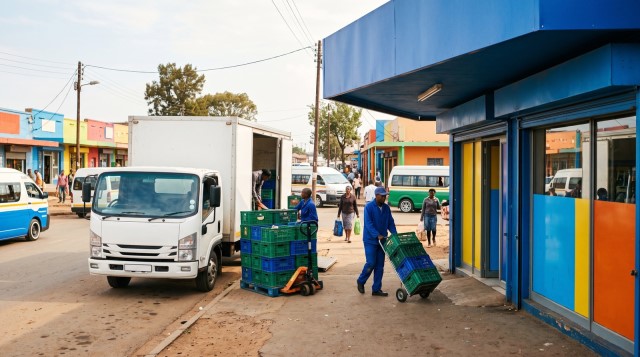
South Africa's biggest grocers are opening stores at a blistering pace — Shoprite alone added 268 outlets in eleven months — and every new shelf has to be filled, which is quietly reshaping the distribution networks that supply them.
Distribution
11 July 2026 • 5 min read
A store-opening arms race between Shoprite, Checkers, Usave and Boxer is adding hundreds of new delivery points a year — many of them small-format outlets in townships and secondary towns. For distribution operators, that means more drops, tighter windows and a growing premium on reliable secondary distribution into places the big trucks were never built to reach.
In the first half of its 2026 financial year, the Shoprite Group opened 268 new stores — blowing past its own target of 223 and doing it in eleven months — behind a R3.9 billion investment aimed largely at growing and upgrading its South African network. The new openings included 41 Shoprite supermarkets, 30 Checkers stores, 48 Usave outlets and 92 LiquorShop branches, with Gauteng taking the largest share at 82 stores, followed by the Western Cape and KwaZulu-Natal.
Rival Boxer is expanding just as aggressively, opening more than 50 net new stores in its 2026 financial year to end the period with 576 locations nationally, backed by a capital programme running into the billions. Together, the two groups are adding hundreds of new retail delivery points a year — and the competitive logic all but guarantees the pace continues.
The distribution load: 268 new Shoprite Group stores in H1 FY2026 alone — 48 of them small-format Usave outlets — each one a new, recurring delivery point that must be replenished multiple times a week. (Source: BusinessTech / The Herald, 2026)
A new store is not a one-off logistics event; it is a permanent addition to a replenishment schedule. Fast-moving grocery formats are typically restocked several times a week, and small-format outlets like Usave — deliberately placed in townships, informal settlements and secondary towns to reach lower-income shoppers — sit exactly where distribution is hardest. Roads are poorer, security risks higher, delivery windows tighter and the drops smaller and more frequent than a single big-box supermarket run.
This is the mechanics behind the headline. Hundreds of new outlets, weighted toward small formats in hard-to-serve areas, multiply the number of individual deliveries a network must make without a matching increase in volume per stop. That shift rewards operators who can run dense, well-planned secondary distribution — many smaller drops per route — rather than those geared only to trunking full loads between a factory and a central warehouse.
The big retailers run their own primary distribution centres and dedicated fleets for the trunk legs, but the last stretch — and the overflow, the peaks and the awkward routes — routinely spills to contracted transporters. For a small or mid-sized fleet with route knowledge, the right vehicle mix (bakkies and 4-to-8-tonne rigids rather than interlink trucks) and disciplined security procedures, this expansion is a durable growth lane, not a passing surge.
It also cascades beyond the tills. Every new store lifts demand at the suppliers and distribution centres feeding it, generating more inbound cartage, more cross-docking and more warehouse throughput. Operators who map where the new outlets are clustering — and position depots, vehicles and drivers to serve those corridors reliably — will be first in line as the retail footprint keeps widening.
The grocery store-rollout race is creating steady demand for secondary distribution — more, smaller, more frequent drops into townships and secondary towns. Fleets with the right small-vehicle mix, route knowledge and security discipline should map where new outlets cluster and position to win replenishment and overflow work as the retail footprint widens.
Stay connected with Southern Africa's freight and transport community.
Join 6,400+ logistics professionals across the SADC region.
Visit Laaimylorrie.com| About the Author | |

|
Andre Klynsmith Entrepreneur & Technology Enthusiast Andre's expertise spans technology, blockchain, transport, and logistics — with a passion for innovation and driving positive change across industries. |
| Source: BusinessTech / The Herald View source › | 11 July 2026 |


Subscribe to our Newsletter and stay in the know with all the latest Industry News, Products and Trends covering the whole of the SADC region.
KS Blockchain T/A Laaimylorrie.com . All Rights Reserved.