Industry related headlines to keep you in the know.
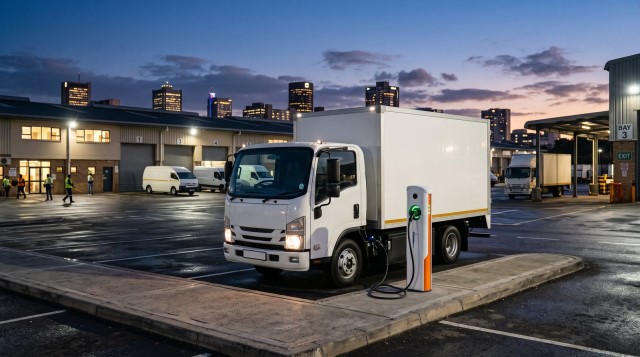
Tata Motors has unveiled 11 new commercial vehicles for sub-Saharan Africa in Cape Town, including a battery-electric range built specifically for zero-emission freight — a sign that the region's electric-truck conversation is shifting from concept to catalogue.
Carbon Footprint
11 July 2026 • 4 min read
For years the barrier to electric freight in Southern Africa was not desire but availability — you could not buy the trucks locally. Tata's new line-up, aimed squarely at urban delivery and light-duty work, starts to close that gap. Diesel still rules the long haul, but the short-range electric case is quietly becoming real.
At its Cape Town launch, the Indian commercial-vehicle giant revealed 11 new trucks, buses and bakkies for the sub-Saharan market, with a battery-electric range at the centre of the announcement. The line-up includes the Ace Pro, a compact delivery vehicle with a range of up to 155km; the Ultra E.9, a light-duty urban truck offering around 140km; and the Prima E28.K tipper, aimed at mining and construction with up to 200km of range.
None of these vehicles is designed to cross a border on a single charge, and that is the point. Their ranges map neatly onto the work that dominates urban and peri-urban freight — parcel rounds, retail replenishment, municipal services and short mine-site haulage — where a truck returns to the same depot every night and can charge on a predictable cycle. It is precisely this duty profile, not long-haul trunking, where electric drivetrains make commercial sense first.
The range that matters: Tata's new electric line-up spans roughly 140km to 200km per charge — short of intercity work, but well matched to the depot-based urban delivery and light-duty cycles that make up a large share of SADC freight movements. (Source: The Herald, 2026)
Every serious analysis of electric freight in Africa lists the same obstacles: high upfront cost, thin charging infrastructure, uncertain grid supply and — underpinning all of them — a shortage of vehicles actually sold and serviced on the continent. Roughly 80% of the world's electric-truck sales still happen in China. A local product launch from an established manufacturer with an existing dealer and parts network chips away at the hardest of those problems: you cannot electrify a fleet with trucks you cannot buy, finance or maintain nearby.
The timing is not accidental. Rising diesel costs are squeezing operators from one side, while tightening emissions expectations — especially strict European Scope 3 supply-chain reporting that flows down to any exporter's logistics providers — press from the other. Increasingly, a low-carbon delivery option is not just a green gesture but a commercial requirement to keep certain contracts.
The honest picture is a two-speed transition. Long-haul, cross-border trunking across the SADC corridors will run on diesel for years yet — the ranges, charging network and payload economics are not there. But urban and light-duty freight is a different market, and it is the one Tata is targeting. An operator with a fixed daily route, a secure depot and the ability to charge overnight can now model a real total-cost comparison rather than a hypothetical one.
The sensible move is to pilot, not to pivot: run one or two electric units on a well-understood urban loop, measure energy cost per kilometre against diesel, and factor in the growing value of being able to offer clients a documented low-emission service. The vehicles are finally here to make that experiment possible.
Electric freight in SADC is now a real option for depot-based urban and light-duty routes, not long-haul. Operators with fixed daily loops and overnight charging can pilot one or two units to test cost-per-kilometre against diesel — and increasingly to meet exporters' low-carbon reporting demands — while keeping the long-haul fleet on diesel.
Stay connected with Southern Africa's freight and transport community.
Join 6,400+ logistics professionals across the SADC region.
Visit Laaimylorrie.com| About the Author | |

|
Andre Klynsmith Entrepreneur & Technology Enthusiast Andre's expertise spans technology, blockchain, transport, and logistics — with a passion for innovation and driving positive change across industries. |
| Source: The Herald View source › | 11 July 2026 |


Subscribe to our Newsletter and stay in the know with all the latest Industry News, Products and Trends covering the whole of the SADC region.
KS Blockchain T/A Laaimylorrie.com . All Rights Reserved.