Industry related headlines to keep you in the know.
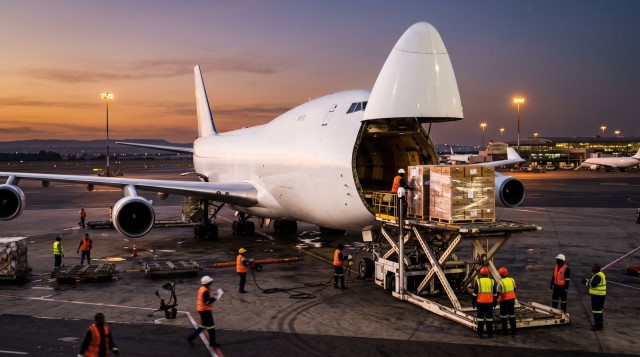
African airlines recorded a 13.3% year-on-year increase in air cargo demand in May 2026 — the strongest performance of any region in the world, according to the International Air Transport Association (IATA). But with capacity up just 1.3%, the continent's air freight market is tightening fast, and SADC shippers of perishables and time-critical cargo will feel it first.
Aviation
7 July 2026 • 3 min read
When demand grows ten times faster than capacity, something has to give — and in air freight, that something is usually the rate. Africa's cargo boom is good news for airlines and a planning challenge for everyone booking space out of Johannesburg, Cape Town or Windhoek this peak season.
Globally, air cargo demand measured in cargo tonne-kilometres rose 6.0% year-on-year in May (6.5% for international operations), while capacity grew just 1.9%. Africa outpaced every other region: North American carriers grew 10.5%, Asia-Pacific 8.0%, while Middle East carriers contracted 8.9% as war-related disruption continued to reroute flows.
May's result is not a one-off. African carriers opened 2026 with an 18.2% demand surge in January — also the strongest of all regions — pointing to a structural shift rather than a seasonal spike.
The capacity gap: African air cargo demand grew 13.3% year-on-year in May 2026 while capacity grew only 1.3% — a ten-to-one imbalance that points to tighter space and firmer rates. (Source: IATA, 2026)
Perishables remain the backbone of African air exports — fruit, vegetables and flowers from South Africa, Kenya and beyond — with growing demand from Middle Eastern markets adding to the traditional European flows. E-commerce, pharmaceuticals and energy-related cargo are also expected to perform strongly through 2026.
Trade rerouting plays a part too. As shippers adjust to tariff turbulence and Red Sea-driven ocean delays, air freight has absorbed time-sensitive volumes that can no longer tolerate unpredictable sea transit times — a dynamic that favours African carriers connecting the continent to Gulf and Asian hubs.
Growth of 13.3% against capacity growth of 1.3% means load factors on African routes are climbing steeply. For freight forwarders, that translates into scarcer belly-hold space on passenger services, earlier booking cut-offs and upward pressure on spot rates — particularly on export lanes for perishables where timing cannot flex.
Infrastructure is the other constraint. Cargo terminal capacity, cold-chain handling and airport slot availability across the region were built for a smaller market. Upgrades are coming — but demand is arriving faster than concrete is being poured.
If you move airfreight — or truck cargo to and from airports — plan for a tight second half of 2026. Book space earlier, lock in rates where possible, and expect airport precinct volumes to keep climbing. Road transporters serving OR Tambo, Cape Town and regional airports should see steady feeder demand as air volumes grow.
Stay connected with Southern Africa's freight and transport community.
Join 6,400+ logistics professionals across the SADC region.
Visit Laaimylorrie.com| About the Author | |

|
Andre Klynsmith Entrepreneur & Technology Enthusiast Andre's expertise spans technology, blockchain, transport, and logistics -- with a passion for innovation and driving positive change across industries. |
| Source: IATA View source › | 29 June 2026 |


Subscribe to our Newsletter and stay in the know with all the latest Industry News, Products and Trends covering the whole of the SADC region.
KS Blockchain T/A Laaimylorrie.com . All Rights Reserved.