Industry related headlines to keep you in the know.
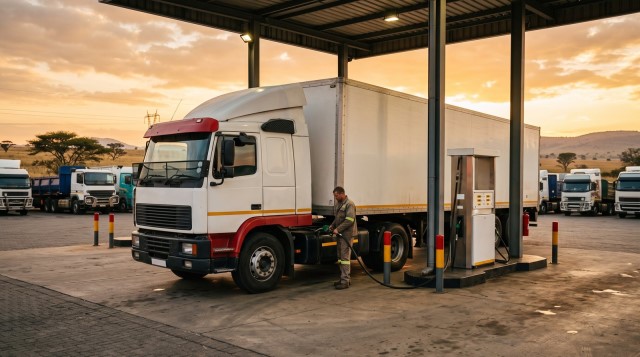
South African diesel prices fell sharply from Wednesday 1 July 2026, with 50ppm diesel down R3.59 per litre and 500ppm down R3.14 — the biggest single-month relief freight operators have seen this year, and a rare chance to reset cost-per-kilometre downward.
Economy and Markets
1 July 2026 • 4 min read
After a brutal April that added R7.51 a litre to diesel, the July cut is real breathing room. But it is a market swing, not a structural change — and operators who bank the saving without repricing risk giving it straight back the next time the rand or Brent moves.
From 1 July 2026, South African wholesale diesel dropped by R3.59 per litre for 50ppm and R3.14 for 500ppm, bringing 500ppm to around R23.91 at the coast and R24.78 inland, with 50ppm at roughly R24.41 and R25.16 respectively. Petrol was cut too — 93 Unleaded by R2.01 and 95 by R1.96 — putting 95 Unleaded at about R25.23 at the coast and R26.11 in Gauteng.
The decrease was driven mainly by softer international oil prices and a firmer rand over the review period. For a heavy-vehicle fleet, a R3-plus cut on diesel is the difference between a squeezed month and a workable one.
What it saves: On a long-haul truck burning ~35 litres/100km over 12,000km a month, the R3.59 cut on 50ppm diesel is worth roughly R15,000 per truck per month versus June pricing. (Source: Laaimylorrie.com calculation based on July 2026 fuel prices, IOL Motoring)
The July cut lands only three months after diesel jumped R7.51 in April — a 32% operating-cost shock for many fleets. That whiplash is the real story. Fuel is the single largest controllable cost line for most SADC hauliers, typically 35% to 55% of total operating costs, and it is set by two variables neither operator nor regulator controls: the Brent crude price and the rand exchange rate.
For Namibian operators, the pass-through is similar but lagged, with NAMCOR setting monthly prices off the same global drivers. The lesson from the past year is that a good month can reverse fast, so the July saving is best treated as a buffer to build, not a windfall to spend.
The operators who benefit most from a fuel-price drop are the ones who measure it. Re-run your cost-per-kilometre at the new diesel price and compare it against the rates you quoted clients in Q2. Where fuel-surcharge clauses exist, apply them honestly in both directions — adjusting down now builds the credibility to adjust up when prices climb again.
This is also the ideal window to lock in efficiency gains. Route optimisation, driver-behaviour coaching and tighter fuel monitoring deliver percentage savings on every litre — and those savings compound whether diesel is cheap or expensive.
Use the July cut to rebuild margin and cash buffers, not to under-price contracts you cannot sustain when fuel rebounds. Reprice your cost-per-kilometre this week, honour fuel-surcharge clauses in both directions, and invest part of the saving in efficiency measures that pay back regardless of the pump price.
Stay connected with Southern Africa's freight and transport community.
Join 6,400+ logistics professionals across the SADC region.
Visit Laaimylorrie.com| About the Author | |

|
Andre Klynsmith Entrepreneur & Technology Enthusiast Andre's expertise spans technology, blockchain, transport, and logistics -- with a passion for innovation and driving positive change across industries. |
| Source: IOL Motoring / Fuels Industry Association of South Africa View source › | 1 July 2026 |


Subscribe to our Newsletter and stay in the know with all the latest Industry News, Products and Trends covering the whole of the SADC region.
KS Blockchain T/A Laaimylorrie.com . All Rights Reserved.