Industry related headlines to keep you in the know.
Namibia has moved to bring a private operator into the running of the Walvis Bay container terminal, with the environmental public-comment window on the operation-and-management plan set to close on 29 June 2026 — a step that could reshape how the western SADC gateway competes for regional cargo.
PORTS AND TERMINALS
28 June 2026 • 5 min read
Walvis Bay has the berths, the depth and the 750,000-TEU capacity. What it has lacked is the throughput to match. Bringing in a private operator is Namibia’s bet that better terminal management will turn spare capacity into a genuine alternative to congested east-coast ports.
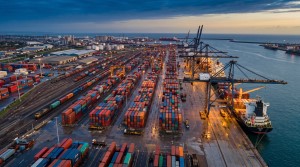
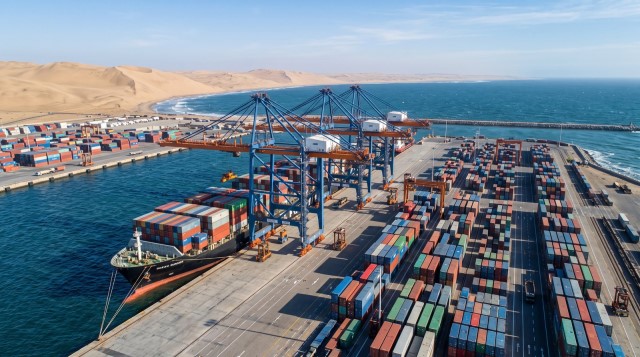
The new Walvis Bay container terminal, built on 40 hectares of reclaimed land and commissioned in 2019, lifted the port’s container capacity from 350,000 TEUs a year to 750,000. Its three deep-water berths can handle vessels of up to 8,000 TEUs — a class of ship that simply could not call at the old quay. On paper, it is one of the most modern box terminals on Africa’s west coast.
Yet utilisation has consistently sat well below that ceiling. Walvis Bay handled a record of roughly 254,000 TEUs in its 2024/25 financial year — a strong result, but only about a third of the terminal’s design capacity. The gap between what the terminal can move and what it actually moves is precisely the prize a private operator would be brought in to capture.
The capacity gap: Walvis Bay’s container terminal is designed for 750,000 TEUs a year but handled a record of roughly 254,000 TEUs in 2024/25 — leaving close to two-thirds of its capacity unused. (Source: Namibian Ports Authority (Namport), 2026)
Bringing a specialist terminal operator into a publicly owned port is a model that has already reshaped Durban’s Pier 2 and is being rolled out across Transnet’s network. The logic is the same everywhere: private operators bring capital, equipment discipline and commercial incentives to lift crane productivity, cut vessel waiting times and win shipping-line volume. For Namport, the environmental authorisation process for the operation and management of the terminal is the procedural gateway to that arrangement, with public comment closing on 29 June 2026.
The timing is no accident. Durban and Ngqura have at times had dozens of ships queuing offshore, with reports of nearly 80 vessels waiting during the worst congestion episodes of the past year. Every day a box sits on a ship outside Durban is a day a Copperbelt importer might have chosen Walvis Bay instead — if the Namibian terminal can promise reliable, fast turnaround.
Walvis Bay is the sea end of the Trans-Kalahari and Trans-Cunene corridors, the natural gateways for Botswana, Zambia, southern DRC and parts of Angola. A terminal that runs efficiently — with predictable berthing windows and quick rail and road evacuation inland — turns that geography into a commercial advantage. A terminal that runs at a third of capacity does not.
For shippers, the question is not whether Walvis Bay is closer than Durban for a given cargo, but whether the whole chain — berth, terminal, customs, corridor — is dependable enough to switch a regular flow of containers onto it. A credible private operator with throughput targets is exactly the signal that would justify giving the western route a serious trial in the second half of 2026.
If the concession proceeds, importers and forwarders serving Botswana, Zambia and the DRC should re-run their landed-cost and transit-time comparisons with Walvis Bay in the mix — a higher-performing terminal could make the western corridor cheaper and more predictable than a congested east-coast routing. Watch for the operator announcement and any published productivity or vessel-turnaround commitments before committing volume.
Stay connected with Southern Africa's freight and transport community.
Join 6,400+ logistics professionals across the SADC region.
Visit Laaimylorrie.com| About the Author | |

|
Andre Klynsmith Entrepreneur & Technology Enthusiast Andre's expertise spans technology, blockchain, transport, and logistics — with a passion for innovation and driving positive change across industries. |
| Source: Namibian Ports Authority (Namport) / Global Africa Network View source › | 28 June 2026 |


Subscribe to our Newsletter and stay in the know with all the latest Industry News, Products and Trends covering the whole of the SADC region.
KS Blockchain T/A Laaimylorrie.com . All Rights Reserved.