Industry related headlines to keep you in the know.
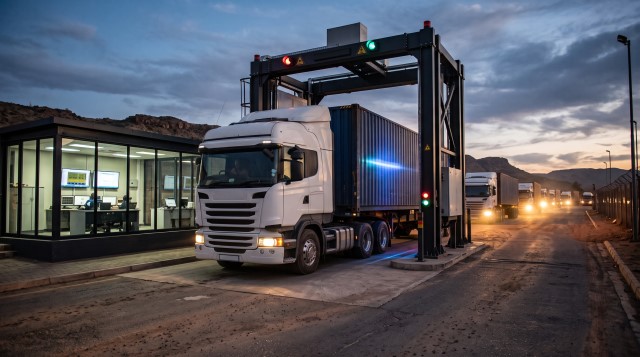
Customs authorities across Africa, including South Africa, are accelerating the rollout of artificial intelligence systems that profile cargo risk before a truck ever reaches the border, marking 2026 as the year AI moved from port pilots into the customs mainstream.
Technology and Trends
5 June 2026 • 3 min read
AI-driven risk engines now decide which consignments get scanned, which get stopped and which roll straight through — and they reward operators with clean data and compliant track records. For SADC transporters, the message is blunt: in the smart-border era, your paperwork history is becoming your fast lane.
According to an April 2026 analysis by law firm Baker McKenzie, customs authorities in South Africa, Egypt, Kenya, Morocco and Nigeria are deploying intelligence-enabled systems designed to detect non-compliance earlier in the clearance chain while reducing physical inspections for trusted traders. The toolkit includes AI-driven risk profiling, automated cargo scanning, biometric identity checks and electronic clearance.
The logic is simple: instead of inspecting a fixed percentage of trucks at random, the system scores every declaration against historical data — shipper history, route patterns, commodity codes, valuation anomalies — and concentrates enforcement where the model sees risk. Compliant operators clear faster; outliers get flagged before arrival.
Continental rollout: At least five major African economies — South Africa, Egypt, Kenya, Morocco and Nigeria — are now deploying AI-enabled customs risk systems, with smart-border technology also live in Rwanda and Ghana. (Source: Baker McKenzie, 2026)
For the region's chronically congested crossings, AI risk profiling could shift the bottleneck from inspection bays to data quality. A truck whose declaration, manifest and tracking data align gets a green channel; a consignment with mismatched values or a patchy compliance history attracts exactly the scrutiny that used to be spread randomly across everyone.
The flip side is earlier detection. AI systems surface undervaluation, misclassification and origin discrepancies that manual review often missed. Operators who relied on inconsistent enforcement as a buffer will find the new systems less forgiving — and penalties arriving with data trails attached.
The clearest winners are accredited operators. Authorised Economic Operator (AEO) and preferred-trader schemes, long underused in the region, become genuinely valuable when an algorithm is allocating inspection resources: accreditation feeds directly into a lower risk score and fewer stops.
Preparation does not require enterprise software. Clean, consistent commercial invoices, accurate HS codes, complete transporter records and a documented compliance history are the inputs the models read. Small fleets that get those basics right will compete for the same green channels as the multinationals.
As AI risk engines spread from South Africa northwards, border waiting time will increasingly track data quality, not queue position. Start building a clean compliance record now, pursue AEO or preferred-trader accreditation where available, and make sure your clearing agents submit consistent, accurate declarations — the algorithm remembers.
Stay connected with Southern Africa's freight and transport community.
Join 6,400+ logistics professionals across the SADC region.
Visit Laaimylorrie.com| About the Author | |

|
Andre Klynsmith Entrepreneur & Technology Enthusiast Andre's expertise spans technology, blockchain, transport, and logistics -- with a passion for innovation and driving positive change across industries. |
| Source: Baker McKenzie View source › | 5 June 2026 |


Subscribe to our Newsletter and stay in the know with all the latest Industry News, Products and Trends covering the whole of the SADC region.
KS Blockchain T/A Laaimylorrie.com . All Rights Reserved.