Industry related headlines to keep you in the know.
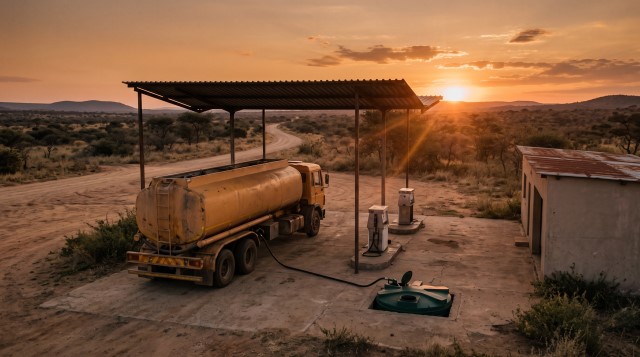
From midnight on 8 May 2026, Namibian fuel prices jumped by up to N$4.63 per litre — one of the country's sharpest single-month hikes in recent history. The Ministry of Industries, Mines and Energy confirmed government will absorb roughly N$1.3 billion through the National Energy Fund to cushion the shock for April and May, but the message to fleet operators is clear: SADC freight cost inflation is now actively repricing in real time.
Economy and Markets
31 May 2026 • 4 min read
Walvis Bay 50ppm diesel is now N$28.26 per litre. The Namibian government is absorbing N$1.3 billion to soften the blow. South Africa's fuel-levy relief halves in June. Taken together, this is the most significant SADC fuel cost reset of 2026 — and it lands directly on freight P&Ls.
The Namibian fuel hike, effective 8 May 2026, pushed Walvis Bay pump prices to N$23.48 per litre for petrol, N$28.26 for 50ppm diesel and N$28.36 for 10ppm diesel. The Ministry attributed the increases to rising global oil prices, geopolitical tensions in the Middle East, and elevated supplier premiums — with international fuel procurement premiums into Walvis Bay currently sitting between N$0.50 and N$2.00 per litre above normal landed costs.
The Namibian government's N$1.3 billion absorption — N$805 million for April under-recoveries and a projected N$490 million for May — was significant. Without it, the pump-price increase would have been markedly worse. But fiscal support of this scale is finite, and the absorption mechanism cannot be sustained indefinitely if global oil prices remain elevated.
Cross-border view: South Africa's general fuel levy relief halves on 1 June 2026 — petrol relief drops to R1.50/litre and diesel relief to R1.96/litre — while the 1 July 2026 fuel-levy restoration window approaches. SADC's two largest fuel-consuming economies are tightening simultaneously. (Source: Namibia MME / South African National Treasury / BusinessTech, 2026)
SADC freight is structurally exposed to fuel because the regional mode mix remains overwhelmingly road-based. Rail reform in South Africa is real but early, and TAZARA and Lobito will take years to materially shift modal share. Until then, every cent on a litre of diesel translates into a measurable cost line on cross-border haulage, and those increases ripple downstream into FMCG, food, building materials and mineral exports.
Compounding the picture is currency exposure. The rand and the Namibian dollar both move with US dollar pricing of Brent and refined product, so even a stable global price is not stable for SADC operators if local currencies weaken. The Iran-related risk premium that has held Brent in the $100-plus per barrel range through 2026 has now combined with structural supplier premiums into Walvis Bay to create a persistent cost layer.
Operators carrying long-tail rate cards that were negotiated in late 2025 or early 2026 are now meaningfully out of the money. Three actions are now overdue: re-run cost-per-kilometre models on the new diesel base, trigger fuel-clause adjustments in existing contracts where the mechanism exists, and open conversations with shippers about indexation for renewal cycles. Shippers will resist — but the alternative for the operator is absorbing the increase and watching margins evaporate over the back half of 2026.
For finance teams, the secondary risk is working capital. Higher pump prices push up the fuel float carried in pre-funded fuel cards and bulk tanks. A fleet running 300,000 litres per month at N$28/litre is funding nearly N$3 million more per quarter in fuel inventory than it was six months ago — a balance sheet hit that often goes unmodelled until it surfaces in covenant calculations.
The May 2026 Namibian fuel hike, combined with South Africa's June halving of fuel-levy relief and the looming 1 July restoration, marks the most material SADC fuel cost reset of the year. Operators should re-run cost-per-kilometre models, trigger fuel-clause adjustments where contractual, and open renewal conversations on indexation. Working capital exposure to higher fuel floats also needs to be modelled into Q3 forecasts.
Stay connected with Southern Africa's freight and transport community.
Join 6,400+ logistics professionals across the SADC region.
Visit Laaimylorrie.com| About the Author | |

|
Andre Klynsmith Entrepreneur & Technology Enthusiast Andre's expertise spans technology, blockchain, transport, and logistics -- with a passion for innovation and driving positive change across industries. |
| Source: Namibia Ministry of Industries, Mines and Energy — May 2026 Fuel Price Review; The Brief — Namibia Fuel Prices Rise; BusinessTech — SA Diesel Relief Halves in June View source › | 31 May 2026 |


Subscribe to our Newsletter and stay in the know with all the latest Industry News, Products and Trends covering the whole of the SADC region.
KS Blockchain T/A Laaimylorrie.com . All Rights Reserved.