Industry related headlines to keep you in the know.
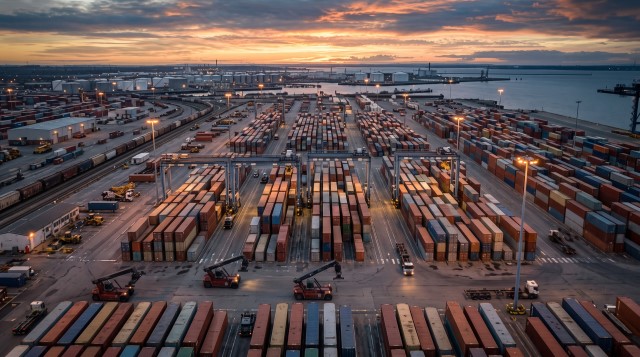
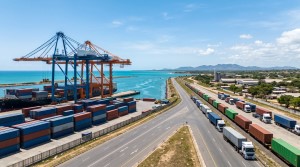
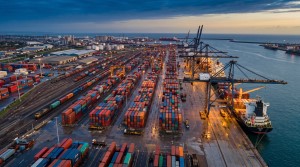
Terminal Investment Namibia (TIN) has added six rubber-tyred gantry (RTG) cranes to its Walvis Bay container terminal in May 2026, in the latest move to lift productivity and accommodate rising cargo volumes through the western SADC gateway. The investment, made under TIN's long-term concession with the Namibian Ports Authority, signals that Walvis Bay's container capability is being scaled in parallel with the wider Africa container deployment boom.
Cargo Handling
31 May 2026 • 4 min read
Six RTGs are not a headline-grabbing number on their own. But layered onto Walvis Bay's existing yard capacity, the additional cranes are the difference between berth-window discipline and chronic dwell — and between SADC shippers using Walvis Bay opportunistically and qualifying it as a primary gateway.
RTG cranes move containers between the quayside and the stacking yard, and back to the truck or rail interchange. They are the under-appreciated bottleneck in most African container terminals — quay cranes do the headline lifting, but yard productivity decides how quickly that work converts into trucks moving out of the gate. Adding six RTGs to Walvis Bay's fleet directly addresses the yard-side throughput equation that has, in past peak months, throttled the port's nominal capacity.
The timing aligns with TIN's broader programme to push Walvis Bay's container throughput toward 750,000 TEU per year in the medium term. With Asia–West Africa deployed vessel capacity up sharply year-on-year and shipping lines actively qualifying secondary African gateways, additional yard equipment is the prerequisite for converting interest into committed services.
Concession context: TIN, part of the MSC-backed Terminal Investment Limited group, operates the Walvis Bay container terminal under a 25-year concession granted by NamPort. The May 2026 RTG addition is part of phased equipment, IT and infrastructure upgrades agreed under the concession. (Source: Walvis Bay Corridor Group, 2026)
Walvis Bay's competitive proposition rests on two pillars: deep-water access on Africa's western coast and corridor connectivity into Botswana, Zambia, the DRC and Angola via the Trans-Kalahari, Trans-Caprivi/Walvis Bay–Ndola–Lubumbashi and Trans-Cunene corridors. Yard capacity has historically been the weak link — especially when bulk and project cargo competed with containers for terminal real estate.
The new RTGs reduce that pressure and allow TIN to operate with tighter stack densities without sacrificing turnaround. For freight forwarders running North–South Corridor traffic that currently flows through Durban or Maputo, this changes the trade-off. Walvis Bay's value proposition — uncongested berth windows, cleaner road runs and a shorter ocean transit from South America — becomes harder to ignore once terminal-side risk is removed.
Cargo handling planning in SADC has been overly Durban-centric for two decades. With Walvis Bay's RTG fleet now expanded, Maputo Port breaking ground on a $2 billion expansion, and Ngqura positioning as a transshipment hub, shippers and forwarders should be re-running their corridor models with multi-gateway assumptions baked in. Sole-port dependence is now a risk-management failure, not a procurement simplification.
For cargo handling operators specifically, the next 18 months will demand investment in trained RTG and reach-stacker operators, integrated terminal operating systems, and tighter pre-advice flows from shipping lines. The terminals are putting steel on the ground; the question is whether the wider SADC handling ecosystem — agents, transporters, rail interchange operators — can keep up.
Walvis Bay's expanded RTG capacity is one more reason to treat the western seaboard as a genuine container gateway, not a fallback. SADC shippers should re-qualify Walvis Bay alongside Durban and Maputo in 2026 corridor planning, and transport operators should be positioning fleets and clearing capability on the Trans-Kalahari and Walvis Bay–Ndola corridors to capture the volume shift.
Stay connected with Southern Africa's freight and transport community.
Join 6,400+ logistics professionals across the SADC region.
Visit Laaimylorrie.com| About the Author | |

|
Andre Klynsmith Entrepreneur & Technology Enthusiast Andre's expertise spans technology, blockchain, transport, and logistics -- with a passion for innovation and driving positive change across industries. |
| Source: Walvis Bay Corridor Group — Trade Corridor Update; Namibia Trade Network — Walvis Bay Container Terminal Briefing View source › | 31 May 2026 |


Subscribe to our Newsletter and stay in the know with all the latest Industry News, Products and Trends covering the whole of the SADC region.
KS Blockchain T/A Laaimylorrie.com . All Rights Reserved.