Industry related headlines to keep you in the know.
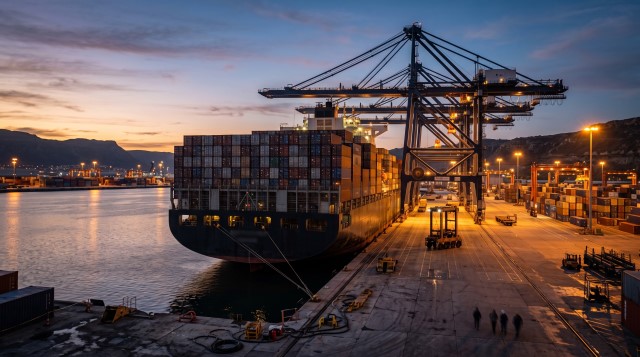
The world's container shipping carriers are running out of places to put their newest ships, and Africa is fast becoming the answer. New data from early 2026 confirms that the continent — and Southern Africa in particular — is absorbing an unprecedented share of global container capacity.
SHIPPING AND LOGISTICS
30 May 2026 • 4 min read
Global carriers are rerouting an outsized share of their 2026 newbuild deliveries to African trade lanes. With Asia-West Africa vessel counts jumping 34% in twelve months and Sub-Saharan container volumes climbing 27.3% year-on-year, the strategic centre of global shipping is shifting south.
According to industry data published in May 2026, between 70% and 80% of all new container vessels entering service this year will be deployed on secondary trades — and Africa now sits at the top of that list. The reason is simple: with Asia-Europe and Trans-Pacific rates squeezed by trade-war volatility and Red Sea uncertainty, carriers are searching for routes where demand is genuinely growing.
They are finding that growth on African lanes. The Asia–West Africa corridor alone saw deployed vessels rise from 122 in January 2025 to 164 by January 2026, a 34% increase in a single year. MSC has already begun deploying 23,000+ TEU vessels on the same trade, and since January 2024, 26 vessels above 15,000 TEU have entered service on routes connecting to West Africa.
Trade-lane growth: Sub-Saharan Africa container traffic is up 27.3% year-on-year — the fastest growth rate of any global region in 2026. (Source: Kuehne-Nagel / Container News, May 2026)
The deployment surge is no longer limited to West Africa. Maputo's $2 billion expansion broke ground in May 2026, Walvis Bay is deepening its channel to 17 metres for larger vessels, and Durban's ICTSI-operated Pier 2 is on a contractual ramp to 2.8 million TEU. The AD Ports-backed Noatum Luanda Terminal — Angola's first deepwater container facility — opens commercially in the second half of 2026, putting Angola firmly inside the "big ship club" for the first time.
For SADC importers and exporters, this matters more than headline tonnage. Larger vessels mean fewer port calls per service, longer port stays, and a more concentrated reefer and dry-container market. Shippers that have grown used to weekly calls at multiple smaller terminals may find their cargo consolidated into bi-weekly or fortnightly calls at flagship gateways.
As carriers deploy larger ships, the question is whether SADC ports can handle them at the crane-moves-per-hour rates required to make ultra-large calls economical. Durban's Pier 2 has lifted productivity from 18 to 28 moves per hour under ICTSI, but most other SADC ports lag well behind. Carrier discipline on slot allocation is also tightening — shippers without long-tenor service contracts may find themselves squeezed onto feeder vessels with extra transhipment legs.
The medium-term picture is unambiguous: more African capacity, larger ships, and a structural shift away from the Asia-Europe trade-centric model of the last two decades. SADC shippers entering 2027 freight tenders should expect more carrier choice, more rate volatility, and a stronger need to qualify multiple gateways into their corridor plans.
Add at least one secondary port — Walvis Bay, Maputo, Beira or Luanda — to your 2027 contract planning. Larger vessels and fewer calls mean SADC shippers tied to a single gateway will lose flexibility and pricing leverage as the year progresses.
Stay connected with Southern Africa's freight and transport community.
Join 6,400+ logistics professionals across the SADC region.
Visit Laaimylorrie.com| About the Author | |

|
Andre Klynsmith Entrepreneur & Technology Enthusiast Andre's expertise spans technology, blockchain, transport, and logistics — with a passion for innovation and driving positive change across industries. |
| Source: Kuehne-Nagel / Container News / The Africa Report View source › | 30 May 2026 |


Subscribe to our Newsletter and stay in the know with all the latest Industry News, Products and Trends covering the whole of the SADC region.
KS Blockchain T/A Laaimylorrie.com . All Rights Reserved.