Industry related headlines to keep you in the know.
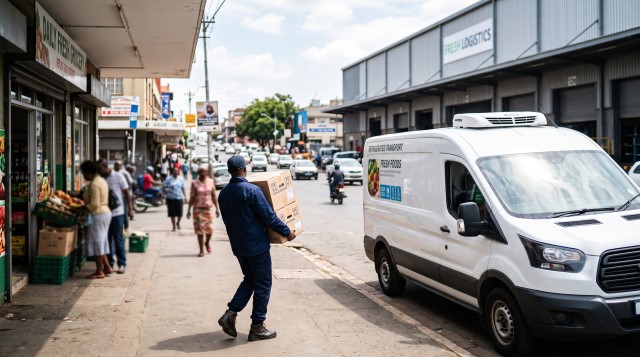
The global cold-chain last-mile market is forecast to grow from roughly $10 billion in 2025 to nearly $18 billion by 2032, and SADC operators have a narrow window to capture a meaningful share. The region's distribution networks already extend across all 12 SADC countries — what they have not yet done is industrialise the cold chain layer at the speed the demand curve now requires.
Distribution
29 May 2026 • 5 min read
E-commerce, pharma compliance, fresh produce export demand and FMCG modernisation are all pushing in the same direction in 2026. The SADC distribution operators that build credible cold-chain last-mile capability over the next 18 months will define the region's distribution landscape for the rest of the decade.
Three demand drivers are pulling SADC cold-chain distribution forward simultaneously. The first is quick-commerce in South Africa's metros, where Checkers Sixty60, Woolworths Dash and Pick n Pay ASAP have expanded dark-store networks beyond Gauteng and Cape Town into secondary metros and into Windhoek's Kleine Kuppe and parts of Lusaka. The second is pharmaceutical compliance — vaccine programmes, biologics distribution and chronic-disease therapies are all demanding GDP-compliant, temperature-validated last-mile delivery. The third is fresh-produce export demand, where reefer slot scarcity at SA ports is creating new pull for cold-chain consolidation hubs at Maputo and Walvis Bay.
Underpinning all three is the broader market projection: the global food cold-chain last-mile market is expected to grow at 8.3% CAGR from approximately $10.24 billion in 2025 to $17.98 billion by 2032. SADC's share of that growth is structurally larger than its current footprint warrants — meaning the operators that build first will harvest market share that has not yet been allocated.
Global market step-up: Cold-chain last-mile delivery is forecast to grow from $10.24bn (2025) to $17.98bn (2032) — an 8.3% CAGR. (Source: Coherent Market Insights / Research and Markets, 2026)
The gap is not in primary distribution — SA-Zambia, SA-Mozambique and SA-Namibia reefer trunking lanes are reasonably well served by long-haul operators. The gap is in the last-mile leg: the move from regional distribution centre to retail shelf, pharmacy counter or consumer doorstep, under temperature integrity and with digital audit-trail compliance. Across most SADC secondary cities, that last-mile leg is still served by ambient-temperature vehicles, manual paperwork, and informal couriers running on diesel-intensive multi-stop routes.
At the same time, the cost picture is moving in the wrong direction for the incumbent model. Diesel above R29 per litre in SA's inland regions and N$24+ in Namibia is making distance-based, multi-stop last-mile economics increasingly fragile. Operators are responding with three shifts: dark-store proximity (cutting average delivery distance), consolidated replenishment runs (cutting empty kilometres), and electric or hybrid two-wheeler courier fleets for sub-5km zones in metros.
Five capabilities will separate the cold-chain distribution operators that win SADC market share from those that get squeezed: validated reefer fleet with continuous telemetric temperature logging; multi-temp warehousing within 10–15 km of metro demand centres; digital track-and-trace producing an auditable cold-chain record; trained last-mile drivers with GDP-aligned handling SOPs; and cross-border customs and permit capability for SADC reefer movements (especially Namibia, Botswana, Mozambique and Zambia).
The capital-light way to compete is partnership-led. SADC distribution specialists are increasingly building hybrid models — owning the regional DC, the reefer trunk and the data layer, while contracting last-mile delivery to local micro-operators under enforceable cold-chain SOPs and digital audit trails. That structure is already working for the Shoprite Lusaka South DC build-out, and is being studied by FMCG principals planning Angola and DRC distribution from 2027.
Cold-chain last-mile is the single most under-built distribution capability in SADC and the demand curve is now turning sharply upward. Operators should prioritise reefer fleet renewal with continuous temperature logging, secure multi-temp warehousing close to metro demand, and build cross-border customs and permit capability now rather than wait for principals to demand it.
Stay connected with Southern Africa's freight and transport community.
Join 6,400+ logistics professionals across the SADC region.
Visit Laaimylorrie.com| About the Author | |

|
Andre Klynsmith Entrepreneur & Technology Enthusiast Andre's expertise spans technology, blockchain, transport, and logistics — with a passion for innovation and driving positive change across industries. |
| Source: Coherent Market Insights / Cold Chain SA / Pharmaceutical Commerce View source › | 29 May 2026 |


Subscribe to our Newsletter and stay in the know with all the latest Industry News, Products and Trends covering the whole of the SADC region.
KS Blockchain T/A Laaimylorrie.com . All Rights Reserved.