Industry related headlines to keep you in the know.

The AU's new AfCFTA Implementation Committee, inaugurated in Accra in February 2026, and the SADC Foreign Ministers' retreat at Skukuza in May, are starting to look like the same political project — and for SADC freight operators, that alignment is finally beginning to translate into rules they can plan around.
Politics Insight
27 May 2026 • 4 min read
Six months after the AfCFTA digital customs platform launched its 15-state pilot, the political scaffolding around it is finally hardening. Accra delivered the Heads of State Implementation Committee. Skukuza delivered the SADC-wide political backing. The freight industry is the constituency that benefits most if the two stay aligned.
In February 2026, on the sidelines of the 39th AU Assembly in Accra, the African Union inaugurated the Heads of State and Government Committee on Implementation of the AfCFTA. The committee is a small, accountable structure whose job is to keep the AfCFTA's policy commitments — tariff phase-downs, rules of origin, digital customs integration — moving on schedule. The signal was clear: the political class wants implementation, not more declarations.
Three months later, the SADC Foreign Ministers' retreat at Skukuza did the regional companion piece. Hosted by South Africa, the retreat focused on a unified SADC response to external trade pressure, on coordinating with the AfCFTA Implementation Committee, and on making sure SADC's 16 member states are not negotiating against each other at the continental level. For an industry that lives or dies on customs harmonisation, the symbolism — and increasingly the substance — matters.
AfCFTA digital customs pilot: 15 member states integrated into the platform; trade document processing times reduced from five days to six hours in early tests. (Source: tralac & AfCFTA Secretariat, 2025/2026)
The political alignment is starting to convert into operational change in three places. First, the AfCFTA digital customs platform — now live across 15 states with South Africa, Kenya and Ghana as the lead pilots — is moving from proof-of-concept into routine use. Second, Mozambique's World Bank-supported one-stop border programme is rolling out integrated customs data sharing across six OSBPs covering Mozambique, Malawi, Zambia, South Africa and Zimbabwe. Third, SADC's revised Regional Guidelines on Cross-Border Transport, approved by Council last year, are being domesticated by member states through 2026 and 2027.
For the freight industry, these three streams are starting to interact. A truck cleared digitally in Accra can theoretically be pre-cleared into Johannesburg through the same platform. A consignment using AfCFTA preferential rules of origin can move across the SADC-COMESA-EAC Tripartite Simplified Trade Regime — and the political scaffolding to make that work is being installed.
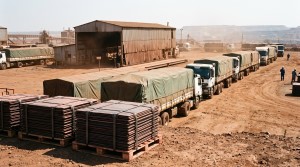
The risk for freight operators is not that the policy direction reverses. The risk is that implementation slips. The AfCFTA tariff offers are still incomplete on the continental level. SADC's own Regional Development Fund ratification has stalled. Individual border systems — most visibly Kasumbalesa — continue to underperform regardless of how many declarations are signed.
The operators who benefit most in 2026 will be the ones who track the implementation calendar as closely as they track the diesel price. The next signals to watch: the AfCFTA Implementation Committee's report-back in October, the SADC Summit of Heads of State in eThekwini later this year, and the publication of the AfCFTA Council of Ministers' decisions on digital customs expansion to the next tier of pilot states.
Customs and border reform is no longer just a SADC story or just an AfCFTA story — it is one continental policy stack with two layers. Operators should build their 2026–2027 cross-border playbook against both calendars, and prioritise the corridors and customs platforms where SADC and AfCFTA implementation are clearly synchronised.
Stay connected with Southern Africa's freight and transport community.
Join 6,400+ logistics professionals across the SADC region.
Visit Laaimylorrie.com| About the Author | |

|
Andre Klynsmith Entrepreneur & Technology Enthusiast Andre's expertise spans technology, blockchain, transport, and logistics — with a passion for innovation and driving positive change across industries. |
| Source: tralac — From Queues to Clicks: How SADC and AfCFTA digital borders can drive efficiency and inclusivity in cross-border trade View source › | 27 May 2026 |


Subscribe to our Newsletter and stay in the know with all the latest Industry News, Products and Trends covering the whole of the SADC region.
KS Blockchain T/A Laaimylorrie.com . All Rights Reserved.