Industry related headlines to keep you in the know.
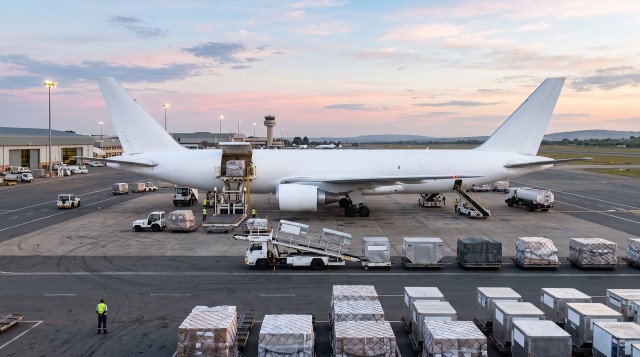
African airlines were the only region to grow air cargo demand in March 2026, posting a 7% year-on-year increase even as global cargo volumes fell sharply.
Aviation
25 May 2026 • 4 min read
IATA data shows African airlines led world air cargo growth in March 2026 with a 7.0% year-on-year demand increase, while global demand contracted by 4.8%. After double-digit growth in January and February, it confirms a structural shift — and a standing question for SADC operators about how much of that freight the region actually captures.
March 2026 was a difficult month for global air freight. Worldwide cargo demand fell 4.8% year on year as trade uncertainty and softer manufacturing weighed on volumes. Against that backdrop, African carriers stood alone — the only region to record growth, up 7.0%.
The March figure follows an exceptional start to the year. African airlines posted an 18.2% demand increase in January and 21.0% in February, the strongest of any region in both months. March's more modest 7.0% partly reflects a tougher global comparison, but the direction is unmistakable: Africa has decoupled from the global cycle and is growing while others stall.
Industry figure: African airlines grew air cargo demand 7.0% year on year in March 2026 — the only region to grow — while global demand fell 4.8%. (Source: IATA, 2026)
The clearest engine is the Africa–Asia trade lane, which surged 61.9% year on year in February 2026 after 41.6% growth in January. Rising imports of manufactured and e-commerce goods from Asia, combined with African exports of perishables, pharmaceuticals and high-value minerals, are filling aircraft in both directions. New freighter routes and expanded networks from Gulf and African carriers have added the capacity to carry it.
IATA has been candid that the picture is not uniformly positive. At its Focus Africa engagements this year, the association stressed that strong demand growth sits alongside persistent structural challenges — high operating costs, infrastructure gaps and marginal airline profitability across much of the continent. Growth is real, but it is not yet comfortable.
For Southern Africa, the headline growth is an opportunity that is not yet fully claimed. Much of the continent's air cargo momentum runs through hubs in East and North Africa. SADC's share depends on whether airports such as OR Tambo, and the region's perishable and mineral exporters, can offer the cold chain, handling capacity and connecting capacity that shippers need.
Freight forwarders and exporters should treat 2026 as a window. Demand for African air cargo is strong, capacity is expanding, and rates are being shaped by genuine volume rather than scarcity. Operators who line up cold chain readiness, reliable airport handling and forwarding relationships now will be positioned to convert continental growth into SADC business.
African air cargo demand is growing while the rest of the world contracts — a rare tailwind. Exporters of perishables, pharmaceuticals and high-value goods should review cold chain readiness and airport handling arrangements now, and forwarders should secure capacity on growing Africa–Asia lanes while volume, not scarcity, still sets the rates.
Stay connected with Southern Africa's freight and transport community.
Join 6,400+ logistics professionals across the SADC region.
Visit Laaimylorrie.com| About the Author | |

|
Andre Klynsmith Entrepreneur & Technology Enthusiast Andre's expertise spans technology, blockchain, transport, and logistics — with a passion for innovation and driving positive change across industries. |
| Source: Nairametrics — IATA African air cargo data, March 2026 View source › | 25 May 2026 |


Subscribe to our Newsletter and stay in the know with all the latest Industry News, Products and Trends covering the whole of the SADC region.
KS Blockchain T/A Laaimylorrie.com . All Rights Reserved.