Industry related headlines to keep you in the know.
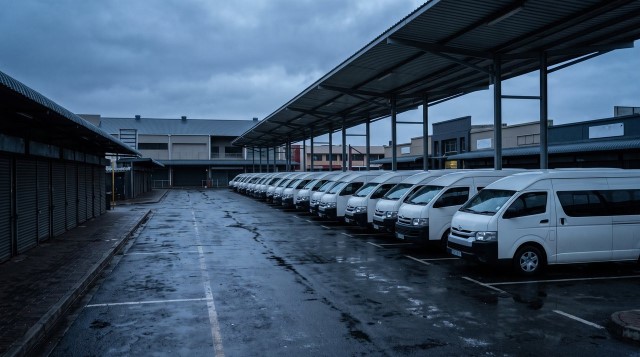
South African and SADC fleet operators are quietly moving past basic location-and-trip telematics into predictive maintenance and behavioural risk profiling, with leading platforms now reporting up to 40 percent downtime reduction and machine-learning models flagging major component failures 20 to 45 days before traditional diagnostics raise an alarm.
Fleet Management
20 May 2026 • 5 min read
Telematics in SADC has matured to the point where reporting what happened yesterday is no longer the value. The operators pulling ahead in 2026 are the ones using AI-driven driver and asset analytics to predict what is about to happen on Tuesday morning -- and pricing that capability into their tender responses.
For many South African fleets in logistics, mining and public transport, baseline telematics adoption is now mature -- location tracking, trip history and vehicle diagnostics are standard. The competitive advantage in 2026 sits one layer up. According to local fleet platforms, the operators that are outperforming peers on cost-per-kilometre are those shifting their focus from asset tracking to risk profiling -- asking how the vehicle is being driven and what that data tells them about future incidents, claims and downtime.
The technology has caught up to that ambition. DigitFMS, a South African telematics provider, reports that its predictive maintenance module can reduce downtime by up to 40 percent by triggering interventions before mechanical failure becomes a roadside incident. Globally, machine-learning models on heavy commercial vehicle data now hit 85 to 95 percent accuracy in predicting major component failures, with risk typically surfacing 20 to 45 days before traditional diagnostics would have raised an alarm. For a long-haul SADC operator running on cross-border corridors with limited workshop access, that lead time is the difference between a planned service in Lusaka and a breakdown at Kasumbalesa.
The performance picture: Up to 80 percent collision rate reduction with telematics-led intervention, up to 40 percent downtime reduction with AI predictive maintenance, and 20-45 days of advance warning on major component failures from current ML models. (Source: DigitFMS, IT News Africa, 2026)
The other half of the 2026 story is driver behaviour analytics. Preliminary data for the 2024/25 festive season showed a 5.3 percent year-on-year increase in road fatalities in South Africa, with experts attributing 87 percent of crashes to human factors -- speeding, fatigue and distraction. Telematics-led intervention programmes have been independently credited with reducing local fleet collision rates by up to 80 percent when fully implemented with coaching, scoring and real-time event review.
Live look-in AI dashcams, two-way driver coaching apps and trip-level driver behaviour scoring have moved from premium add-ons to standard expectation in 2026 fleet tenders. Insurers are increasingly pricing premiums on driver behaviour profile rather than vehicle class alone, which means the operators that cannot show real-time scoring data at quotation stage are quietly losing both contracts and insurance cost competitiveness.
The most visible barrier to wider AI adoption in SADC fleets is data fragmentation. Most operators run between two and five telematics suppliers across their fleet -- often a legacy tracker, an OEM telematics feed, a fuel monitoring system and a tyre pressure provider. Tools like GoMetro Bridge are building telematics aggregator layers that unify multi-vendor data into a single live operational view, which is what AI models need to work properly. Without that aggregation, predictive analytics gets stuck at vendor level and never sees the whole truck.
For SADC operators the practical sequence is now reasonably clear. Step one is data aggregation across legacy telematics suppliers. Step two is layering driver behaviour scoring with a credible coaching workflow. Step three is enabling predictive maintenance triggers tied to workshop planning, parts forecasting and route scheduling. Skipping straight to AI without the aggregation foundation is the most common failure mode and the most expensive to unwind 18 months later.
Audit your current telematics stack before signing your next AI or predictive maintenance contract -- the savings come from unified data, not from one more app. Set a 12-month target to bring driver behaviour scoring and predictive maintenance into the same monthly review forum, and demand integrated reporting at tender stage rather than vendor-by-vendor dashboards.
Stay connected with Southern Africa's freight and transport community.
Join 6,400+ logistics professionals across the SADC region.
Visit Laaimylorrie.com| About the Author | |

|
Andre Klynsmith Entrepreneur & Technology Enthusiast Andre's expertise spans technology, blockchain, transport, and logistics -- with a passion for innovation and driving positive change across industries. |
| Source: DigitFMS -- "The Future of Fleet Intelligence: How Telematics and AI Integration is Transforming South African Businesses" View source › | May 2026 |


Subscribe to our Newsletter and stay in the know with all the latest Industry News, Products and Trends covering the whole of the SADC region.
KS Blockchain T/A Laaimylorrie.com . All Rights Reserved.