Industry related headlines to keep you in the know.
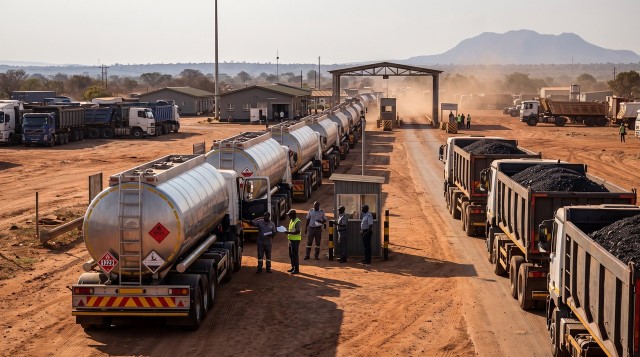
South Africa's Competition Commission has used a public address in the second week of May 2026 to warn that the country's privatisation push, including the Transnet Private Sector Participation (PSP) programme covering Durban Container Terminal Pier 2, Cape Town and Maydon Wharf, must be designed so it does not simply convert state-owned monopolies into private monopolies — a signal that competitive structure, not just deal-flow, will define the next phase of SADC freight reform.
BUSINESS INSIGHTS
19 May 2026 • 5 min read
Reform is not the same as competition. South Africa's Competition Commission has drawn that distinction in public — and SADC shippers, forwarders and corridor operators should be reading it as a forward-looking warning about how the next twelve months of port, rail and logistics concessions will be priced and governed.
The Competition Commission's intervention, reported by BusinessDay on 13 May 2026, sits squarely inside the architecture of South Africa's structural reform agenda. The Commission's concern is straightforward: when state-owned enterprises with significant market power are unwound or partially concessioned, there is no automatic guarantee that competitive outcomes follow. Without explicit, enforceable design choices around access pricing, third-party use rights and regulatory oversight, a concession can simply transfer monopoly rents from a public balance sheet to a private one.
The relevance for SADC freight is direct. The Transnet PSP programme has already concluded its flagship deal with International Container Terminal Services (ICTSI) for Durban DCT Pier 2, with an estimated R11 billion in terminal upgrades. Cape Town's liquid bulk RFP is in motion. Maydon Wharf concessions are out to market. Eleven private train operators have just concluded mainline access agreements. The question the Commission is implicitly asking is whether the post-reform South African freight system will deliver a step-change in competition, or simply a step-change in price discipline by a smaller set of dominant private incumbents.
Industry figure: The South African logistics system is estimated to cost the economy roughly R1 billion a day in inefficiency drag, which is the central justification for the PSP and open-access rail programmes now in delivery. (Source: SAAFF reform position paper, 2026)
Three live processes will test whether the Commission's concern is being acted on. The first is the ICTSI ramp at DCT Pier 2, where price discipline, gate hours and crane productivity will be visible to every container shipper from Maputo to Walvis Bay. The second is the Independent Economic Regulator for Transport and Logistics, flagged in the NRMP, which needs enabling legislation tabled to give the new private rail operators clear, low-friction access to the network. The third is the Cape Town liquid bulk concession, where the choice of competitive structure will set a precedent for how Maydon Wharf, Richards Bay and other follow-on concessions are run.
If those three pieces line up with strong, predictable competitive design, the case for SADC shippers to plan around lower long-run port and rail unit costs gets stronger. If they slip toward closed-access, take-it-or-leave-it terms, the Commission's warning becomes an early dashboard light that the reform programme is delivering investment without delivering competition.
For SADC freight operators, the practical takeaway is to stop assuming a single "post-reform price." The market is splitting into two plausible 2027 scenarios. Under a competition-led path, container handling, rail haulage and port-side logistics costs ease and become more contestable. Under a private-monopoly path, headline service levels improve but tariffs remain sticky and access conditions tighten.
Shippers, forwarders and fleet operators with cross-border exposure should be modelling both scenarios in 2027 and 2028 contract negotiations, and using regional industry voices — SAAFF, RFA, FESARTA, the regional ports council — to push for transparent access pricing, third-party use rights and a credible regulator before the cement around the new concessions sets.
Model two reform scenarios in your 2027 budgets. Use the next twelve months — while concession terms are being finalised — to lobby through SADC industry associations for clear competitive structure, transparent access tariffs and a real Independent Economic Regulator. Outcomes are still movable.
Stay connected with Southern Africa's freight and transport community.
Join 6,400+ logistics professionals across the SADC region.
Visit Laaimylorrie.com| About the Author | |

|
Andre Klynsmith Entrepreneur & Technology Enthusiast Andre's expertise spans technology, blockchain, transport, and logistics — with a passion for innovation and driving positive change across industries. |
| Source: BusinessDay — Competition Commission Warns Against Private Sector Monopolies in Privatisation Push View source › | 19 May 2026 |


Subscribe to our Newsletter and stay in the know with all the latest Industry News, Products and Trends covering the whole of the SADC region.
KS Blockchain T/A Laaimylorrie.com . All Rights Reserved.