Industry related headlines to keep you in the know.
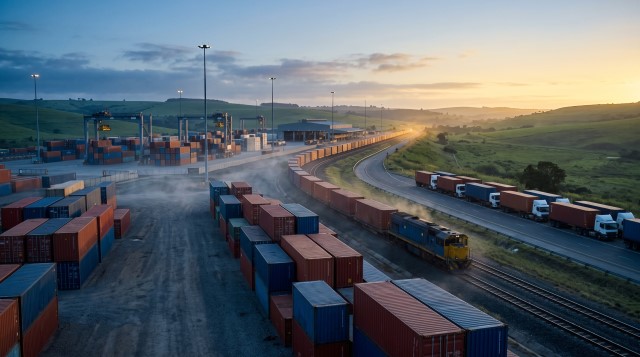
South Africa's Operation Vulindlela has confirmed in its Q4 2025/26 progress communication that freight logistics system reform has moved decisively from policy drafting into implementation, with the Cabinet-approved National Rail Master Plan (NRMP), eleven private train operator access agreements, and the Cato Ridge to Durban short-haul service all reaching live status inside a six-week window.
SHIPPING AND LOGISTICS
19 May 2026 • 5 min read
After three years of strategy documents and pilot announcements, the Vulindlela Q4 progress report quietly redrew the SADC freight map. Shippers, forwarders and cross-border road operators now have a six-month visibility window to plan around rail-share growth, port-side congestion relief and a tightening private operator pipeline that will reshape regional freight rates well into 2027.
Operation Vulindlela, the joint Presidency-Treasury reform unit, has spent the last three years pushing structural changes in energy, water, visas and logistics. Its Q4 2025/26 communications cycle, issued in the second week of May 2026, makes one thing clear for the freight industry: the reform deliverables that had been on paper since the 2023 Freight Logistics Roadmap are now operational.
In the freight logistics workstream, four items moved over the line in quick succession. The National Rail Master Plan received Cabinet approval on 1 April 2026, with a public comment window running into September 2026. Eleven private train operators concluded rail access agreements with Transnet on 13 May 2026. The Cato Ridge to Durban short-haul container service launched in May 2026. And Transnet signed the €300 million AFD freight decarbonisation loan in early May 2026, anchoring capital for locomotive recapitalisation and corridor electrification.
Industry figure: The Transnet Rail Infrastructure Manager (TRIM) estimates the eleven new private operators will move an additional 20 million tonnes of freight per annum from the 2026/27 financial year, with the majority operational across 2027. (Source: Engineering News / Transnet, May 2026)
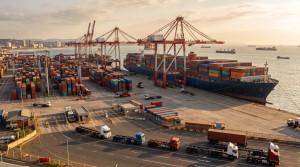
Roughly two-thirds of SADC externally-traded volume flows through South African ports and corridors. When Transnet rail capacity moves up, the JHB-Durban truck-density picture eases for Zambian and Zimbabwean copper, Botswana beef, Malawian tobacco, Namibian agricultural exports and DRC industrial inputs that all rely on the same N3 and N4 trunks.
Equally, the AFD-funded decarbonisation programme has direct knock-on effects for cross-border carriers. Lower Transnet diesel exposure, more electrified haulage and renewed mainline rolling stock all reduce the rail-vs-road cost gap that has kept SADC long-distance freight stuck on rubber tyres since the early 2010s.
Between now and November 2026, four delivery milestones will determine whether the Vulindlela Q4 picture sticks. First, the NRMP public consultation closes in September 2026, after which Treasury and the Department of Transport will publish a final implementation schedule. Second, the first wave of private train operators must convert access agreements into actual train movements; TRIM is targeting Q3 2026 to Q1 2027 for initial corridors. Third, the Cato Ridge to Durban service has to demonstrate genuine truck-volume displacement to validate the inland-evacuation model for other ports. Fourth, the Independent Economic Regulator for Transport and Logistics, flagged in the NRMP, needs enabling legislation tabled.
For shippers writing 2027 contracts now, the practical implication is to keep optionality. The reform delivery scenario points to rail share of containerised SADC freight rising by 6 to 10 percentage points by late 2027; the reform delay scenario keeps current modal splits intact and locks in further fuel-linked rate escalations.
Build dual-mode road and rail clauses into 2027 contracts and treat private train operator readiness as a procurement filter. Operators that already have intermodal slot relationships at Cato Ridge, City Deep and Komatipoort will benefit first as private rail volumes scale and Durban port congestion eases.
Stay connected with Southern Africa's freight and transport community.
Join 6,400+ logistics professionals across the SADC region.
Visit Laaimylorrie.com| About the Author | |

|
Andre Klynsmith Entrepreneur & Technology Enthusiast Andre's expertise spans technology, blockchain, transport, and logistics — with a passion for innovation and driving positive change across industries. |
| Source: Engineering News — Eleven Private Train Operators Gear Up for Mainline Entry View source › | 19 May 2026 |


Subscribe to our Newsletter and stay in the know with all the latest Industry News, Products and Trends covering the whole of the SADC region.
KS Blockchain T/A Laaimylorrie.com . All Rights Reserved.