Industry related headlines to keep you in the know.
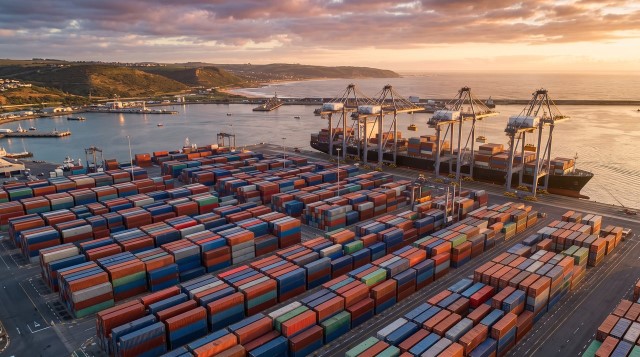
Two TNPA cargo handling stories landed in May 2026 that, taken together, signal a structural shift in how South Africa's secondary ports will share the country's container and liquid bulk burden through to 2028. Richards Bay's container handling capacity is set to quadruple to 200,000 TEU per year under a R285 million Grindrod-led concession, while Cape Town opened a 25-year liquid bulk terminal RFP for private sector operators. Neither port is the obvious headline-grabber — and that is precisely why SADC operators should pay attention.
CARGO HANDLING
16 May 2026 • 5 min read
TNPA's two May 2026 announcements deepen the message of South Africa's port reform: container and liquid bulk capacity is being structured at secondary ports to relieve Durban and Cape Town's primary terminals, with private operators carrying the build-out risk.
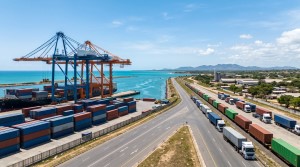
TNPA confirmed in May 2026 that the agreement with the Grindrod Eyamakhosi joint venture for the Richards Bay container handling facility at the Bayvue precinct is signed and proceeding to construction. The R285 million project takes the port's container handling capacity from its current 50,000 TEU per year to 200,000 TEU per year. Commercial operations are scheduled for 2028, the concession runs for 25 years, and the project will create approximately 122 permanent jobs in the local Richards Bay community.
For context: a quadrupling of capacity at a port best known for coal, magnetite, chrome and woodchip exports is a signal of intent. Richards Bay has been positioning to diversify beyond bulk for the better part of a decade, and the Grindrod concession is the first major operational expression of that strategy. SADC freight operators routing through Richards Bay for bulk export will progressively be able to use the same port for containerised reefer, project cargo, and bonded transit volumes that today have to be sent through Durban.
Key number: Richards Bay's container handling capacity will move from 50,000 TEU to 200,000 TEU per year — a 4x lift on a single project, against a port system that handled 304 million tonnes across all Transnet ports in 2025/26 (a 15-year high). (Source: TNPA media statement / Engineering News, May 2026)
In the same window, TNPA opened the bidding process for a 25-year liquid bulk terminal concession at the Port of Cape Town. The RFP follows the Maydon Wharf agri-bulk and fresh produce concessions awarded earlier in 2026 and aligns with the FFS Tank Terminals edible oils concession at Cape Town that landed in early April. Together, these constitute a coordinated push to bring private balance-sheet investment into liquid bulk handling on the Western Cape — a category historically squeezed by ageing infrastructure and concentrated operator risk.
For SADC importers and exporters, liquid bulk is a sensitive category — fuel, edible oils, chemicals and bitumen all flow through it, and capacity constraints translate directly into demurrage, vessel turnaround time, and unloading costs that pass through to landed prices. A new 25-year operator at Cape Town materially changes the negotiating position of importers who have for years dealt with limited choice of berth, schedule and shore-based storage.
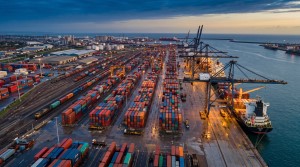
Stitched together, three things are happening simultaneously: TNPA is using private concessions to fund and operationalise capacity that the parastatal cannot reach alone; that capacity is being deliberately distributed across multiple ports — Richards Bay for containers, Cape Town for liquid bulk and edible oils, Maydon Wharf for fresh produce and agri-bulk, Ngqura for transshipment and manganese, Durban for the flagship container line — to spread risk; and the timelines are now genuinely close. Richards Bay's container facility goes operational in 2028, not the back half of the decade.
For SADC operators routing perishables, project cargo, fuel imports, or finished goods, the practical implication is that the cargo-handling map of South Africa is being redrawn to give shippers genuine port-of-entry choice for the first time in years. Operators who lock their freight planning to Durban-only routings risk missing the cost and reliability gains that secondary-port concessions are designed to deliver from 2027 onwards.
Begin scenario-modelling Richards Bay as a real container alternative for KwaZulu-Natal-bound cargo from 2028, particularly for reefer, project, and bonded volumes. For liquid bulk importers, the Cape Town RFP opens a strategic conversation about long-term storage agreements, slot reservations, and contract structure with the new operator. The ports are no longer a single bottleneck — they are an emerging network of differentiated capacity.
Stay connected with Southern Africa's freight and transport community.
Join 6,400+ logistics professionals across the SADC region.
Visit Laaimylorrie.com| About the Author | |

|
Andre Klynsmith Entrepreneur & Technology Enthusiast Andre's expertise spans technology, blockchain, transport, and logistics -- with a passion for innovation and driving positive change across industries. |
| Source: TNPA / Engineering News / SAnews on Richards Bay container concession and Cape Town liquid bulk RFP View source › | May 2026 |


Subscribe to our Newsletter and stay in the know with all the latest Industry News, Products and Trends covering the whole of the SADC region.
KS Blockchain T/A Laaimylorrie.com . All Rights Reserved.