Industry related headlines to keep you in the know.
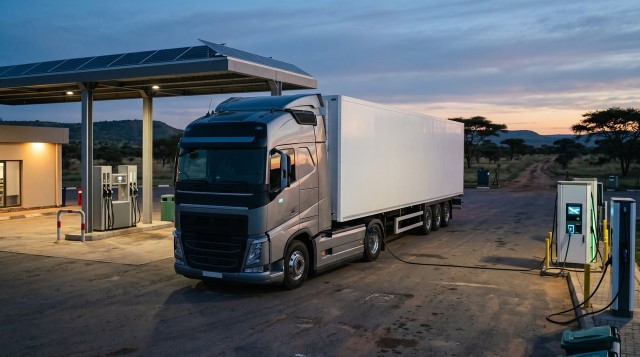
Smart Freight Week 2026 in Amsterdam closed this week with a sharper African delegation than any previous edition, dominated by East African freight associations and a growing group of SADC operators pushing to convert global decarbonisation talk into deployable practice. For Southern African hauliers, the playbook that came out of the event matters because it shifts the conversation from electric trucks to immediate operational levers — and the latter are already within reach in 2026.
Carbon Footprint
15 May 2026 • 5 min read
Africa moves 85–90% of its freight by road and most of that fleet is operated by SMEs running on tight margins. The Smart Freight Week 2026 message for SADC is pragmatic: chase efficiency, eliminate unnecessary freight kilometres, and use shared infrastructure before betting on hydrogen and electric tractor units.
Smart Freight Week 2026 brought together more than 600 logistics professionals in Amsterdam, with the Federation of East African Freight Forwarders Associations (FEAFFA) anchoring an African contingent that for the first time included Southern African operators alongside East African and West African colleagues. The Green Freight Study Tour focused on three deployable themes: aerodynamic and rolling-resistance fleet upgrades, multi-modal consolidation, and shared charging or refuelling infrastructure as an alternative to single-fleet capital expense.
For African operators, the message was unusually grounded. With road freight still moving between 85% and 90% of African freight tonnage, and with the median fleet operator running fewer than 20 vehicles, the global hype around hydrogen and battery-electric heavy trucks needs to be sequenced against a much more immediate decarbonisation opportunity: cutting empty running, optimising route geometry, and trimming load factors.
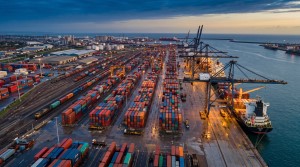
The structural challenge: 85–90% of African freight moves by road, dominated by SME operators working under cost and infrastructure constraints — making efficiency gains, not electrification, the immediate 2026 decarbonisation lever. (Source: FEAFFA / Smart Freight Week 2026)
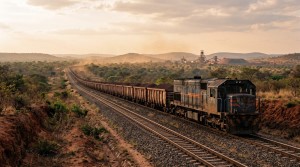
The first lever is empty-running reduction. SADC freight backhaul utilisation remains stubbornly poor on the Walvis Bay, Beira and Beitbridge corridors, with industry estimates suggesting 30–40% of return legs run empty or under-loaded. Digital load-matching platforms — including Laaimylorrie.com's own marketplace — can compress that gap and deliver an immediate cut in emissions per tonne-kilometre without any capital investment.
The second is aerodynamic retrofitting and tyre management. Side skirts, roof fairings, low-rolling-resistance tyres and properly maintained tyre pressures can reduce fuel burn by 6–12% on a typical 6x4 SADC long-haul tractor — and with diesel above R32 per litre in South Africa and US$2 per litre in Zimbabwe, the payback period has tightened sharply.
The third Amsterdam takeaway is structural: shared infrastructure is the only realistic path to alternative-fuel adoption for SME-heavy African fleets. The global truck industry is already converging on shared charging at logistics parks, depot-based renewable-energy generation, and corridor-level shared hydrogen refuelling. SADC's emerging electric truck moves — Volvo's FH Aero Electric on a 700 km range, DSV's African build-out, and the SA-North-bound Zero Carbon Charge corridor — will only deliver fleet-wide benefit if they are organised as shared resources rather than as proprietary single-fleet investments.
Smart Freight Week's broader message was that the European, Asian and North American freight industries are now treating decarbonisation as a procurement obligation as much as a climate ambition. Shippers are increasingly demanding emissions data alongside rate cards. For SADC operators serving global brands — particularly in agri-export, automotive and mining — the demand for measurable carbon performance is moving from optional to mandatory inside a 12–24 month window.
Treat 2026 as the year to measure and cut emissions per tonne-kilometre through better load matching, aerodynamic retrofits and tyre discipline — and to start building the supplier-emissions reporting capability that global shippers will demand by 2027. The electric and hydrogen conversation can wait; the efficiency and reporting conversation cannot.
Stay connected with Southern Africa's freight and transport community.
Join 6,400+ logistics professionals across the SADC region.
Visit Laaimylorrie.com| About the Author | |

|
Andre Klynsmith Entrepreneur & Technology Enthusiast Andre's expertise spans technology, blockchain, transport, and logistics -- with a passion for innovation and driving positive change across industries. |
| About the Author | |
|
|
Andre Klynsmith Entrepreneur & Technology Enthusiast Andre's expertise spans technology, blockchain, transport, and logistics -- with a passion for innovation and driving positive change across industries. |
| Source: FEAFFA / Smart Freight Centre — Smart Freight Week 2026 reporting View source › | May 2026 |


Subscribe to our Newsletter and stay in the know with all the latest Industry News, Products and Trends covering the whole of the SADC region.
KS Blockchain T/A Laaimylorrie.com . All Rights Reserved.