Industry related headlines to keep you in the know.
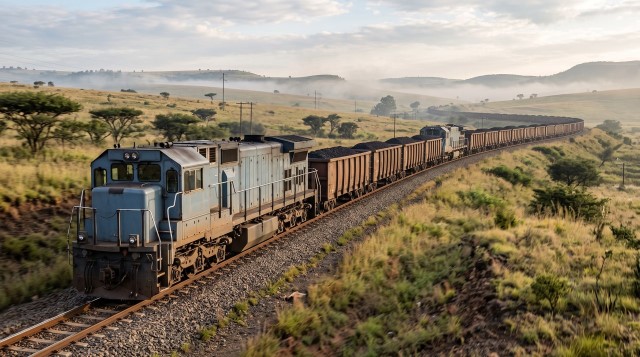
South Africa's eleven approved private freight rail operators are now in the final stretch of access negotiations with Transnet, with the first commercial trains expected to haul coal, iron ore and containers in the second half of 2026. Government officials estimate the new entrants could add 20 million tonnes of annual capacity — roughly 11% of current rail volumes — and unlock up to R100 billion in private investment in wagons, locomotives and sidings over the next decade.
Business Insights
11 May 2026 • 6 min read
For three years South Africa has been promising rail reform. The next six months will reveal whether the eleven approved private operators can put trains on the network — or whether the model gets stuck on slot allocation, locomotive supply and corridor access pricing.
The eleven private operators emerged from a 25-applicant shortlist after clearing Transnet's safety, technical and financial assessments. Most have now entered the three-to-six-month negotiation window for network-access agreements covering slot rights, infrastructure access charges, route-pricing tariffs and operational coordination protocols. Several operators are targeting commercial operations in the second half of 2026, with the bulk of the entrant base aiming for steady-state operations in 2027-2028.
The locomotive question is now the binding constraint. With Transnet's own legacy locomotive procurement dispute still unresolved, private operators are sourcing motive power from a combination of Indian regauge units, Traxtion lease pools and Chinese new-build orders. Several entrants have signalled they will start with a small mixed fleet of 8-15 locomotives in the first year, scaling to 30-50 units by 2028.
The capacity prize: 20 million tonnes per year of incremental rail volume — roughly 11% of current Transnet Freight Rail throughput — with cumulative private capex potentially reaching R100 billion over the decade. (Source: Department of Transport / Operation Vulindlela Quarterly Report, 2026)
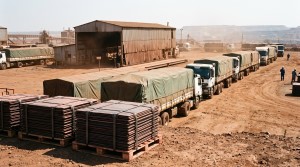
The biggest SADC implication is the unlock of coal, iron ore, manganese and container traffic that has been stuck on road for the past several years. Rail capacity coming back into the system in the second half of 2026 will pull tonnage off the N3 and N4, easing the chronic overloading and road-damage pressure that has driven up provincial maintenance costs and accelerated tyre and brake wear for road freight operators.
Equally important is what private rail operators will do for cross-border traffic. Several of the approved entrants have indicated interest in regional services — interoperability conversations with Botswana Railways, NRZ in Zimbabwe and Mozambique's CFM are already under way. For SADC mineral exporters that have spent the past decade routing copper, manganese and ferro-alloys onto trucks because of rail unavailability, the prospect of regional private-rail capacity coming online from 2027 is materially price-positive.
First: track infrastructure condition. The same Operation Vulindlela quarterly that confirms private-operator progress also flags that 60% of broader rail freight reform milestones are running behind schedule. Cable theft, copper-coil vandalism and ballast deterioration on several heavy-haul lines will limit usable slots until the maintenance backlog clears. Private operators will quickly discover which corridors are commercially viable in 2026 and which need to wait.
Second: pricing transparency. Slot fees and infrastructure-access tariffs are still being negotiated case by case. Until a published, transparent tariff structure is in place, smaller commodity shippers will struggle to access the new private capacity at predictable cost.
Third: dispatch coordination. With Transnet retaining the central traffic-control function, private operators are operationally dependent on the incumbent's signalling, slot allocation and dispatch decisions. The first major dispatch dispute will be a stress test of whether the access regime is robust enough to give private operators a fair commercial outcome.
Begin conversations now with the approved private rail operators on long-term capacity agreements for Q4 2026 and full-year 2027. Road-to-rail modal shift will be selective — corridor by corridor, commodity by commodity. Operators with bulk commodities, predictable volumes and origin-destination pairs on the heavy-haul lines should be at the front of the queue.
Stay connected with Southern Africa's freight and transport community.
Join 6,400+ logistics professionals across the SADC region.
Visit Laaimylorrie.com| About the Author | |

|
Andre Klynsmith Entrepreneur & Technology Enthusiast Andre's expertise spans technology, blockchain, transport, and logistics -- with a passion for innovation and driving positive change across industries. |
| Source: Ecofin Agency / Railway Gazette / Operation Vulindlela View source › | May 2026 |


Subscribe to our Newsletter and stay in the know with all the latest Industry News, Products and Trends covering the whole of the SADC region.
KS Blockchain T/A Laaimylorrie.com . All Rights Reserved.